
Choosing the best Steel Coil Slitting Machine in China takes more than comparing advertised line speeds. The World Steel Association’s World Steel in Figures 2024 reports that China produced 1,019.1 million tonnes of crude steel in 2023. That figure shows the scale of the steel industry, not the performance of any individual machine. Scale matters. Buyers still need evidence from actual production trials.
A useful comparison starts with your material and finished-strip requirements. Check the supported coil width, thickness range, coil weight, slitting tolerance, and expected changeover time. Then look closely at the recoiler, tension control, knife setup, and scrap-winding arrangement. These details affect daily output. A clean sample cut is helpful, but it cannot show how the line performs through a full shift. Ask for a witnessed test using comparable material, and record edge quality, burrs, strip width, and downtime.
Supplier support deserves equal attention. Confirm which components are sourced locally, how quickly replacement parts can be delivered, and what training is included. Request references from plants running similar products, not just polished demonstration footage. Specifications can look convincing on paper. They may still leave gaps. This guide compares machine capabilities, factory verification, customization, and after-sales service, while noting where public data cannot settle the choice. The best option is the one that consistently meets your production needs, with measurable results and support your team can verify.
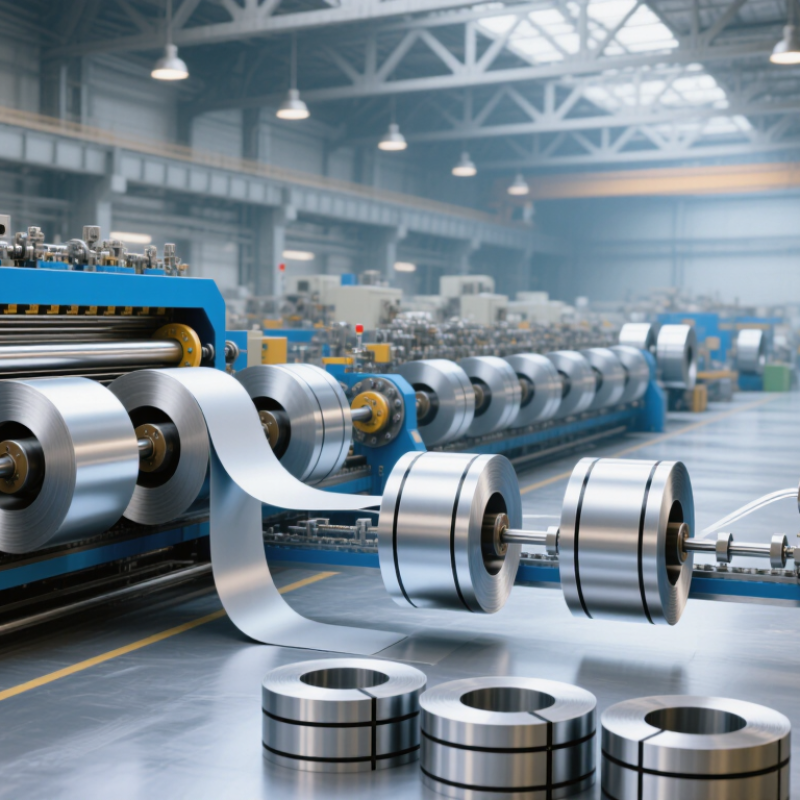
Which Is the Best Steel Coil Slitting Machine in China?
What a Steel Coil Slitting Machine Does: Uncoiling, Slitting, and Recoiling
A steel coil slitting line turns a wide coil into narrower strips for downstream forming or fabrication. The process starts at the uncoiler, where the coil is mounted and fed into the line. A hold-down arm and entry guides help control the moving steel. Coil width, thickness, and weight all affect setup.
The strip then passes through circular knives arranged on slitting shafts. These knives shear the steel lengthwise into selected widths. Spacers set the knife positions, while correct alignment helps produce consistent edges. Small details matter. Poor setup can leave burrs, uneven strip widths, or excess tension. Operators should check knife condition and trial-cut material before running at full speed.
At the recoiler, the divided strips are wound into separate coils, often with tension control to keep each wrap firm and orderly. A reliable machine should handle the intended material range, maintain stable strip tracking, and allow practical adjustments. Speed alone is a weak measure. A line may run quickly yet struggle with thin, springy stock. Even careful settings can drift, so inspect the finished edges and coil shape during production. No machine removes the need for sound setup.
A practical steel coil slitting line should match the material, not just a headline speed. Typical configurations handle 0.3–6 mm steel at 100–200 m/min, but actual output depends on coil width, grade, tension control, and changeover time. China’s production scale is substantial: World Steel Association’s World Steel in Figures 2025 reports 1,005.1 million tonnes of crude steel produced there in 2024. That makes consistent processing important, but national output alone cannot identify the best machine for a specific plant.
For thinner stock, inspect strip tracking and edge quality at speed; a small wander can spoil narrow slit coils. For 6 mm material, ask about shear capacity, arbor rigidity, recoiler torque, and the coil weights the line can safely handle. Check finished-width tolerances against your product requirements, and request sample cuts using your own steel. A little blunt truth: maximum speed figures rarely include threading, acceleration, or coil changes. I would ask for a timed trial. Watch the strip at the recoiler, not only the control screen. The IEA’s Iron and Steel Technology Roadmap identifies steelmaking as a major source of industrial emissions, so avoiding trim waste and rejected coils has practical value. Published specifications help narrow the field; they do not replace a production test.
Choosing a slitting machine starts with understanding the coil it will process. EN 10131 specifies dimensional and shape tolerances for certain cold-rolled steel flat products. Check that the standard’s scope matches the material grade and product ordered. It is not a slitting-machine performance rating. Small errors matter.
Before setup, compare the coil certificate and purchase specification. Check nominal thickness, width, edge condition, and permitted tolerances. Measure a sample at several points across the width; a single reading can hide variation. Use a calibrated micrometer and record the results. Keep the strip flat and free from tension while measuring. That detail is easy to miss.
Set the knife spacing for the required finished widths, while accounting for incoming width variation and the agreed edge condition. Inspect trial strips for width, burrs, and edge damage, then adjust clearance and tension if needed. A slitter can produce repeatable cuts, but it cannot remove every upstream variation. Sometimes the first setup is imperfect. Review the measurements, document adjustments, and confirm acceptance criteria with the supplier before production.
The best steel coil slitting machine depends on the coils you actually process, not the widest capacity listed in a brochure. Start with maximum coil weight, outer diameter, and width, then check whether the uncoiler and recoiler can handle those loads safely. A line rated for heavy coils may still be a poor fit if your workshop handles narrow strips or frequent size changes.
Steel grade and thickness affect the cutting setup. Softer steel and high-strength grades can behave differently under blade pressure and strip tension. Ask suppliers to state the supported thickness range for each grade, along with slitting tolerance and typical line speed. Small details matter. For example, a 1.5-millimeter sheet may need different knife clearance from a thinner, harder strip. Confirm these settings using sample material when possible.
I would also compare threading access, scrap-winder capacity, and changeover time. These details shape daily output more than a headline speed. One point is easy to miss: published capacity may assume ideal coil dimensions and steady production. Request a layout and a trial plan based on your heaviest coil, narrowest finished strip, and most demanding steel grade. The right match is rarely the biggest machine; it is the line that handles your real mix without constant adjustment.
| Application | Typical Incoming Coil Weight | Typical Coil Width | Typical Thickness Range | Suitable Steel Grades | Recommended Line Configuration | Indicative Operating Speed | Key Selection Considerations |
|---|---|---|---|---|---|---|---|
| Light-gauge precision slitting | 3–10 tonnes | 300–1,250 mm | 0.2–1.0 mm | Cold-rolled low-carbon steel; galvanized steel | Light-duty uncoiler, precision slitter head, tension stand, and recoiler sized for the required strip count | Approximately 60–150 m/min | Prioritize stable strip tension, accurate knife clearance, and surface protection. Actual speed depends on thickness, strip width, and threading requirements. |
| General-purpose coil processing | 5–15 tonnes | 500–1,600 mm | 0.3–3.0 mm | Cold-rolled steel; galvanized steel; hot-rolled pickled steel | Medium-duty line with hydraulic or motorized uncoiler, slitter, scrap winder, loop control, and recoiler | Approximately 40–120 m/min | A versatile option for mixed production. Confirm maximum coil outside diameter, mandrel expansion range, and recoiler torque against the actual coils. |
| Heavy-gauge slitting | 15–30 tonnes | 800–2,000 mm | 2.0–6.0 mm | Hot-rolled steel; hot-rolled pickled steel; selected high-strength low-alloy grades | Heavy-duty uncoiler and recoiler, rigid slitter stand, high-capacity drive, and appropriately sized scrap winders | Approximately 20–70 m/min | Check machine capacity at the maximum thickness and steel strength, not just maximum width. Heavy coils require adequate foundation, braking, and handling equipment. |
| Stainless-steel slitting | 5–20 tonnes | 600–1,600 mm | 0.3–3.0 mm | Austenitic, ferritic, and other stainless grades within the specified machine capacity | Precision slitter with suitable tooling, controlled tension, protected contact surfaces, and carefully aligned recoiler | Approximately 30–100 m/min | Stainless steel can work-harden and may require grade-specific tooling and settings. Specify surface-finish protection and acceptable edge quality. |
| Electrical-steel processing | 5–15 tonnes | 600–1,250 mm | 0.2–0.8 mm | Grain-oriented or non-oriented electrical steel, subject to grade and coating requirements | Precision slitting line with low-burr tooling, stable tension control, and careful strip handling | Approximately 30–80 m/min | Validate burr limits, edge condition, coating compatibility, and magnetic-property requirements with the material supplier and line builder. |
Selection note: These ranges are indicative examples, not guaranteed machine specifications. Confirm the maximum coil weight, width, thickness, material strength, coil dimensions, strip-width plan, and required finish for the exact line configuration. Operating speeds vary with material, setup, tooling, and production requirements.
A steel coil slitting machine should be judged by how well it handles your actual material, not by its advertised speed alone. Compare tooling that matches your coil thickness, width, and steel grade. Ask how quickly operators can adjust knives and spacers, and whether setup instructions are clear. Small details matter. A clean, repeatable setup can reduce edge defects and scrap during changeovers.
Automation should fit the production line. Check whether the control system stores recipes, monitors line speed, and helps maintain tension as the coil unwinds. Ask to see a demonstration using comparable material. Watch how the machine responds to a stop or a change in settings. More automation is not automatically better if operators find it difficult to diagnose faults.
Safety features deserve a close inspection. Look for guarded rotating parts, accessible emergency stops, and clear procedures for threading material. Service is equally practical: ask about technician response times, spare-part availability, and remote troubleshooting. Get specific answers, not just a promise of support. It is easy to focus too much on purchase price; downtime, however, can cost more than expected. Supplier comparisons are imperfect, and a polished demonstration may not reveal every maintenance issue. Request references and a written scope of service before making a decision.
It unwinds a wide steel coil, cuts it into narrower strips, and recoils those strips separately. Circular knives make the lengthwise cuts.
Match the line to your actual coil weight, width, and outer diameter. A heavy-duty line may be unnecessary if your work uses narrow strips.
Knife alignment and spacing influence strip width and edge quality. Poor settings can leave burrs or uneven edges. Small details matter.
Not always. Thin, springy steel may track poorly at high speed, so inspect sample material before choosing a production rate.
Confirm the supported thickness range for each grade, along with slitting tolerance and typical speed. A 1.5-millimeter sheet may need different knife clearance from thinner, harder steel.
Check whether it stores recipes, monitors speed, and helps control tension. Watch a demonstration using similar material, including a stop or setting change.
Check threading access, scrap-winder capacity, and changeover time. These details can matter more than headline speed.
Inspect guards, emergency stops, and threading procedures. Ask for specific service response times and spare-part availability. A neat demo is not proof; request references and a written service scope.
A Steel Coil Slitting Machine converts a wide steel coil into narrower strips through a coordinated process of uncoiling, precision slitting, and recoiling. Typical production lines may handle steel thicknesses from 0.3 to 6 mm and operate at speeds of approximately 100–200 m/min, depending on the material, configuration, and required finish. When assessing strip quality, consider width and thickness tolerances in relation to EN 10131, and confirm that the line’s setup can meet the specifications of the intended application.
Choosing a suitable Chinese slitting line starts with matching its capacity to coil weight, width, thickness, and steel grade. Compare suppliers not only on rated output, but also on tooling quality, automation options, operator safeguards, installation support, and ongoing service. A clear review of these factors helps identify equipment that balances production needs, dimensional consistency, and long-term reliability.
