
Precision Coil Processing & Leveling Lines
Heavy-duty continuous slitting, precision tension leveling, and automated cut-to-length systems designed and assembled in our 40,000 m² Wuxi facility.
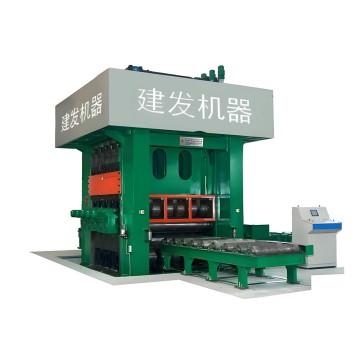
Multi-roll cassette leveling engineered to eradicate severe coil set, cross bow, and edge waves in high-yield-strength alloys.
View Line Specs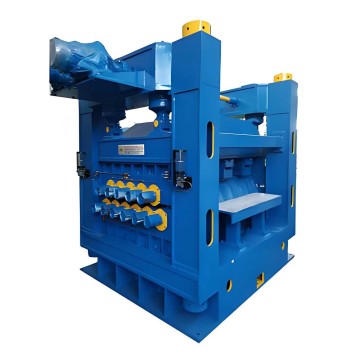
Precision straightening units providing continuous neutral-axis fiber elongation for laser-flat non-ferrous strip processing.
View Line Specs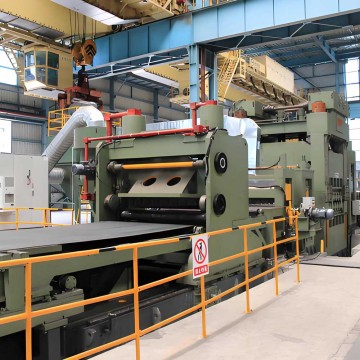
Servo-synchronized moving shear that tracks dynamic strip speeds up to 120 m/min, cutting heavy-gauge plates without pausing.
View Line Specs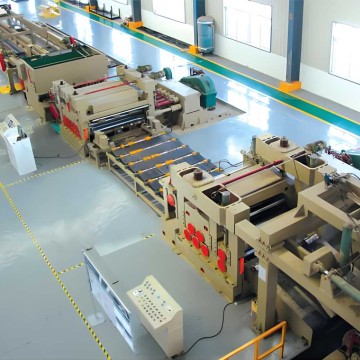
Designed for mirror and satin finishes, incorporating polyurethane-sleeved bridle rolls, edge trimming, and automated air stacking.
View Line Specs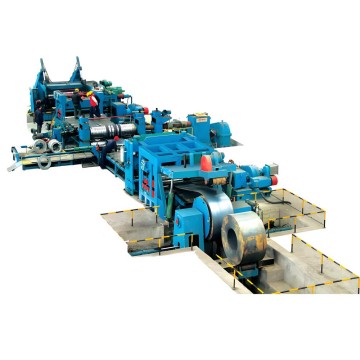
Integrated multi-process configuration eliminating intermediate handling between master coil slitting and precision blank stacking.
View Line Specs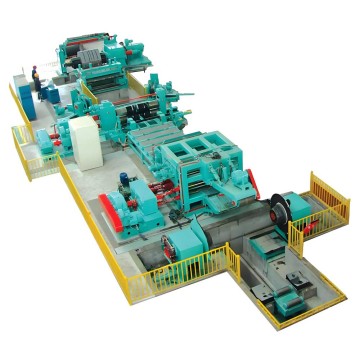
Heavy-duty arbor tooling with rapid hydraulic knife changes, delivering burr-free edges on high-tensile structural strip coils.
View Line Specs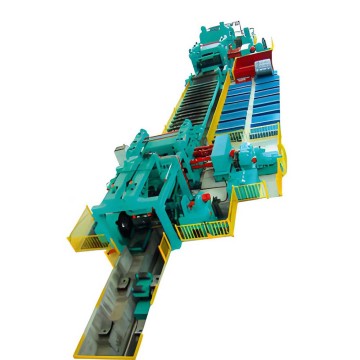
Optimized for tube and roll-forming supply chains, featuring hydraulic tension pads, scrap ballers, and automated separators.
View Line Specs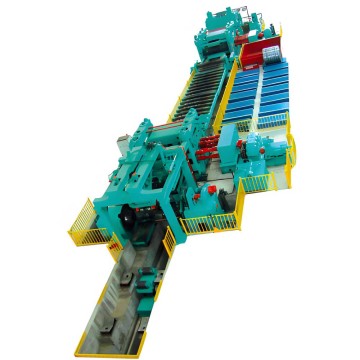
Continuous precision blanking with optical measuring encoders and non-contact electromagnetic sheet stackers for heavy plate.
View Line SpecsUnderstanding Continuous Stretch-Bend Tension Leveling
Why conventional roller levelers fail with thin, work-hardened aluminum strip, and how dynamic tension leveling achieves dead-flat strip geometry below 1–2 I-Units.
Mechanical Fiber Elongation
Conventional roller levelers rely solely on alternating bending over offset rolls. For cold-rolled aluminum (1xxx, 3xxx, 5xxx, and 6xxx series), the strip exhibits distinct internal stress gradients: the core remains in an elastic state while the outer fibers enter plastic deformation. Tension leveling superimposes massive, controlled axial strip tension (up to 70% of material yield strength) over small-radius intermeshed leveling rolls. This forces 100% of the cross-sectional fibers past their yield point, permanently eliminating length differentials between strip edges and center.
Residual Stress Harmonization
When aluminum coils undergo downstream laser cutting, high-speed CNC punching, or chemical anodizing, entrapped residual stresses cause severe warping, oil canning, and twist. China tension leveling aluminum manufacturers employ closed-loop elongation control systems (typically achieving 0.2% to 2.5% elongation with ±0.03% precision). By equalizing longitudinal internal stresses, the processed aluminum strip retains absolute geometric stability during thermal cutting and complex stamping operations.
Erasing Coil Curvature & Camber
Thin aluminum gauges (0.15 mm – 3.0 mm) often suffer from localized waviness, herringbone defects, and heavy cross bow inherited from cold tandem mills. A state-of-the-art tension leveler utilizes entry and exit 4-roll or 6-roll bridle stands that generate pulling forces up to 250 kN. As the strip passes through multi-roll bending cassettes (roll diameters down to 18–35 mm with tungsten carbide or high-chromium coatings), all strip fibers achieve identical longitudinal length, reducing I-Units from 50–80 down to <2 I-Units.
| Leveling Process Technology | Plastic Fiber Deformation | Residual Stress Profile | Exit Flatness (I-Units) | Primary Industrial Use-Case |
|---|---|---|---|---|
| Standard Roller Leveler (Multi-Roll) | Outer 40%–60% of sheet thickness | Non-uniform parabolic stress curve | 10 to 25 I-Units | Heavy steel plates, general structural framing |
| Pure Hydraulic Stretch Leveler | 100% uniform cross-sectional yield | Uniform low tensile residual stress | < 3 I-Units | Thick aerospace aluminum plate (discrete sheets) |
| Continuous Tension Leveling Line (Stretch-Bend) | 100% full cross-section (tension + flexure) | Zero neutral-axis stress gradient | < 1 to 2 I-Units | Auto body sheet (BIW), lithographic coil, battery foil |
| Skin Pass Mill (Temper Mill) | Surface cold reduction (0.5%–1.5%) | High surface compression, internal tension | 8 to 15 I-Units | Surface hardness increase, yield point elimination |
Why Global Processors Partner with Chinese Tension Leveling Manufacturers
Examining the structural supply-chain capabilities, metallurgical mechanical engineering heritage, and precision fabrication clusters centered in the Yangtze River Delta.
Wuxi Metallurgical Cluster
Wuxi is the recognized capital of precision coil processing equipment in China. With specialized suppliers of ultra-hard rolls, forged high-alloy shafts, heavy dynamic planetary gearboxes, and precision induction-hardened components within a 30 km radius, manufacturing lead times are shortened by 40% compared to Western European machinery builders.
In-House CNC Gantry Machining
At Wuxi Jianfa, all critical machine housings, heavy leveling stands, and tension bridle frames are machined on large-scale 5-axis CNC boring and milling centers within our 40,000 m² facility. Full in-house manufacturing eliminates subcontractor tolerance stacking and ensures roll parallelism within 0.01 mm across 2,200 mm web widths.
Total Capital Expenditure Edge
Procuring complete tension leveling lines or cut-to-length systems from top-tier Chinese factories reduces capital expenditure by 45% to 60% compared to SMS group, FIMI, or Danieli, while delivering identical electrical architectures (Siemens S7-1500 PLC, Parker/Moog servo hydraulics, and ABB regenerative drives).
Direct Port Logistics
Situated along direct expressway arteries connecting Wuxi to Shanghai Port and Taicang Port, large monolithic equipment foundations, uncoilers, and 60-ton bridle stands are dispatched via breakbulk or flat-rack containers seamlessly, providing guaranteed shipping schedules to over 30 countries globally.
Pioneering precision metallurgical coil processing machinery since the early 1980s.
Heavy-duty fabrication, machining bays, clean assembly halls, and full line testing yards.
Solid financial structure assuring reliable execution of multi-million dollar turnkey lines.
Exported and actively running across the Americas, Europe, Middle East, Africa, and Asia.
Key Technological Trends Driving Aluminum Tension Leveling Lines
How digital twins, optical laser flatness feedback, and high-frequency servo tension control are revolutionizing high-speed coil processing.
Non-Contact Optical ShapeMetres
Modern Chinese factories are integrating inline non-contact laser triangulation flatness measurement systems. Emitting continuous laser scanning lines across the strip web, the optical sensor measures wave height and wavelength at 200 Hz. The measured I-Unit data is fed into an adaptive PLC algorithm that dynamically adjusts the hydraulic roll bending cylinders on the leveling cassette to counteract edge wave or center buckle in real-time.
Four-Quadrant Energy Regeneration
Tension leveling requires huge braking torque on entry bridle rolls and massive motoring torque on exit bridle rolls. Next-generation lines employ shared DC-bus multi-drive systems with active front-end (AFE) regeneration. The braking energy generated by the entry bridles is converted back into electrical power and directly fed into the pulling exit drives, reducing electrical consumption by up to 55% during continuous high-speed runs.
Non-Marking Anti-Slip Roll Coatings
Aluminum surfaces are exceptionally vulnerable to micro-scratching, pick-up roll debris, and slippage scars. Advanced lines implement specialized roll coatings including tungsten carbide via HVOF (High-Velocity Oxygen-Fuel) spraying, mirror-hard chrome plating (HRC >65), and high-coefficient synthetic polyurethane coatings on bridle rolls, guaranteeing zero strip mark transfer at line speeds up to 300 m/min.
Localized Application Scenarios in High-Growth Sectors
Meeting strict ASTM, EN, and GB/T metallurgy standards across automotive lightweighting, clean energy, electronics, and aerospace.
Automotive Body-in-White (BIW)
Alloys 5182, 6016, and 6111 require absolute freedom from stretcher-strain marks (Lüders lines) and zero spring-back variance. Tension-leveled sheets for hoods, doors, and side panels ensure consistent stamping draw depths and automated robotic spot welding fit-up.
EV Battery Enclosures & Foils
3003 and 1060 alloy coil stock used for prismatic battery casings, cell side plates, and ultra-thin cathode aluminum foil (down to 12 microns) demands strict tension uniformity to eliminate edge crinkling, micro-perforations, and thermal battery cell expansion.
Electronics & Anodizing Stock
5052 and 1100 aluminum for smartphone chassis, laptop unibodies, and lithographic CTP printing plates require ultra-clean dry strip processing. Tension leveling lines combine high-efficiency ultrasonic degreasing, hot-air drying, and protective PE film lamination.
Architectural Curtain Walls
Architectural facades, ACP (Aluminum Composite Panels), and perforated ceiling panels demand wide-strip processing (up to 2,200 mm). Tension leveling ensures total flatness after CNC turret punching, avoiding pillowing and optical distortion under daylight reflection.
Macro Turnkey Production Line Engineering
A standard heavy-duty continuous stretch-bend tension leveling line integrates multiple mechanical, hydraulic, and electrical subsystems engineered for zero downtime.
Coil Handling & Uncoiling
Hydraulic coil loading car, dual-mandrel or single cantilever uncoiler with automatic CPC (Coil Position Control) centering and hold-down snubber roll.
Strip Jointing & Washing
Mechanical strip stitching machine or automated TIG welder, followed by high-pressure multi-stage alkaline degreasing and ultrasonic rinse tanks.
Entry Tension Bridle
Four-roll heavy-duty bridle unit driven by AC vector servo motors, establishing forward braking back-tension up to 250 kN without strip slippage.
Stretch-Bend Cassette
Rapid cassette exchange cart housing 4-high or 6-high leveling cartridges. Micro-adjustable back-up rolls exert precise local deflection profiles.
Exit Bridle & Recoil / Shearing
Pulling exit bridle, dynamic flying shear for sheet stacking or high-torque recoiler equipped with automatic belt wrapper and protective paper interleave.
Global Procurement Checklist: Evaluating Chinese Factories
Key mechanical and electrical parameters global buyers must audit during Factory Acceptance Tests (FAT) and technical RFP evaluations.
Roll Cassette Quick-Change Design
When switching between 0.2 mm thin foil and 2.5 mm heavy automotive sheet, roll diameters must be swapped (e.g., from Ø23 mm to Ø40 mm rolls). Ensure the manufacturer provides automated hydraulic side-shifting cassette exchange cars that complete roll set changes within 12 minutes, minimizing downtime.
Drive Synchronization & S-Curves
Audit the motion control bus architecture. Bridle motors must be synchronized via high-speed isochronous Profinet or EtherCAT networks. Acceleration/deceleration S-curves must operate smoothly to prevent momentary tension spikes that snap thin strip or induce tension bridle roll scuffing.
Surface Quality & Hardness Verification
Inspect roll metallurgy test certificates. Work rolls must be fabricated from premium vacuum-degassed Cr12MoV, D2, or 9Cr2Mo alloy tool steel, deep cryogenically treated, with surface hardness maintained strictly at HRC 62–65 and surface roughness Ra ≤ 0.05 μm for bright aluminum strip finishing.
Explore Available Heavy-Duty Coil Processing Machinery
Fully custom-configured to your plant footprint, strip width, alloy grade, and annual throughput targets.
Ultra-rigid mechanical construction engineered for severe coil memory elimination across structural aluminum and steel alloys.
View Line Specs
Precise intermediate straightening systems for coil processing lines and high-speed punching press decoilers.
View Line Specs
High-speed synchronization shear system built for massive annual tonnage without surface scuff marks or cycle delays.
View Line Specs
Non-contact stacking system for sensitive decorative finishes, high-precision electronic foil, and polished bright strip.
View Line Specs
Compact dual-function architecture providing independent slitting or sheet blanking from a single master uncoiler unit.
View Line Specs
High-precision arbors with micron-level bearing runout tolerances, producing razor-sharp slit edges on broad coils.
View Line Specs
Designed for heavy duty strip service centers delivering high packing densities and perfect coil sidewall alignment.
View Line Specs
End-to-end heavy gage decoiling, hydraulic leveling, high-precision shearing, and automatic drop stacking systems.
View Line SpecsWuxi Jianfa Machine-Building Co., Ltd.
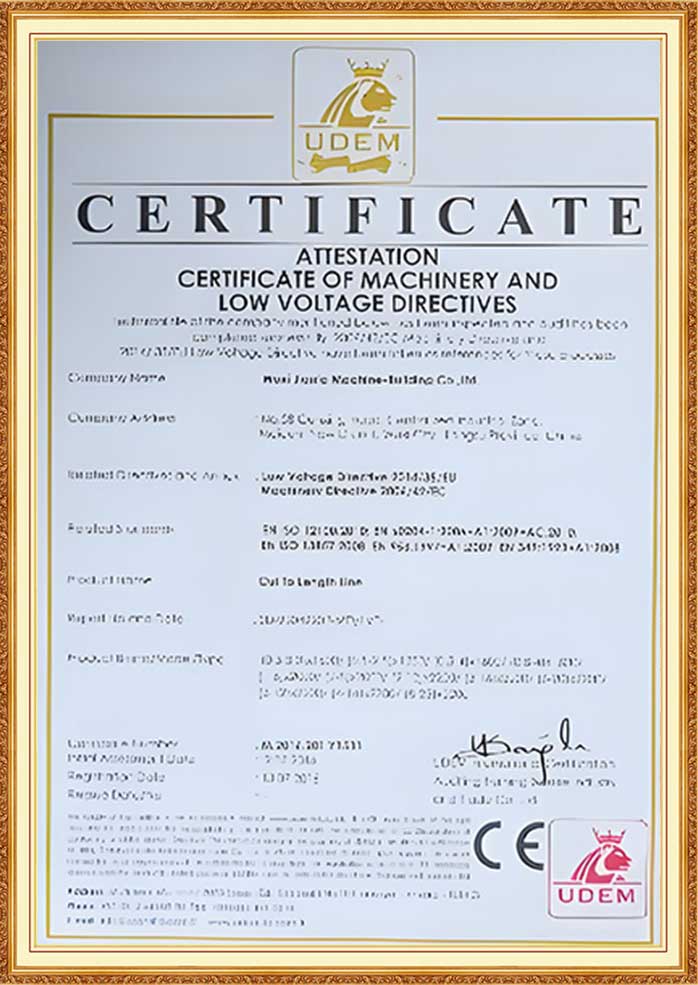
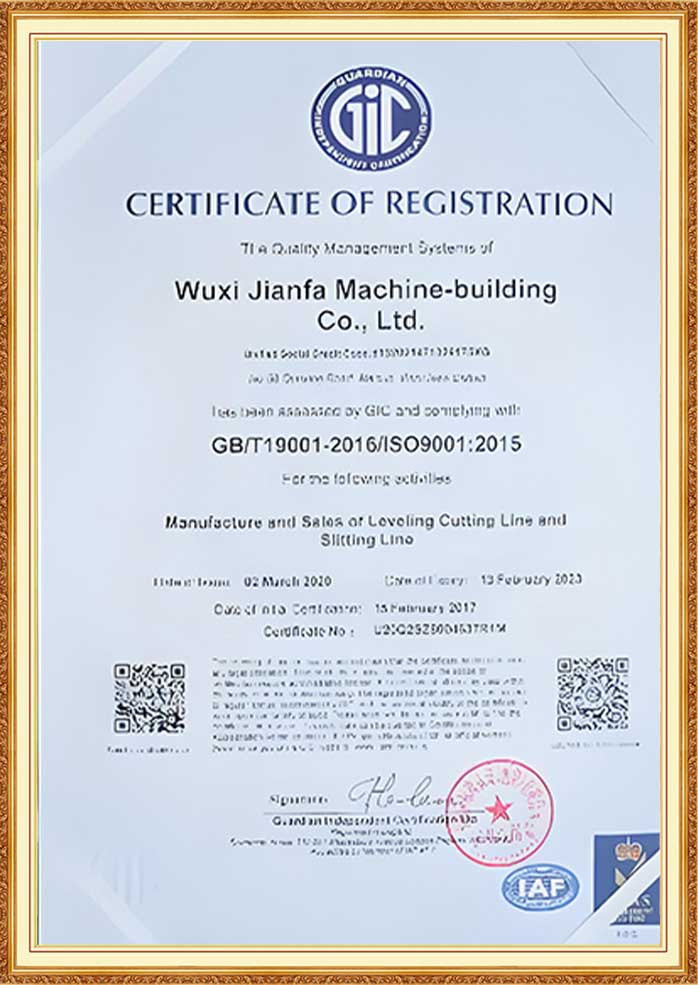
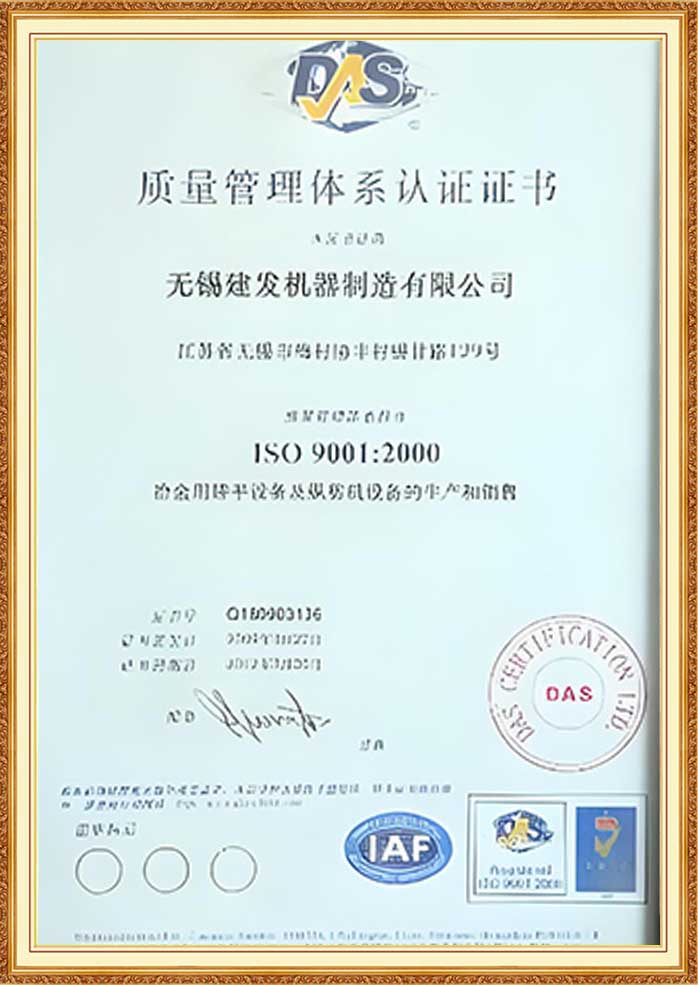
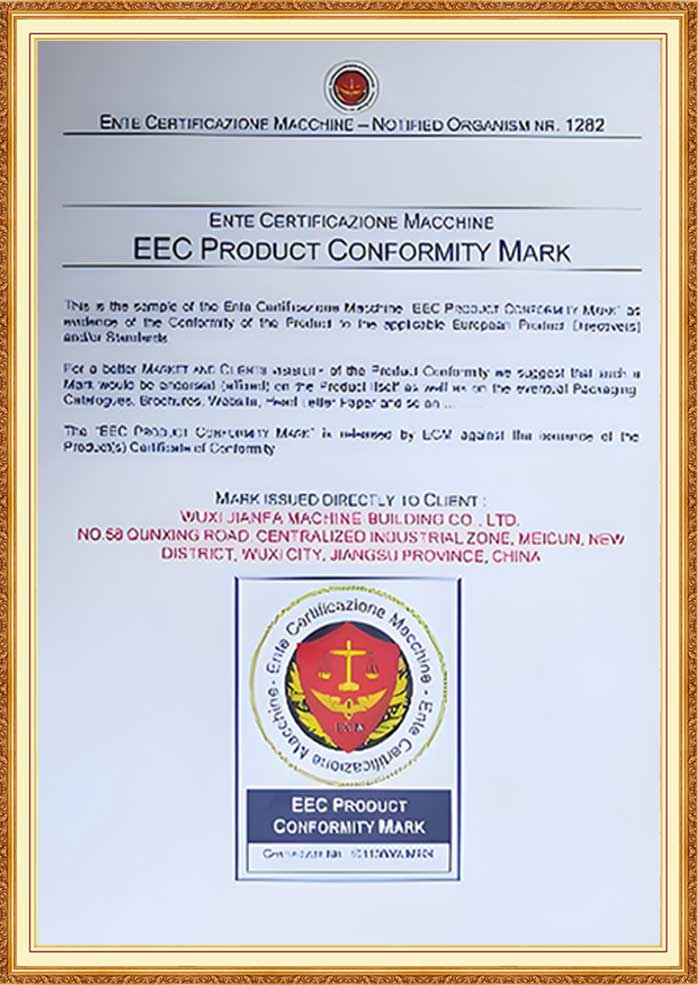
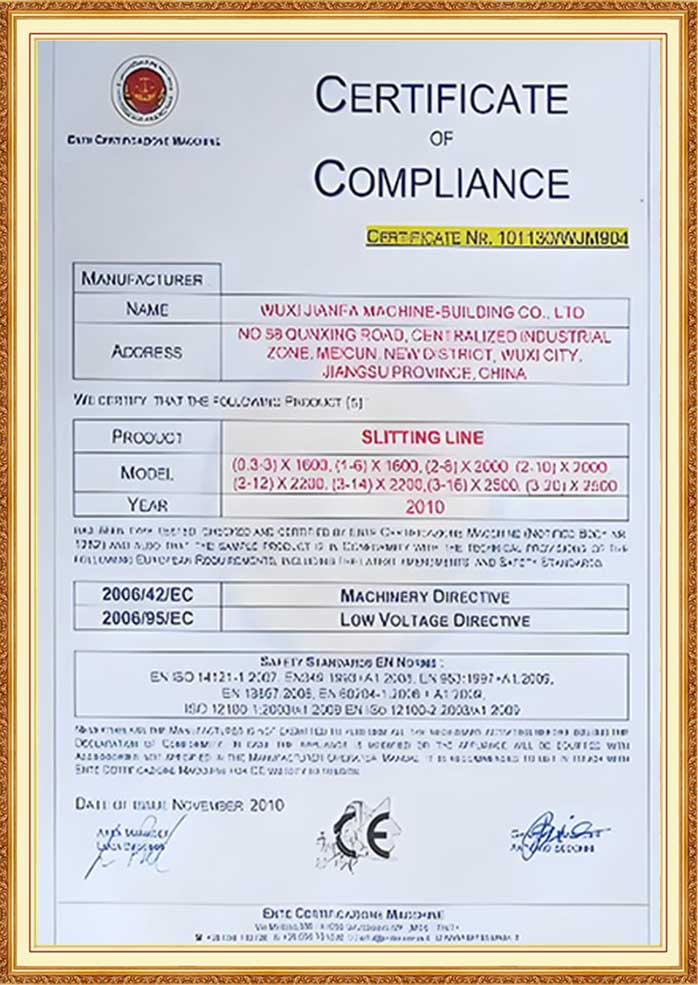
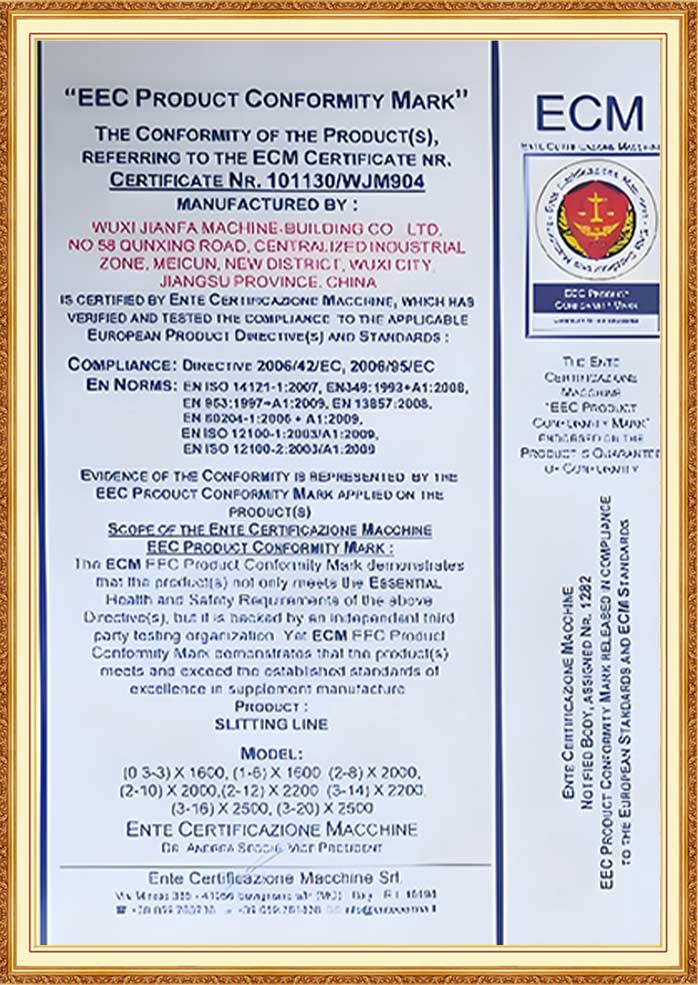
Recognized by China's national metallurgical machinery authorities, Wuxi Jianfa has engineered custom coil processing equipment since the early 1980s. Operating from our modern 40,000 m² heavy-machinery manufacturing base in Meicun, Xinwu District, Wuxi, we uphold complete internal control across mechanical design, fabrication, heat treatment, electrical assembly, and pre-shipment FAT commissioning.
Frequently Asked Engineering & Procurement Questions
Direct answers addressing technical metrics, metallurgy parameters, tolerance standards, and international line commissioning.