
Engineered Coil Processing & Leveling Systems
Explore heavy-duty, factory-direct leveling machines, slitting lines, and moving shear installations built with sub-millimeter precision for steel service centers and high-throughput fabricators worldwide.
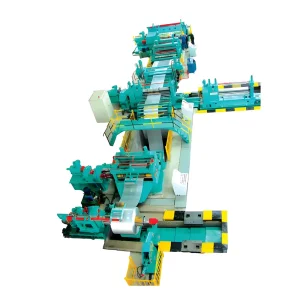
China Manufacturer Of Slitting Line Manufacturers, Supplier
High-torque rotary slitter configured with dynamic tension pads, automatic knife arbor locking, and synchronized scrap winding for precision strip width control.
View Equipment Details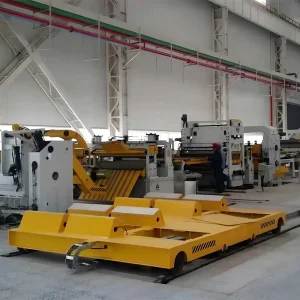
High-Quality Professional Flying Shear Production Line Manufacturer
Continuous dynamic shearing system moving synchronously with high-speed strips to deliver cut-to-length sheets without surface scoring or deceleration marks.
View Equipment Details
CE Certification Manufacturer Of Cut to Length Line Manufacturer, Suppliers
CE-compliant uncoiling, multi-roll precision leveling, encoder-driven length measuring, and automated palletized magnetic stacking line for heavy plate stock.
View Equipment Details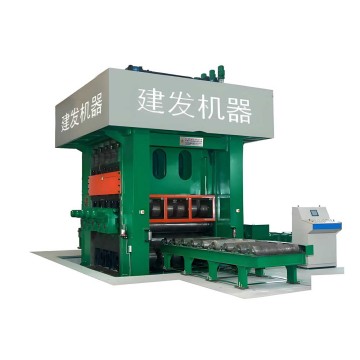
High Strength Leveling Machine
Multi-backup cassette roller leveler calibrated for ultra-high-yield structural steel, overcoming coil set, crossbow, and localized edge buckling.
View Equipment Details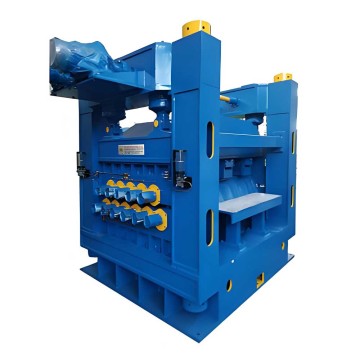
Professional Straightening Machine
Heavy cross-section flattening unit applying controlled plastic deformation to achieve neutral fiber normalization before secondary stamping operations.
View Equipment Details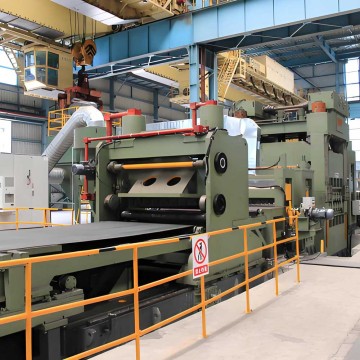
Hot Rolled Plate Moving Shear Line
Engineered for high-volume structural coil conversion, featuring dual-axis rack synchronized carriage drives and automated offload conveyance.
View Equipment Details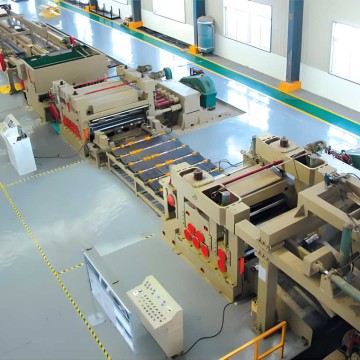
Stainless Steel Uncoiling-Leveling-Shearing Line
Equipped with 6-high intermediate rolls and polyurethane-coated nip rolls designed to prevent chatter marks and galling on architectural stainless surfaces.
View Equipment Details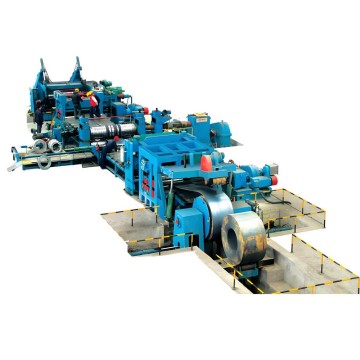
HR Uncoiling-Slitting-Leveling-CTL Line
A unified footprint combining high-speed rotary slitting, cassette leveling, and flying shear cut-off to streamline production within tight plant layouts.
View Equipment DetailsThe Evolution of Precision Metal Leveling in Global Heavy Industry
A macroeconomic and metallurgical perspective on why sheet metal flattening has transitioned from a secondary workshop process into a critical quality determinant across global supply chains.
Over the past decade, the global metal fabrication and coil processing sector has experienced an unprecedented shift driven by higher-strength materials, tighter manufacturing tolerances, and automated downstream processing. Across North America, Western Europe, and the Asia-Pacific region, modern laser cutting centers, robotic press brakes, and automated welding lines require metal sheet inputs with near-zero residual stress. Coiled strip metal inherits significant internal memory during the primary hot and cold rolling cycles at the mill. Defects such as coil set, crossbow, center buckle, and wavy edges prevent consistent robotic processing, causing costly head crashes in fiber laser cutting machines and inconsistent springback in stamping tooling.
Consequently, the role of a premier high performance metal leveler manufacturer and factory is no longer just to build mechanical flattening devices, but to engineer complex elastoplastic deformation systems. By subjecting incoming coiled steel, aluminum, copper, and titanium alloy strip to alternating cyclic bends through precisely staggered work rolls, the leveler forces outer and inner fibers beyond their material yield point, progressively equalizing fiber length across the strip's entire cross-section. The result is a truly neutralized, dead-flat sheet that remains stable through downstream thermal cutting and stamping.
The Physics of Stress Relief: Neutral Axis Normalization
True high-performance roller leveling relies on the Bauschinger effect and deliberate elastoplastic deformation. By achieving 70% to 80% plastic strain in the initial roll clusters, followed by gradually decreasing intermesh toward the exit cluster, the material's internal residual stress curve is smoothed out. Without this controlled plastic-to-elastic transition, residual tensile stresses remain dormant within the blank, only to release unpredictably during subsequent laser, plasma, or CNC punch cutting.
Worldwide, steel service centers (SSCs) are upgrading from archaic 2-high or 4-high straighteners to precision 5-high and 6-high cassette-type leveling machines. In emerging markets across Latin America, the Middle East, and Southeast Asia, explosive infrastructure growth has magnified the requirement for heavy-plate hot-rolled leveling machines capable of handling yield strengths up to 960 MPa and thicknesses exceeding 25 mm with continuous repeatability.
Key Industry Development Trends Shaping Modern Leveling Technology
The convergence of advanced metallurgy, intelligent closed-loop sensors, and energy-efficient drive engineering is redefining the benchmark for industrial roll levelers.
Autonomous Closed-Loop Gap Regulation
Traditional levelers relied entirely on experienced machine operators manually tuning roll intermesh via handwheels or basic hydraulic valves. State-of-the-art systems now employ continuous laser triangulation scanners at both entry and exit points. When residual waviness or camber is detected, hydraulic servo-actuators dynamically adjust intermediate backup roll flights in real-time, maintaining consistent flatness across variable coil properties.
Quick-Change Modular Cassette Systems
Modern steel service centers frequently switch between thin gauge cold-rolled sheets and heavy hot-rolled pickled plates. Advanced machine builders integrate fully automated cassette exchange carriages. An entire roller assembly (work rolls, intermediate rolls, and backup bearings) can be uncoupled and replaced with an alternate roll-diameter cassette in under 10 minutes, maximizing plant throughput and uptime.
High-Yield AHSS Processing Mechanics
The rapid adoption of Advanced High Strength Steels (AHSS) and Ultra High Strength Steels (UHSS)—such as DP980, DP1180, and boron steels—has required complete mechanical redesigns. These grades exhibit extreme elasticity and high work hardening. Levelers now feature heavy pre-stressed portal frames, forged alloy work rolls (e.g., 60CrMoV / DIN 1.2358), and precision induction-hardened surfaces reaching 62-64 HRC.
Localized Application Scenarios: Where Flatness Dictates Performance
Specific manufacturing workflows where residual stress elimination is a mandatory prerequisite for product integrity and process safety.
Automotive Body & Structural
Electric vehicle (EV) battery enclosures and safety-critical chassis members demand zero internal stress. Uneven stress causes springback variations during high-speed multi-stage progressive stamping dies, risking vehicle structural compliance.
Aerospace & Alloy Skin Panels
Aluminum-lithium and titanium airframe skins undergo chemical milling and stretch forming. Residual stress gradients create uncorrectable distortion after surface skin removal, making 6-high cassette leveling vital.
Shipbuilding & Marine Platforms
Heavy marine deck plates (12 mm to 40 mm) cut via underwater plasma arc frequently curl upward if internal roll stress is not thoroughly relieved, leading to weld alignment mismatches in drydock fabrication.
Contract Fiber Laser Cutting
High-power 20kW+ fiber lasers move at speeds up to 100 m/min. If internal sheet stress causes small thermal cutouts to tilt upwards by even 1.5 mm, the cutting head collides with the work piece, causing substantial downtime.
Precision Leveler Class Comparison: Architectural, Structural & Ultra-High Strength
A breakdown of leveling cassette configurations, roll diameter parameters, and operating envelopes engineered by Wuxi Jianfa Machine-Building Co., Ltd.
| Performance Category | Light Precision Leveler (6-High) | Medium Coil Service Leveler (4-High / 5-High) | Heavy Structural Plate Leveler (4-High) | UHSS Armor & High-Yield Leveler |
|---|---|---|---|---|
| Typical Thickness Range | 0.2 mm – 3.0 mm | 1.5 mm – 8.0 mm | 6.0 mm – 25.0 mm | 3.0 mm – 16.0 mm |
| Work Roll Diameter (Ø) | 25 mm – 45 mm | 50 mm – 85 mm | 110 mm – 180 mm | 65 mm – 100 mm (Pre-stressed) |
| Number of Work Rolls | 19 – 23 Rolls | 15 – 19 Rolls | 9 – 13 Rolls | 17 – 21 Rolls |
| Yield Strength Handling | Up to 450 MPa | Up to 650 MPa | Up to 850 MPa | Up to 1,300 – 1,500 MPa |
| Roll Surface Hardness | 60 – 62 HRC (Hard Chrome Plated) | 58 – 60 HRC (Induction Quenched) | 56 – 58 HRC (Alloy Carburized) | 62 – 64 HRC (Vanadium Tool Steel) |
| Backup Flight Adjustment | Servo Motorized Wedges | Multi-Point Hydraulic Cylinder | Heavy Mechanical Eccentric Wedges | Closed-loop Electro-hydraulic Gap Control |
| Flatness Tolerance Post-Level | ≤ 1 – 3 I-Units (±0.15 mm/m) | ≤ 3 – 5 I-Units (±0.3 mm/m) | ≤ 5 – 8 I-Units (±0.8 mm/m) | ≤ 3 – 6 I-Units (±0.4 mm/m) |
Next-Generation Technology Roadmap & Future Outlook
How digital twins, energy-recovery drives, and AI-driven metallurgy will transform coil flattening over the next decade.
Dynamic AI Intermesh Calculations
By feeding coil metallurgical telemetry (tensile strength, yield ratio, coil crown profile, and gauge variation) directly into the leveler PLC via mill cert barcodes, the machine automatically sets entry and exit intermesh values prior to threading, eliminating trial scrap.
Thermal & Deflection Digital Twins
Continuous cyclic bending of thick, high-yield steel generates significant friction heat, causing micro-thermal expansion of center work rolls. Next-generation levelers utilize embedded fiber-optic thermal probes to monitor roll temperature and automatically adjust localized backup roll crowns.
Regenerative Kinetic Braking
In high-speed cut-to-length and flying shear operations, frequent start-stop cycles consume immense energy. Advanced multi-axis DC-bus servo systems now capture deceleration energy from uncoilers and moving shear carriages, returning up to 34% of power back to the plant grid.
Integrated Macro Industry Solutions: From Master Coil to Ready-to-Ship Packs
A holistic manufacturing review detailing how Wuxi Jianfa combines uncoiling, leveling, trimming, edge-conditioning, shearing, and robotic stacking into a unified production cell.
Complete Production Cell Synchronization
A metal leveler never functions in isolation; its performance is linked with coil payoff tension, loop bridge stability, and downstream shearing dynamics. At Wuxi Jianfa Machine-Building Co., Ltd., our engineering philosophy treats the entire processing line as an interdependent mechanical ecosystem.
- Hydraulic Expanding Uncoiler: Built with motorized snubber rolls, peeling tables, and double-ended mandrel supports to handle coil weights up to 35 metric tons without arbor deflection.
- Entry Crop Shearing & De-Cambering: Pre-cropping irregular coil heads protects precision leveler rolls from edge gouging and uneven localized impact shocks.
- Precision Cassette Leveler: Operating as the line's metallurgical core, equipped with multi-roll backing bearings, automated gap calibration, and motorized skew adjustments.
- High-Speed Flying / Moving Shear: Cuts continuously on the fly without stopping the strip, preserving sheet surface quality and boosting line speeds up to 80 meters per minute.
- Robotic Magnetic / Air-Float Stacker: Automatically bundles delicate stainless steel, mirror aluminum, or heavy plate blanks without drop damage or corner impact.
In-House Manufacturing Depth & E-E-A-T Capabilities
Established in the early 1980s in Wuxi, Jiangsu, Wuxi Jianfa has evolved into a national key developing enterprise in China's metallurgical machinery sector. Operating from a fully owned 40,000 m² heavy industrial facility with registered capital exceeding 45 million RMB, our team of more than 200 engineers, precision machinists, and assembly technicians maintains complete ownership over every manufacturing phase.
Unlike commercial trading intermediaries, every critical component—including welded machine frames, cast housings, hardened drive gears, ground work rolls, and hydraulic manifolds—is fabricated, heat-treated, CNC-machined, and quality-tested in our own facility. Our global installation record covers more than 30 nations across Europe, the Americas, Africa, Central Asia, and Oceania, supported by bilingual service engineers and dedicated lifetime spare parts availability.
Frequently Asked Questions: High-Performance Metal Leveling & Coil Lines
In-depth technical answers addressing common engineering inquiries, roll mechanics, flatness calculations, and project configuration guidelines.
How does work roll diameter determine the leveling thickness range?
Work roll diameter is the single most critical parameter in roller leveler design. Smaller rolls (e.g., Ø 25 mm – 35 mm) generate sharp bend radii necessary to exceed the high yield point of thin sheet metal (0.3 – 2.0 mm) into the plastic zone without exceeding work hardening limits. Conversely, thicker plates (10 mm – 25 mm) require substantial roll diameters (Ø 120 mm – 180 mm) and wider pitch spacing to resist massive separating forces and avoid catastrophic roll core fatigue.
What is the difference between 4-High, 5-High, and 6-High roll levelers?
A 4-High leveler consists of top and bottom work rolls backed directly by backup roller flights, ideal for carbon steels and heavy plate where microscopic contact marking is tolerable. A 5-High leveler adds intermediate rolls to one bank to soften roll deflection transitions. A 6-High leveler includes a full set of top and bottom intermediate rolls between the work rolls and backup bearings, preventing backup roll stripe transfer—making it the mandatory standard for automotive surface class-A panels, polished stainless steel, and soft aluminum.
How is strip flatness quantified using I-Units?
The "I-Unit" (Index of Flatness) quantifies the relative length difference (ΔL/L) between adjacent longitudinal ribbons across a metal sheet. One I-Unit represents a proportional length difference of 10-5 (or 1 mm per 100 meters). Standard commercial hot-rolled coil typically arrives from mills at 30 to 60 I-Units. Precision multi-roll leveling machines from Wuxi Jianfa regularly reduce this below 3 to 5 I-Units, producing dead-flat stock essential for fiber laser and plasma cutting.
Why choose a Flying Shear Line over a conventional Stop-Start CTL line?
Conventional Cut to Length (CTL) lines bring the metal strip to a dead stop before executing each hydraulic shear cycle, limiting operating speed to roughly 20–35 m/min and risking feed-roll slip marks on soft or bright-finished coil. A Flying Shear continuously accelerates the shear frame to match strip speed exactly, cutting sheets on the fly at line speeds up to 80–100 m/min, boosting output up to 2.5x while protecting cosmetic strip surfaces.
Can a single leveling machine handle both mild steel and high-yield AHSS?
Yes, provided the machine is engineered with sufficient drive torque, heavy pre-stressed portal housings, and dual-cassette interchangeability. High-yield AHSS generates separating forces up to 3 to 4 times greater than mild carbon steel of identical gauge. If run through a standard leveler, excessive frame springback and backup bearing deflection will result in rapid bearing failure and loss of flatness calibration.
What technical data is required to receive a customized equipment proposal?
To prepare an accurate engineering quote and roll cassette calculation, we require: (1) Material types and range of yield/tensile strength (MPa); (2) Minimum and maximum strip thickness and coil width; (3) Maximum coil weight, OD, and ID; (4) Output targets (target line speed, cut length ranges, stack dimensions); and (5) Local factory power ratings (e.g., 380V/480V 50/60Hz).
Proven Heavy Industrial Coil Machinery
Review our core product lines operating globally in steel service centers, automotive stamping facilities, and heavy structural engineering plants.
China Manufacturer Of Slitting Line Manufacturers, Supplier
High-torque rotary slitter configured with dynamic tension pads, automatic knife arbor locking, and synchronized scrap winding for precision strip width control.
View Equipment Details
High-Quality Professional Flying Shear Production Line Manufacturer
Continuous dynamic shearing system moving synchronously with high-speed strips to deliver cut-to-length sheets without surface scoring or deceleration marks.
View Equipment Details
CE Certification Manufacturer Of Cut to Length Line Manufacturer, Suppliers
CE-compliant uncoiling, multi-roll precision leveling, encoder-driven length measuring, and automated palletized magnetic stacking line for heavy plate stock.
View Equipment Details
High Strength Leveling Machine
Multi-backup cassette roller leveler calibrated for ultra-high-yield structural steel, overcoming coil set, crossbow, and localized edge buckling.
View Equipment Details
Professional Straightening Machine
Heavy cross-section flattening unit applying controlled plastic deformation to achieve neutral fiber normalization before secondary stamping operations.
View Equipment Details
Hot Rolled Plate Moving Shear Line
Engineered for high-volume structural coil conversion, featuring dual-axis rack synchronized carriage drives and automated offload conveyance.
View Equipment Details
Stainless Steel Uncoiling-Leveling-Shearing Line
Equipped with 6-high intermediate rolls and polyurethane-coated nip rolls designed to prevent chatter marks and galling on architectural stainless surfaces.
View Equipment Details
HR Uncoiling-Slitting-Leveling-CTL Line
A unified footprint combining high-speed rotary slitting, cassette leveling, and flying shear cut-off to streamline production within tight plant layouts.
View Equipment DetailsConsult Directly with Wuxi Jianfa's Senior Metallurgical Engineers
Submit your coil processing specifications (alloy grade, yield strength, coil dimensions, target line speed, and surface class requirements). Our engineering group will provide a comprehensive equipment proposal, roller layout simulation, and plant layout within 24 business hours.