
Featured Industrial Coil Processing Machinery
Factory-direct precision equipment engineered for heavy-gauge carbon steel, high-strength structural alloys, cold-rolled sheets, and sensitive non-ferrous metals.
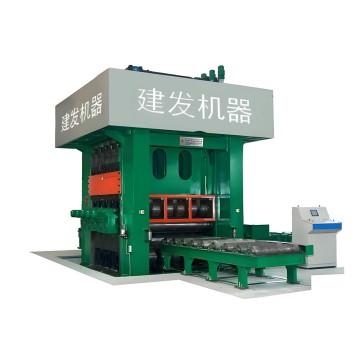
High Strength Leveling Machine
Multi-roll cassette engineering designed to eliminate internal residual stresses and edge waves in yield-heavy metallurgical plates.
View Specification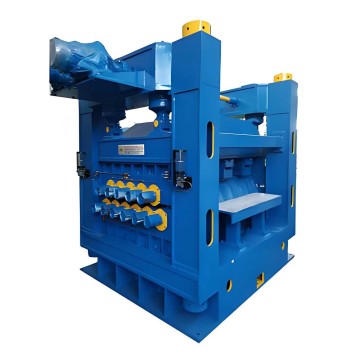
Professional Straightening Machine
High-rigidity roll design for continuous flat strip correction ahead of precision cutting, stamping, and profiling mills.
View Specification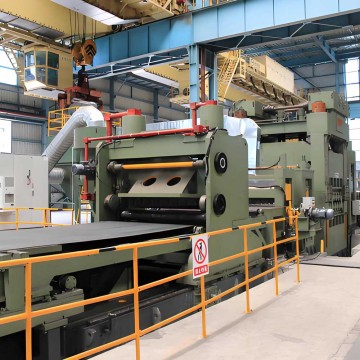
Hot Rolled Plate Moving Shear Line
Servo-synchronized flying kinetic carriage executing non-stop continuous high-output shearing without surface scuffing.
View Specification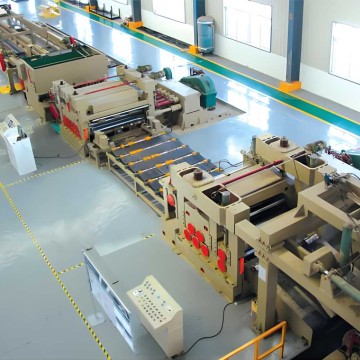
Stainless Steel CTL & Stacking Line
Non-marking polyurethane roll contact surfaces tailored for 2B, BA, and hairline surface preservation with automated magnetic stacking.
View Specification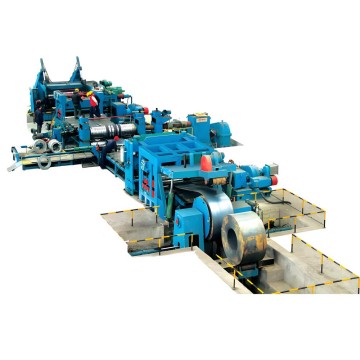
Combined Slitting & CTL Line
Dual-process integrated footprint enabling longitudinal slitting and cross-cutting within an automated unified control loop.
View Specification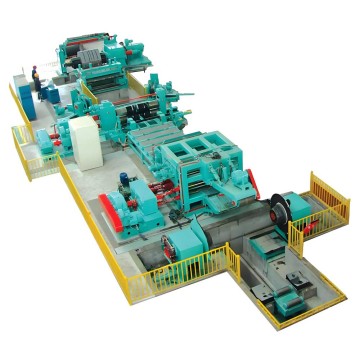
Hot Rolled Slitting & Recoiling Line
Heavy-duty rotary slitting arbors engineered to handle high-tensile hot rolled steel coils up to 25mm thickness with minimal burr.
View Specification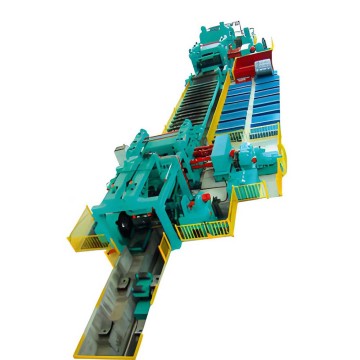
HR Heavy Uncoiling-Slitting Line
High-uptime continuous slit-strip delivery system feeding high-frequency welded (ERW) tube mills and roll-forming complexes.
View Specification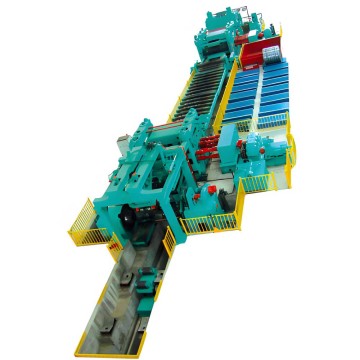
HR Sheet Leveling-Shearing Line
Precision hydraulic cross-cut guillotine synchronized with high-load roller levelers for maximum sheet flatness and squareness.
View SpecificationCertified Production Systems
Key manufacturing certifications and specialized international line equipment directly delivered from our engineering workshops:
Global Macro Status: The Industrial Paradigm of Modern Metal Slitting
Metal slitting lines serve as the critical gateway between bulk steel production and downstream precision manufacturing. From automotive stamping plants to transformer core winders, precision slitting dictates modern production yields.
High-Strength Steel (AHSS) Shift
Global steel processing has experienced an inflection point driven by Advanced High-Strength Steels (AHSS) and Ultra-High-Strength Steels (UHSS) exceeding 1200 MPa yield strengths. Conventional slitting machinery suffers arbor deflection and high knife wear when slitting these materials. Tier-1 factories now demand dynamic arbor stabilization and high-rigidity housings that resist micro-deflection.
E-Mobility & Silicon Steel
The global transition toward electric vehicles (EVs) has triggered unprecedented demand for Non-Grain-Oriented (NGOES) and Grain-Oriented (GOES) Electrical Steel. Processing these brittle, ultra-thin (0.20mm - 0.35mm) magnetic alloys requires zero-clearance knife setups, edge burr tolerances under 10 microns, and specialized looping pit configurations to eliminate strain induction.
Non-Ferrous & Aluminum Expansion
Lightweight vehicle chassis design has expanded aluminum coil demand (5xxx and 6xxx series alloys). Slitting aluminum requires surface protection systems, belt-bridle drag tensioning units that replace traditional pinch rolls, and specialized scrap winders designed to prevent edge galling and surface pickup.
Engineering Anatomy of a World-Class Metal Slitter
Inside a premier coil slitting facility like Wuxi Jianfa, engineering precision is governed by micron-level mechanical tolerances, finite element-verified housings, and closed-loop hydraulic tension controls.
Dual-Arbor Head Rigidity
Forged alloy tool-steel shafts (42CrMo/40Cr) heat-treated and ground to TIR (Total Indicated Runout) < 0.003mm. Eliminates axial float and knife deflection under 50-ton shearing stresses.
CNC Turret Quick-Change
Double or triple-head turnstile systems allowing operators to pre-tool knife sets on standby arbors while the active head runs. Slashes changeover times from 90 minutes to under 8 minutes.
Dynamic Differential Recoil
Differential tensioning shafts and hydraulic expanding drums compensate for coil-thickness crown variations, preventing loose center strands and dangerous edge over-stretching.
Smart Closed-Loop PLC
Siemens S7-1500 / Allen-Bradley PLC architectures integrated with dynamic servo tensioners, digital laser edge positioning systems (EPC), and automated recipe management.
| Line Parameter | Light-Gauge Precision Line | Medium Commercial Line | Heavy-Gauge Industrial Line |
|---|---|---|---|
| Thickness Capability | 0.15 mm – 2.0 mm | 1.5 mm – 6.0 mm | 6.0 mm – 25.0 mm |
| Coil Width Handling | 600 mm – 1,300 mm | 1,000 mm – 1,850 mm | 1,200 mm – 2,200 mm |
| Operating Line Speed | Up to 300 m/min | Up to 180 m/min | 40 – 80 m/min |
| Typical Strip Burr Ratio | < 3% of thickness | < 5% of thickness | < 7% of thickness |
| Target Materials | Silicon Steel, Copper, Al 5xxx, 2B SS | Cold Rolled, GI, PPGI, Automotive AHSS | Hot Rolled Carbon, Heavy Structural, API Pipe |
Technological Roadmap & Future Evolutionary Vectors
The transition to autonomous coil processing is accelerating. Leading factories are implementing digital closed-loop architectures to maximize yields, lower power consumption, and eliminate scrap rates.
In-Line Telemetric Tooling Calibration
Manual blade gap setup with feeler gauges is being replaced by robotic automated arbor shimming and optical knife clearance verification. Real-time vision systems inspect burr development during runs, automatically notifying the PLC if thermal expansion alters knife clearances.
Energy-Regenerative Drive Systems
Uncoiling and braking generate substantial kinetic forces. Modern DC/AC bus drives from leading manufacturers route uncoiler braking energy directly back into the recoiler motor, lowering total line energy consumption by 28% to 35% across multi-shift operations.
Integrated Autonomous Strapping & Packaging
High-speed slitting lines often face bottlenecks at the recoiling exit. Factory engineering now focuses on integrated turnstile downenders, automatic circumferential and radial strapping heads, visual robotic sorting, and palletizing lines that handle multiple coils per hour without human intervention.
Localized Application Scenarios & Downstream Industries
Different manufacturing sectors impose wildly distinct metallurgical demands on metal slitting machinery. Selecting the right line configuration depends directly on finished product specifications.
Automotive Press Shops
Material: AHSS (DP600-DP1180), Al 6000 series.
Demands: Zero surface scratches, clean shearing without micro-fissures along sheared edges to prevent edge split failures during deep-drawing press operations.
Power Distribution Transformers
Material: Silicon Steel (CRGO/CRNGO).
Demands: Ultra-precise width tolerances (±0.02mm), minimal camber (<0.2mm/m), and burr heights under 8μm to reduce core loss and interlaminar short-circuiting in high-voltage grids.
ERW Tube & Hollow Section Mills
Material: Heavy hot-rolled steel strip up to 16mm.
Demands: Continuous, dependable delivery without strip camber (banana effect) that could cause weld misalignment or seam failure during continuous high-frequency induction welding.
How to Evaluate & Select the Best Slitting Machine Factory
Navigating global machinery builders requires looking beyond marketing claims. An authentic factory demonstrates transparent engineering capabilities, deep in-house machining infrastructure, and strict quality verification protocols.
1. Direct Factory vs. Trading Intermediary
Verify that your supplier owns its machine shops, CNC gantry mills, and horizontal boring centers. Wuxi Jianfa operates out of its own 40,000 m² facility with 45 million RMB in registered capital, ensuring direct mechanical engineering accountability without trading markups or communication delays.
2. In-House Machining & Stress Relieving
Slitter arbors and base frames must undergo furnace thermal stress-relief annealing followed by precision five-face machining. If welded structures are not thermally normalized, residual manufacturing stresses will distort over time, ruining edge clearances and arbor alignment.
3. Pre-Delivery Full Load Factory Testing
Insist on complete mechanical, electrical, and hydraulic dry-run and live-coil trials at the manufacturer's floor before containerization. Wuxi Jianfa encourages international buyers and third-party inspection firms (SGS, TÜV, Bureau Veritas) to inspect production lines under operational power prior to export packing.
Engineering & Procurement FAQ (Q&A)
Common technical considerations evaluated by plant managers, process engineers, and procurement directors when investing in heavy-duty coil slitting machinery.
What is the maximum allowable arbor deflection on high-precision slitting lines?
For precision automotive and silicon steel slitting, arbor deflection across the full bearing span must be controlled under 0.015 mm under full shearing loads. Wuxi Jianfa achieves this through oversized arbor diameters, forged 42CrMo alloy shafts, and intermediate support bearings on wide-width lines.
How do you compensate for coil crown during the recoiling process?
Master coils are naturally thicker in the center than at the edges. Slitting produces strips that recoil at slightly differing outer diameters. We employ deep looping pits between the slitter and tension unit combined with differential tension pads, belt bridles, and expanding spacers to ensure uniform recoil tightness across all strips without scratching.
Can a single slitting line process both stainless steel and carbon steel?
Yes, provided the line is engineered with dual-mode tensioning and non-marking contact surfaces. We incorporate chrome-plated or polyurethane-jacketed rolls, paper interleave winders for surface protection, and variable-speed drives capable of handling both high-tensile stainless alloys and ductile carbon steels.
What commissioning and operator training protocols are included for export shipments?
We deploy senior mechanical and electrical engineers directly to your plant for foundation positioning, leveling, wiring integration, dry-runs, and live coil commissioning. Our teams provide extensive operator training covering PLC recipe creation, knife setup mathematics, hydraulic maintenance, and emergency protocols.
Explore Complete Coil Processing Capabilities
Discover our comprehensive range of leveling, shearing, slitting, and handling machines engineered to deliver continuous uptime and maximum operational ROI.
High Strength Leveling Machine
Precision leveling solutions engineered for high-yield carbon steel plate, removing coil memory and longitudinal curvature.
View Product Details
Professional Straightening Machine
Heavy-duty roll configuration delivering uniform, stress-relieved sheet outputs for laser cutting and stamping.
View Product Details
Hot Rolled Plate Moving Shear Line
Dynamic continuous flying shear for high-volume service centers requiring non-stop plate processing.
View Product Details
Stainless Steel Cut to Length Line
Scratch-free uncoiling and precision stacking built specifically for sensitive polished stainless steel coils.
View Product Details
Combined Slitting + CTL Production Line
Compact dual-function configuration providing both longitudinal strip recoiling and cross-cut sheet stacking.
View Product Details
Hot Rolled Slitting Production Line
Heavy-gauge rotary knives engineered for structural carbon steel, featuring high-torque recoiling drive shafts.
View Product Details
HR Uncoiling-Slitting-Recoiling Line
Reliable strip supply systems purpose-built for continuous feed into structural tube mills and profiling machines.
View Product Details
HR Leveling-Shearing-Stacking Line
Turnkey high-capacity uncoiling, multi-roller leveling, guillotine shearing, and pneumatic automated stacking line.
View Product Details