
Primary Coil Slitting & Cut-to-Length Product Solutions
Direct factory machinery configurations delivering high dynamic stiffness, micro-level slit edge tolerances, and integrated scrap processing.
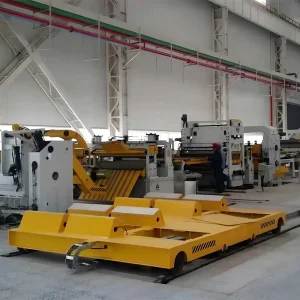
Continuous dynamic shearing line engineered for high-speed transverse cutting without stopping the master steel strip.
View Specifications
Complete uncoiling, multi-roll precision leveling, encoder length-measuring, and pneumatic stacking unit.
View Specifications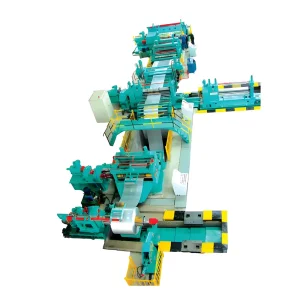
Heavy-duty rotary arbor slitter designed for narrow tolerances, minimal burr formation, and uniform coil recoiling.
View Specifications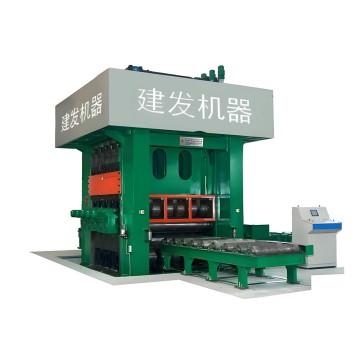
Engineered for AHSS, hot-rolled structural steel, and high-yield alloys to eradicate residual coil stresses and center buckles.
View Specifications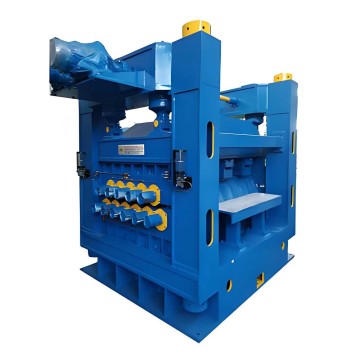
Specialized multi-roll geometry ensuring strict flatness tolerances prior to high-speed roll forming or stamping.
View Specifications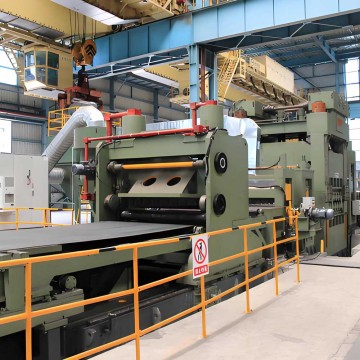
Synchronous hydraulic traveling cutting mechanism delivering high volume output for heavy-duty metal service centers.
View Specifications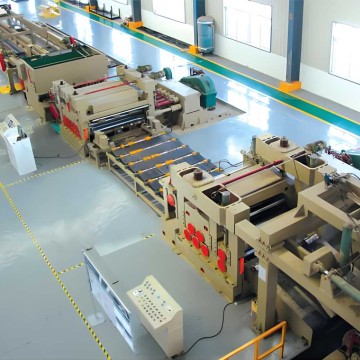
Non-marking polyurethane rolls, anti-scratch guiding tables, and automated paper interleaving capabilities.
View Specifications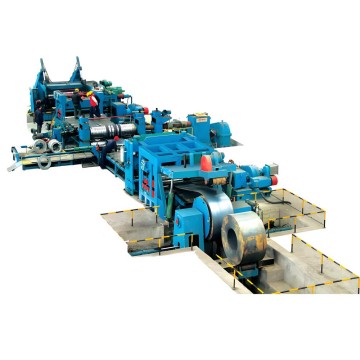
Hybrid design incorporating rotary shearing and transversal cutting into a unified footprint to reduce material handling.
View SpecificationsThe Mechanics of High-Precision Strip Slitting
An engineering analysis of arbor deflection, shearing fracture geometry, knife clearance, and recoil tension dynamics in modern industrial coil slitting systems.
Rotary Shearing Physics & Fracture Ratio
Precision rotary slitting does not rely on simple mechanical pressing; it is a controlled two-stage fracture process. As the rotating circular male and female knives penetrate the steel coil, plastic penetration accounts for the initial 20% to 35% of thickness, followed immediately by natural shear fracture. Balancing blade overlap (depth) and horizontal blade clearance prevents severe secondary burrs, excessive work-hardening on the strip edge, and premature edge spalling.
Arbor Rigidity & Zero-Backlash Driving
The mechanical foundation of a first-tier slitting head rests upon arbor shaft rigidity. Modern slitting heads employ 42CrMo or forged alloy shafts treated with multi-stage quenching, cryogenic stabilization, and micron-grade precision grinding. Dual heavy-duty spherical or tapered roller bearings cancel axial play, ensuring that total radial and axial arbor runouts do not exceed 0.005 mm under peak line speed and maximum blade density.
Differential Tensioning & Recoil Density
A major challenge in multi-strand strip slitting is crown variation: the center of master coils is naturally thicker than the outer edges. Without dynamic tension management, inner strips coil tightly while outer strips droop in the pit. Modern systems integrate tension pads, pneumatic belt bridles, and differential drag roll stands to generate uniform back-tension, resulting in tight, straight-walled coils ready for automated transport.
Strategic Advantages of Sourcing Strip Slitting Lines from China
Why international metal processors, service centers, and automotive Tier-1 suppliers increasingly rely on Chinese manufacturing excellence for heavy metallurgical machinery.
Yangtze River Delta Metallurgy Cluster
Located in Wuxi, Jiangsu, manufacturers operate at the center of the world's most concentrated heavy mechanical supply chain. From precision casting foundries and induction hardening plants to world-class CNC gantry machining centers, all critical components are manufactured within a 50-kilometer radius, drastically reducing manufacturing cycle times and eliminating sub-tier supply disruptions.
Superior Capital Efficiency & ROI
Chinese mechanical engineering delivers an unmatched ratio of performance to capital investment. Buyers gain access to high-precision equipment constructed with internationally recognized components—such as Siemens PLCs, Schneider switchgear, Rexroth hydraulics, and NSK bearings—at an investment baseline 30% to 50% lower than Western European alternatives, substantially compressing payback horizons.
Agile Bespoke Engineering
Unlike rigid Western production models offering only standard catalogue models, established Chinese factories such as Wuxi Jianfa customize lines around exact customer constraints. Every variable—including space-constrained plant layouts, specialized coil weights, exotic alloys, dual-speed shearing systems, and customized electrical codes—is directly integrated into 3D CAD/CAM models within weeks.
Trends Transforming the Strip Slitting Machine Industry
Technological innovations shaping modern coil processing operations worldwide, from robotic tooling setups to AI-powered diagnostics.
Automated Tooling Turnstiles
Manual blade and spacer setup can consume 45 to 90 minutes. Next-generation systems integrate dual-head rotary turnstiles or robotic knife setups that pre-position the upcoming tooling layout offline while the line operates, reducing downtime between coils to under 5 minutes.
High-Tensile Processing (AHSS)
Automotive lightweighting demands machines capable of slitting Dual-Phase (DP) and Martensitic steels up to 1350 MPa. These alloys require reinforced structural housings, anti-deflection hydraulic locking collars, and tungsten carbide circular rotary cutters.
IoT & Predictive Maintenance
Industrial 4.0 telemetry embedded across main arbor bearings and gearboxes monitors vibration harmonics and thermal gradients in real time. Cloud algorithms alert technicians to bearing fatigue or blade dulling before scrap coils occur.
Energy Regeneration Drives
During continuous high-speed unwinding, uncoiler brakes generate vast kinetic resistance. Modern lines utilize regenerative DC-bus drives, converting mechanical braking forces back into usable electrical grid power, saving up to 28% in plant electricity.
Specialized Applications & Downstream Industries
Tailored engineering packages designed to meet the strict quality thresholds of major downstream manufacturing verticals.
Automotive Body & EV Battery Casing
Automotive press lines require strip edges free of micro-cracks and work-hardened burrs that could compromise progressive stamping dies. For EV battery manufacturing, specialized lines slit ultra-thin copper and aluminum foils down to 0.1 mm with absolute clean-room tension control and dust extraction hoods.
Grain-Oriented Silicon Electrical Steel
Transformers and high-efficiency electric motors rely on Grain-Oriented (CRGO) and Non-Oriented (CRNO) electrical steel. Processing these brittle materials demands specialized carbide rotary knives, micro-lapping spacers, and zero-impact recoil to preserve core magnetic flux properties.
Tube & Pipe Mill Continuous Feed
High-frequency welded (ERW) and spiral tube manufacturing plants require slit strip coils with precise camber limits and perfectly squared edges. Our heavy-duty slitting lines run in tandem with strip accumulators, providing non-stop strip feeding for continuous structural hollow section manufacturing.
System Architecture: Selecting the Optimal Processing Line
A comparative evaluation of coil processing workflows to assist plant managers and system engineers in selecting the proper operational equipment.
| System Architecture | Material Range | Thickness / Width | Operational Dynamics | Primary Output |
|---|---|---|---|---|
| High-Speed Rotary Slitting Line | Cold-rolled, Hot-rolled, Galvanized, Stainless, Al | 0.2 – 6.0 mm / up to 2000 mm | Continuous line velocity up to 250 m/min; dual looping pits | Multiple precision-slit strips rewound on common recoiler |
| Heavy-Gauge Plate Slitting Line | Hot-rolled Carbon Steel, Ship-building Plate, Q235/Q355 | 4.0 – 16.0 mm / up to 2200 mm | High-torque cutting up to 80 m/min; heavy hydraulic peelers | Narrow heavy strips for ERW pipe mills and structural beams |
| Precision Cut-to-Length (CTL) Line | Cold-rolled, Silicon Steel, Prepainted, Stainless | 0.3 – 4.0 mm / up to 1800 mm | Stop-and-go hydraulic or mechanical shear; ±0.2mm accuracy | Dead-flat rectangular sheets cleanly stacked on pallets |
| Continuous Flying Shear Line | Hot-rolled sheet, Structural Steel, Decking Coil | 1.5 – 12.0 mm / up to 2000 mm | Continuous synchronized traveling shear; high sheet yield | High-volume flat panels for construction and container builds |
| Combined Slitting & CTL Hybrid Line | General fabrication steels, Service Center inventory | 0.5 – 6.0 mm / up to 1600 mm | Interchangeable slitter head and guillotine shear in single line | Flexible production: either slit coils or leveled flat plates |
Global Enterprise Procurement & Factory Audit Checklist
Crucial engineering inspection points that procurement teams must verify before awarding turnkey slitting line contracts.
1. Arbor Runout & Machining Quality
Verify that the factory performs dynamic balancing and laser micrometer inspection on arbors. Demand documentation verifying arbor runouts under 0.005 mm and check that the slitter housing features stress-relieved welded frames or solid cast-iron housings to prevent deflection under sustained multi-blade shearing loads.
2. Drive Synchronization & PLC Architecture
Inspect the drive architecture. A high-performance line requires fully synchronized AC vector drives across the uncoiler, slitter head, tension bridle, and recoiler. Ensure the control software features closed-loop torque control, automatic loop pit depth monitoring, and standard Profinet or Ethernet/IP bus communication.
3. CE Safety Compliance & Factory Acceptance (FAT)
Ensure adherence to EN ISO 13849-1 functional safety requirements, including dual-channel safety relays, physical perimeter interlocks, laser safety curtains around pit zones, and uncoiler snubber roll lockouts. Never accept delivery without an on-site full-speed FAT using your representative coil materials.
Wuxi Jianfa Machine-Building Co., Ltd.
National key developing enterprise in China's metallurgical machinery sector, delivering heavy-duty coil processing machinery since the early 1980s.
40,000 m² Integrated Manufacturing Base
Our manufacturing footprint in Xinwu District, Wuxi, houses complete in-house capabilities: heavy fabrication, stress-relief annealing furnaces, CNC floor-type boring machines, precision cylindrical grinders, and clean assembly bays. We retain total control over mechanical and structural quality without reliance on external contract machine shops.
200+ Specialists & 45M RMB Capital
Backed by 45 million RMB in registered capital and a dedicated technical team of over 200 skilled engineers and assembly technicians, Jianfa possesses the financial solvency and technical bandwidth required to execute complex, multi-million-dollar turnkey processing projects with extended cycle times.
Export Deployments in 30+ Nations
From North America to Southeast Asia, Europe, South America, and the Middle East, Jianfa coil processing lines operate under demanding production environments. Our experienced field engineers handle overseas installation, electrical commissioning, and local operator training to guarantee immediate operational ramp-up.
Specialized Slitting, Shearing & Leveling Lines
Explore our full line-up of custom-engineered slitting systems, heavy plate straighteners, and rotary shearing solutions.
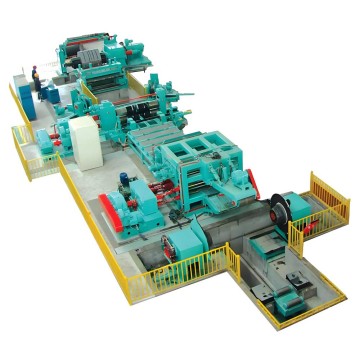
Built to slice thick hot-rolled carbon coil into clean, uniform strips with integrated scrap balling systems.
View Specifications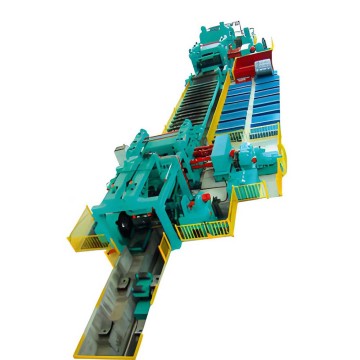
Ruggedized configuration engineered for non-stop feeding of downstream tube mills and roll-forming machines.
View Specifications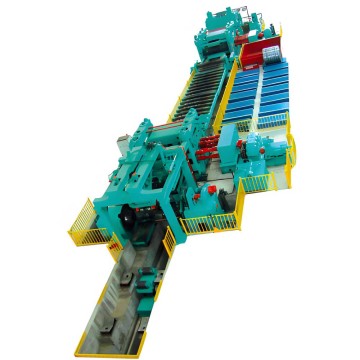
Processes heavy coils into flat sheets with automated drop stacking and magnetic sheet separation.
View Specifications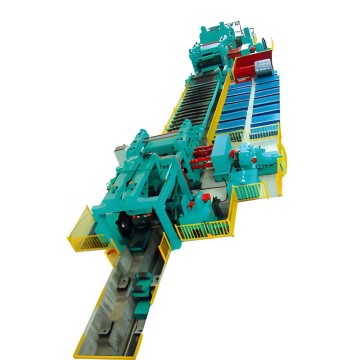
Featuring dual quick-change slitter heads, pneumatic scrap winders, and closed-loop hydraulic recoiler tensioning.
View Specifications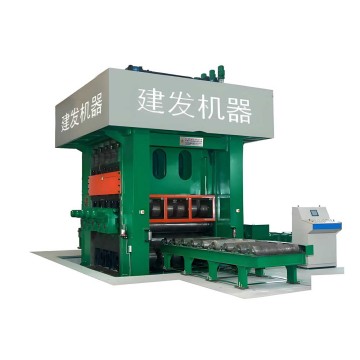
Corrects coil curvature, crossbow, and wave defects across high-tensile structural alloy steels.
View Specifications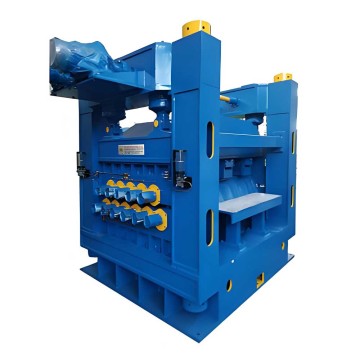
Independent roll adjustments providing ultra-fine leveling control for downstream stamping lines.
View Specifications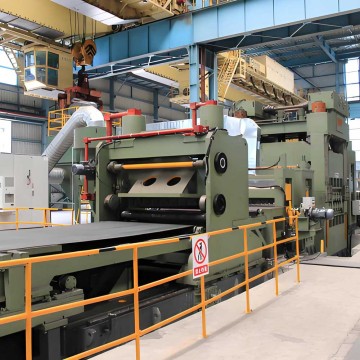
Synchronous rack-and-pinion servomotor drive system ensuring clean cuts at high operational speeds.
View Specifications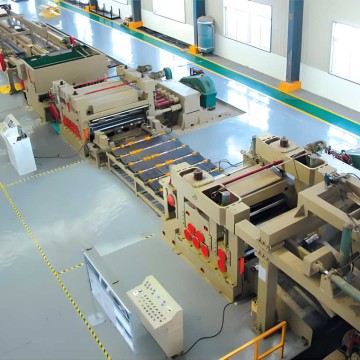
Fitted with non-marking rolls and automatic protective film laminators for mirror and brushed metals.
View SpecificationsProven Engineering Deployed Across Six Continents
From service centers in North America to steel mills in Southeast Asia, Jianfa slitting lines provide continuous processing reliability across all major industrial markets.

Americas
Operational heavy plate slitting lines and automated cut-to-length lines running continuously in the United States, Mexico, Brazil, Argentina, Guatemala, and Peru.
Europe & Central Asia
High-precision lines serving automotive and structural fabricators across Russia, Türkiye, Kazakhstan, Kyrgyzstan, Albania, Bulgaria, and Greece.
Middle East, Africa & APAC
High-capacity coil processing solutions actively operating in the UAE, Egypt, South Africa, Nigeria, India, Vietnam, Malaysia, Indonesia, and Australia.
Frequently Asked Technical Questions
Direct answers to core mechanical, metallurgical, and operational questions encountered when planning strip slitting projects.
Request a Custom Slitting Line Engineering Proposal
Speak directly with our senior application engineers. Share your coil material grades, yield strengths, thickness range, width parameters, and target line velocity to receive a 3D layout, functional specification, and investment quotation within 24 hours.