
Featured Sheet Metal Leveling & Coil Processing Systems
Engineered for extreme yield strengths, zero residual tension, and high-speed synchronized line integration.
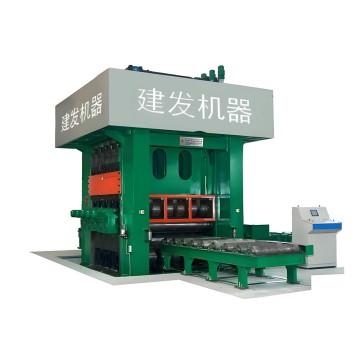
High Strength Leveling Machine
Engineered with backed-up multi-roll cassettes to eliminate coil set, crossbow, and severe edge waves on high-yield structural steel.
View Specifications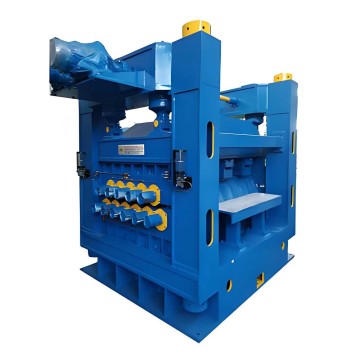
Professional Straightening Machine
Delivers micro-tolerance flatness and comprehensive residual stress neutralization for downstream laser cutting and automated stamping.
View Specifications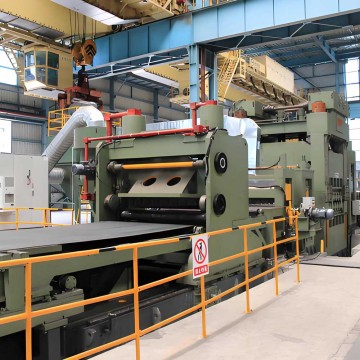
Hot Rolled Plate Moving Shear Line
Continuous dynamic shearing synchronizes cut velocities with strip transit, achieving continuous high-tonnage sheet throughput.
View Specifications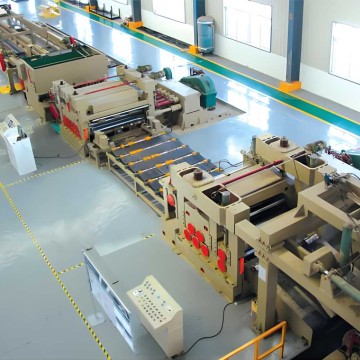
Stainless Steel Coil Uncoiling-Leveling-Shearing Line
Non-marking 6-high roll configurations engineered specifically for bright annealed, mirror-finish, and 2B stainless coil protection.
View Specifications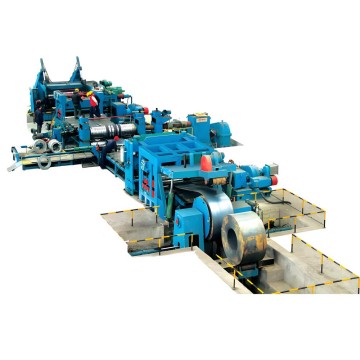
HR Uncoiling-Slitting-Leveling-CTL Line
Unified footprint consolidating precision slitting, intermediate roller leveling, and flying cutoff in a high-efficiency closed cycle.
View Specifications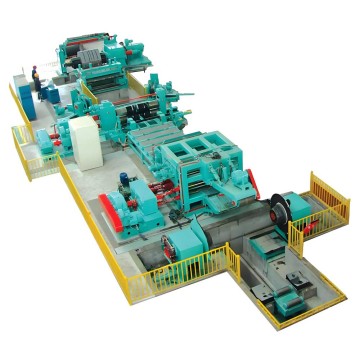
Hot Rolled Uncoiling Slitting & Recoiling Line
High-torque rotary arbor technology providing burr-free strip separation, precision hydraulic tensioning, and compact recoil winding.
View Specifications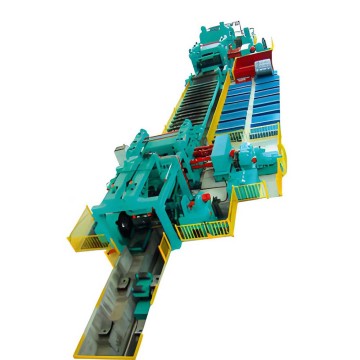
HR Heavy Gauge Slitting-Recoiling Line
Heavy-duty structural framework built to slit structural carbon coils up to 20mm thickness destined for roll-forming and welded tube mills.
View Specifications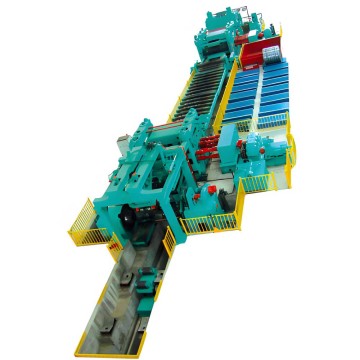
HR Uncoiling-Leveling-Shearing-Stacking Line
High-capacity decoiling with hydraulic wedge leveler gap adjustment, rapid optical length sensing, and magnetic drop stacking.
View SpecificationsThe Global Commercial & Industrial Paradigm of Sheet Metal Leveling
Modern metal processing demands absolute flatness. As high-strength steel (AHSS), titanium alloys, and pre-painted aluminum dominate production lines, conventional mechanical straightening can no longer keep pace.
Elimination of Internal Residual Stresses
Coils produced via hot rolling or cold reduction retain non-uniform internal tension. When fabricators process sheets using 20kW+ fiber laser cutters or progressive stamping dies, uneven residual stresses unleash severe thermal and mechanical warpage. Precision multi-roll levelers plastically deform outer fibers across alternating bends, homogenizing cross-sectional stresses down to negligible tolerances.
Automotive Lightweighting & High-Yield Alloys
Vehicle structural components increasingly deploy Advanced High-Strength Steels (AHSS) such as DP980, CP1180, and press-hardened boron steels. These alloys possess high yield-to-tensile ratios, requiring extreme intermeshing pressures, rigid machine frames, and backup roll crowning systems to overcome massive elastic springback without surface fracturing.
Heavy Machinery, Cranes & Structural Yellow Goods
Telescopic boom fabricators, yellow-goods manufacturers, and shipbuilders process plates ranging from 8mm to over 25mm in thickness. Levelness errors here directly cause automated welding robotic offsets and misaligned assembly jigs. Industrial levelers must deliver up to 5,000 tons of continuous hydraulic load while preserving edge squareness.
Decoding CE Certification for Sheet Metal Levelers: Compliance vs. Performance
A CE mark is not a marketing emblem; it is a legally binding declaration that capital equipment complies with rigorous European Union safety, health, and environmental directives.
| Directive / Harmonized Standard | Mandatory Engineering Scope | Technical Verification Criteria on Leveling Lines |
|---|---|---|
| Machinery Directive 2006/42/EC (Transitioning to EU Machinery Regulation 2023/1230) | Essential health and safety requirements (EHSR) covering design, kinematic transmission, pinch point guarding, and hydraulic hazards. | Physical interlocked safety barriers, light curtains across infeed/outfeed pinch zones, emergency trip wires, and zero-energy lock-out tag-out (LOTO) protocols. |
| EN ISO 13849-1 / IEC 62061 (Functional Safety of Machinery) | Risk reduction architectures for safety-related parts of control systems (SRP/CS). Demands Performance Level (PL) calculations. | Safety dual-circuit PLC integration, redundant safety valves on roll cassette clamping circuits, Cat 3/4 PL d/e certification for emergency stop matrices. |
| Low Voltage Directive (LVD) 2014/35/EU & EN 60204-1 | Electrical safety of industrial equipment operating at 50–1000V AC. Protection against electric shock, insulation failure, and thermal overloads. | Equipotential bonding verification, dielectric withstand tests, IP54+ enclosure sealing for electrical panels, documented short-circuit breaking capacity (SCCR). |
| EMC Directive 2014/30/EU & EN 61000-6-2 / EN 61000-6-4 | Electromagnetic compatibility. Suppresses noise interference and verifies high immunity to electrical transients in heavy industrial plants. | High-attenuation line reactors on variable frequency drives (VFD), shielded servo cabling, dedicated grounding busses, and isolated signal routing for encoders. |
| EN ISO 4413:2010 (Hydraulic Fluid Power Safety) | Safety requirements for hydraulic systems and components, focusing on rupture containment and uncommanded hydraulic descent. | Hydraulic burst containment sleeves, mechanical cassette lock valves, continuous pressure telemetry, accumulator blowdown valves, and anti-cavitation manifolds. |
Crucial Engineering Factors When Selecting a Leveler Manufacturer
Machinery uptime and sheet tolerance depend entirely on core physical engineering decisions made during line design and mechanical integration.
Roll Pitch & Diameter Ratio (4-Hi, 5-Hi, 6-Hi)
Thin gauge and non-ferrous sheets require smaller roll diameters with tight center distances to induce acute bending radiuses without roll deflection. 6-high roll configurations incorporate intermediate drive rolls to isolate the leveling rolls from backup roll imprint marks, protecting mirror-finish stainless and architectural aluminum.
Hydraulic Roll Deflection Crown Compensation
When high-tonnage strips enter the machine, frame deflection naturally pushes center rolls upward, causing center buckle to escape unchecked. Leading suppliers integrate independently adjustable hydraulic wedge flights beneath the bottom backup rolls, allowing dynamic micro-crowning to target specific wave locations across the sheet width.
Rapid Cassette-Exchange Mechanism
Scale buildup, fine dust, and burr debris settle into roll crevices during prolonged runs, which risks marring finished sheets. Modern high-efficiency lines feature fully motorized quick-change cassette carts. Operators can swap an entire 21-roll cassette within 8 minutes for offline ultrasonic roll cleaning or roll-bearing maintenance.
Roll Metallurgy & Surface Treatment Depth
Leveler working rolls must maintain micro-finish hardness under extreme cyclic contact stress. Top-tier manufacturers specify premium alloy forgings (e.g., 60CrMoV, 9Cr2Mo, or GCr15). Rolls undergo induction hardening to 60–64 HRC with effective case depths exceeding 5mm, followed by hard-chrome electroplating and optical sub-micron finish grinding.
Servo Infeed Gap Calibration & Smart Recipe Memory
Manual handwheel roll gap adjustment is obsolete. Industrial levelers feature independent 4-quadrant hydraulic or high-resolution planetary servo screw drives. Coupled with an intelligent HMI, operators select material grade, width, and thickness to instantly load pre-calculated roll intermesh values from an encrypted recipe database.
Heavy-Duty Gearbox & Cardan Shaft Distribution
Leveling introduces high torque spikes during initial strip entry. Manufacturers must engineer individual pinion distribution drive gearboxes featuring carburized, ground helical gearing, forced oil recirculation systems, and heavy-duty cardan universal joint drive shafts to deliver smooth, backlash-free rotational velocity.
The Chinese Manufacturing Advantage: Wuxi's Industrial Hub & Scale Efficiency
Wuxi, Jiangsu stands as the world's preeminent cluster for metallurgical machinery. Here, integrated industrial ecosystems deliver major procurement advantages in cycle time, supply chain depth, and cost efficiency.
Four Decades of Engineering Pedigree
Specialized builders such as Wuxi Jianfa Machine-Building have manufactured continuous coil processing machinery since the early 1980s. This multi-generational expertise spans metallurgical deformation mechanics, hydraulic feedback control, and heavy precision assembly.
40,000 m² Integrated Infrastructure
Owning comprehensive in-house heavy casting, stress-relief annealing furnaces, large-scale gantry CNC milling, and modular pre-assembly workshops prevents delivery delays caused by sub-tier machining contractors.
Rapid Project Delivery Timelines
While European machinery builders routinely cite 14 to 22 months lead time for customized leveling lines, Wuxi's integrated supply ecosystem delivers complete, bespoke, CE-compliant production lines within 4 to 7 months.
Optimized Total Cost of Ownership
Procuring factory-direct from vetted Chinese manufacturers yields 40% to 55% capital expenditure savings compared to Western counterparts, without compromising on premium electricals like Siemens, Schneider, and Rexroth hydraulics.
Localized Application Scenarios & Downstream Processing Workflows
Precision leveling is the crucial gateway enabling high-speed automated production across diverse manufacturing sectors.
Laser Cutting Service Centers
Uncorrected sheets experience significant thermal deflection when cut under high-power laser heads, causing cutting nozzle collisions, cut-path kerf distortion, and expensive tip damage. Tension-leveled sheets lie completely flat on cutting beds, enabling lights-out unattended laser operation.
Sheet Metal Perforation & Expanded Mesh
Punching hundreds of perforations per square meter releases localized residual tension, causing sheets to distort into severe bow and camber shapes. In-line precision leveling immediately post-perforation counteracts this strain, delivering clean, flat panels for HVAC, filtration, and architectural acoustic ceilings.
Appliance Enclosures & Architectural Facades
White goods (refrigerators, washers) and curtain wall panels require flawless surfaces. Any remaining oil canning or reflection ripples visually ruin pre-painted or bright stainless surfaces. 6-high levelers ensure distortion-free flatness with pristine, blemish-free finishes.
Global Vendor Audit Checklist: Verifying Manufacturer Technical Capability
Procuring a capital leveling line warrants strict physical and engineering verification before issuing formal purchase contracts.
Audit Verification of the CE TCF
Demand the complete Technical Construction File, including EN ISO 12100 risk assessments, circuit schematics, and Notified Body certificates, rather than a self-signed Declaration of Conformity.
Working Roll Metrology & Metallurgy
Request mill test certificates verifying vacuum degassed alloy steel (e.g., 60CrMoV, 9Cr2Mo), ultrasonic non-destructive testing reports, and surface hardness depth profiles to ensure durability.
Factory Acceptance Test (FAT) Run
Conduct trial runs in China prior to final shipping. Verify load performance by processing the buyer's maximum specified gauge, highest yield strength alloy, and maximum coil width at line speed.
Overseas Commissioning & Spares
Verify manufacturer deployment policies for engineers on-site, review remote VPN diagnostic gateway access for PLCs, and confirm spare parts availability for wear items like backup bearings and seals.
Emerging Trends: Industry 4.0, Closed-Loop Flatness & Sustainable Metallurgy
Next-generation leveling systems leverage real-time closed-loop optical feedback and intelligent energy recovery to optimize performance.
In-Line Laser Vision Flatness Measurement
Advanced lines now feature high-frequency multi-stripe laser scanning systems positioned directly downstream of the leveler. Any detected surface waves or camber variations feed automated real-time micro-adjustments back to individual bottom backup roll wedges, maintaining precision flatness without stopping the line.
Regenerative Common DC Bus Drive Arrays
Braking uncoilers and tension units continuously generate electrical energy during uncoiling and deceleration. Multi-drive systems link main AC drives onto a common DC bus, feeding kinetic braking energy directly back into the leveler drive motors to reduce factory energy usage by up to 28%.
IoT-Enabled Predictive Bearing Health Telemetry
Heavy cyclic roll pressures place intense mechanical stress on internal needle bearings and backup roll spherical assemblies. Embedded vibration and thermal wireless sensors alert maintenance teams to micro-spalling or lubricant breakdown days before bearing failure can interrupt production.
Frequently Asked Questions: Leveler Engineering & Procurement
Key technical insights address common engineering and compliance questions from international buyers.
What is the technical difference between a Straightening Machine and a Precision Leveling Machine?
Why is CE certification under the Machinery Directive 2006/42/EC legally critical for non-EU operations?
How do you calculate the optimal roll diameter for a broad sheet thickness range?
When should a metal processor specify a 4-High versus a 6-High roll layout?
How does roll intermesh depth change from the infeed to outfeed of a leveler?
What parameters must buyers provide to receive an engineered line proposal?
What international testing standards define sheet metal flatness?
How does Wuxi Jianfa assist international buyers during commissioning and long-term support?
Explore Our Complete Coil Processing Machine Portfolio
Precision-engineered cut-to-length lines, flying shears, slitting lines, and levelers built for global reliability.

Cut to Length Line System
High-tonnage decoiling, high-precision leveling, optical length metering, and automated stacking for precision metal sheets.
Product Details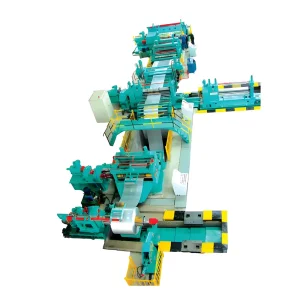
High Precision Slitting Line
Heavy-duty rotary slitting technology delivering clean edge cuts, zero strip twist, and precision tension-controlled recoiling.
Product Details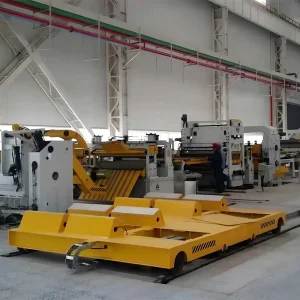
Flying Shear Production Line
Synchronous velocity tracking cuts sheet metal continuously at up to 80m/min without stopping the strip or marring finishes.
Product Details
High Strength Leveling Machine
Deep plastic deformation multi-roll cassettes eliminate residual tension across high-yield structural carbon and alloy coils.
Product Details
Professional Straightening Machine
Delivers micro-tolerance flatness to protect downstream automated laser cutting and multi-stage stamping processes.
Product Details
Hot Rolled Moving Shear Line
Dynamic traveling shear cuts heavy plate smoothly on the fly, delivering high-throughput sheet production.
Product Details
Stainless Steel Leveling & CTL Line
Engineered with non-marking 6-High intermediate roll cassettes designed to protect bright annealed and mirror stainless surfaces.
Product Details
HR Slitting, Leveling & CTL Line
Compact combined layout uniting precision rotary slitting and flying cut-to-length within a single continuous system.
Product Details