
High-Performance Continuous Coil Processing Systems
Engineered for high line speeds, micron-level strip flatness, and strict adherence to European CE Machinery Directives (2006/42/EC).
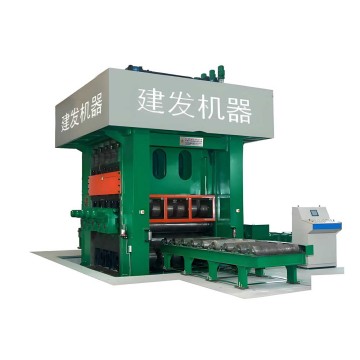
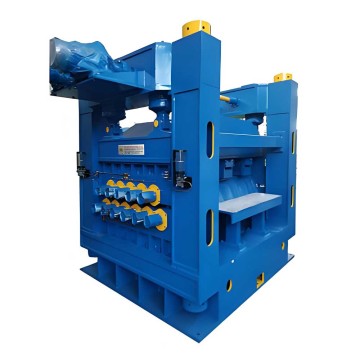
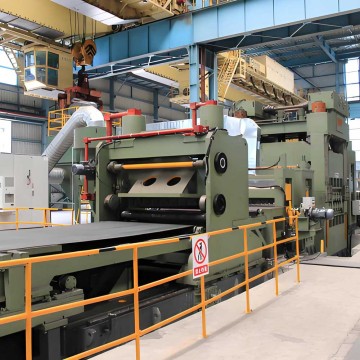
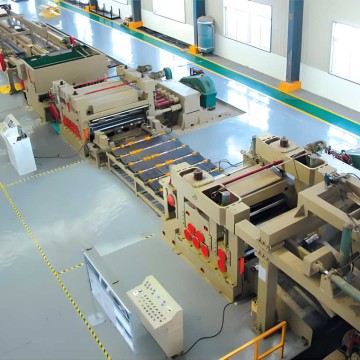
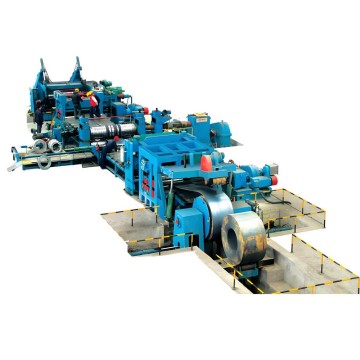
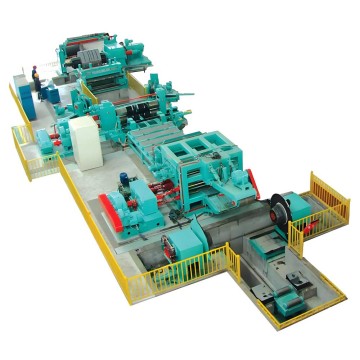
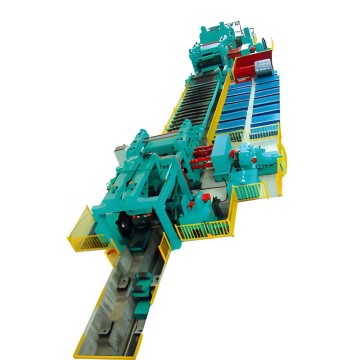
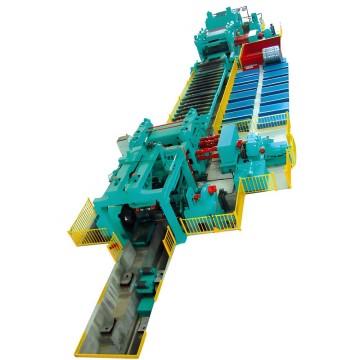
Engineering Mechanics of Tension Leveling Technology
Achieving zero residual stress and absolute flatness under high-yield dynamic continuous tension.
Simultaneous Bending and Stretching
Unlike standard roller levelers that rely solely on alternating bending deformation, a Tension Leveler Machine subjects the metallic strip to combined axial tensile stresses and cyclic plastic bending around small-diameter work rolls. This overcomes the yield limit of high-strength alloys across the entire cross-section, eliminating center buckles, edge waves, and camber effortlessly.
Differential Fiber Elongation Control
Residual stresses in rolled coils derive from uneven fiber length generated in hot/cold reduction rolling. By imparting controlled strip elongation (typically between 0.3% and 2.5%) via high-torque bridle rolls, shorter longitudinal fibers are permanently elongated to match longer zones, ensuring that inner structural stresses equilibrate below 5 I-Units.
Elimination of Coil Break & Stretcher Strains
For deep-drawing steel (DC04-DC06) and 5000/6000 series aerospace-grade aluminum, uncoiling often induces surface coil break markings. Tension leveling homogenizes the yield point elongation (YPE), creating an ultra-uniform grain boundary response essential for class-A exterior automotive body-in-white (BIW) press stamping lines.
Trends in Modern Metallurgy & Global Sourcing Requirements
How downstream high-precision industries demand next-generation CE-certified tension leveling infrastructure.
| Processing Parameter | Conventional Roller Leveler | CE Tension Leveler Machine | Procurement Advantage & ROI Impact |
|---|---|---|---|
| Post-Leveling Flatness | 15 – 30 I-Units (Variable by operator skill) | < 1 – 3 I-Units (Consistent dynamic feedback) | Zero distortion during downstream high-power fiber laser cutting. |
| Internal Residual Stress | Partially redistributed, surface only | 90% neutralized across 100% sheet cross-section | Prevents springback in progressive dies and robotic stamping cells. |
| Yield Strength Handling | Declines rapidly above 600 MPa | Effective up to 1200+ MPa (AHSS / UHSS grades) | Enables processing of lightweight Gen-3 automotive high-strength alloys. |
| Processing Velocity | Intermittent / 30 - 60 m/min | Continuous line up to 250 - 400 m/min | Drastically lowers per-ton processing cost in high-volume coil mills. |
| Surface Protection | Prone to friction slip marks on soft coatings | Controlled planetary intermesh, non-slip bridle friction | Critical for bright annealed (BA) stainless steel, tinplate & pre-painted coils. |
Chinese Manufacturing 4.0: Supply Chain Agility & Delivery Resilience
Wuxi Jianfa Machine-Building provides factory-direct metallurgy equipment with end-to-end quality sovereignty.
Single-Roof Manufacturing Sovereignty
Unlike export trading intermediaries, Wuxi Jianfa operates a dedicated 40,000 m² production site in Wuxi, Jiangsu. From structural frame flame cutting, heavy CNC gantry milling, roll induction hardening, to complex multi-axis drive integration, every step is executed on-site. This eliminates sub-tier subcontract delays and secures strict dimensional tolerances.
Full CE Directives Compliance
Exporting to European Union countries, the Americas, and developed industrial hubs demands verified structural safety. Our tension levelers feature double-circuit emergency interlocks, CE-standard functional safety logic (EN ISO 13849-1), redundant hydraulic brake failsafes, low-noise acoustic housings, and integrated IP54 electrical enclosures with EMC suppression.
Yangtze Delta Logistics Velocity
Situated in Meicun, Xinwu District, Wuxi, our plant is plugged into the core metallurgy logistics ecosystem of the Yangtze River Delta. High-speed highway access directly to Shanghai Port guarantees containerized or break-bulk ocean freight dispatches without inland choke-points, reducing project turnaround times by up to 25% compared to inland facilities.
Critical Downstream Industrial Applications
Where tension-leveling accuracy dictates manufacturing success and defect-free output.
Automotive Body Panels (BIW)
Aluminum alloy (5182, 6016) and galvanized cold-rolled outer skin panels demand complete freedom from stretcher strain marks, coil crossbow, and camber. Tension leveling enables continuous stretch-forming with 0.1% thickness accuracy, safeguarding flawless robotic paint finishes.
Electrical Steel & Core Laminations
Grain-oriented (GO) and non-grain-oriented (NGO) silicon steel strips utilized in electric vehicle (EV) traction stators and high-voltage power transformers require near-zero residual stress to retain peak magnetic permeability and prevent core loss post-stamping.
Continuous Coil Coating & Tinplate
Tension leveler stands integrated into continuous color coating lines (CCL) and tinplate canning lines guarantee ultra-uniform lacquer application. Flat substrates eliminate film thickness unevenness, wave defects, and high-speed canning press jams.
Factory Specialized Core Processing Series
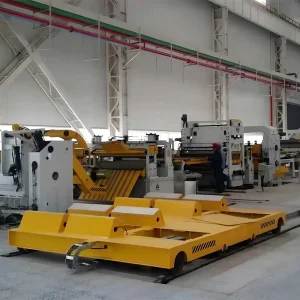
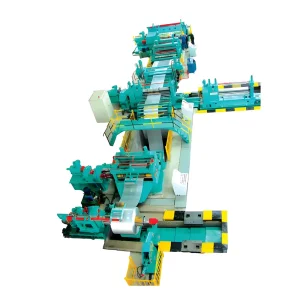
Retained primary engineering product offerings from Wuxi Jianfa Machine-Building official catalog.

Frequently Asked Questions: Tension Leveler Procurement & Engineering
Practical guidance from metallurgical mechanical specialists regarding project planning and equipment commissioning.
What is the core difference between a tension leveler and a standard roller leveler?
A standard roller leveler uses alternating bending rolls to relieve curvature, but cannot completely eliminate center buckles or edge waves because strip fiber length differences remain uncorrected across the width. A Tension Leveler Machine adds controlled axial tension (via multi-roll bridle blocks), achieving plastic deformation across the whole cross-section under lower bending forces, guaranteeing absolute flatness below 2-3 I-Units.
Which coil materials can Wuxi Jianfa tension levelers and processing lines handle?
Our engineered systems handle cold-rolled steel, hot-rolled pickled coil, galvanized sheet, stainless steel (ferritic, austenitic, duplex), and non-ferrous metals like aluminum alloys and copper strips. Yield strengths can range from deep-drawing soft grades (140 MPa) up to advanced ultra-high-strength steel grades (over 1200 MPa).
How does Wuxi Jianfa ensure compliance with European CE standards?
All CE-certified equipment adheres strictly to the Machinery Directive 2006/42/EC, Low Voltage Directive 2014/35/EU, and Electromagnetic Compatibility Directive 2014/30/EU. We implement verified safety relays, interlocked electro-mechanical perimeter guarding, dual-redundant hydraulic safety blocks, ergonomic operator consoles, and comprehensive risk assessments documented with complete technical construction files.
What baseline technical inputs are required to receive a customized line proposal?
To prepare an accurate engineering blueprint and price estimation, we need: material type and grade, tensile and yield strength range, strip thickness (min/max), strip width (min/max), coil weight and outer/inner diameter, required line speed (m/min), downstream packaging or cutting requirements, and site electrical specifications (voltage, frequency).
Does Wuxi Jianfa support overseas factory installation and trial commissioning?
Yes. Our dedicated field deployment team comprises mechanical, hydraulic, and automation commissioning engineers. We oversee foundation alignment, equipment anchoring, hydraulic piping flushing, electrical bus wiring, PLC dry/wet testing, trial coil rolling, and on-site training for operators and maintenance technicians until full cycle output is verified.
Can international buyers conduct on-site factory acceptance testing (FAT)?
Absolutely. We encourage overseas partners and third-party inspection agencies (SGS, TÜV, Bureau Veritas) to visit our 40,000 m² production site in Wuxi (conveniently accessible via Shanghai high-speed train) to audit the line assembly, observe full dry-run tests, inspect work roll surface roughness, and verify drive synchronization before packaging.
Custom Tailored Coil Lines Built to Your Plant Specifications
Direct sourcing from China's national key developing metallurgical machinery manufacturer.