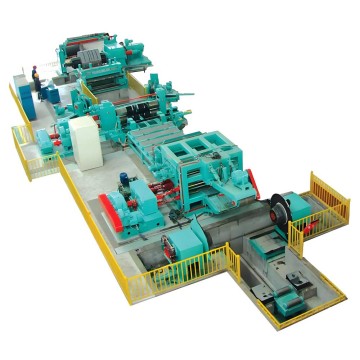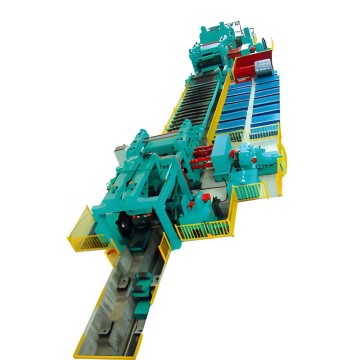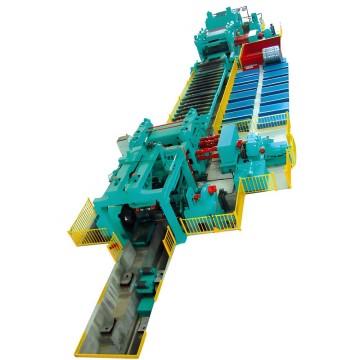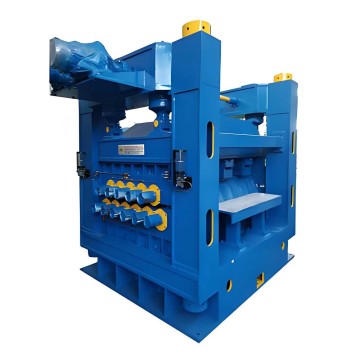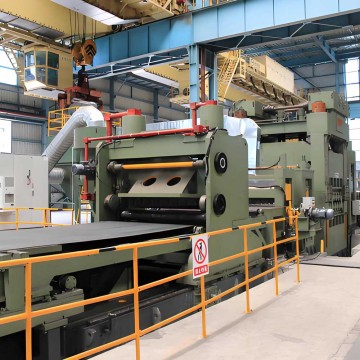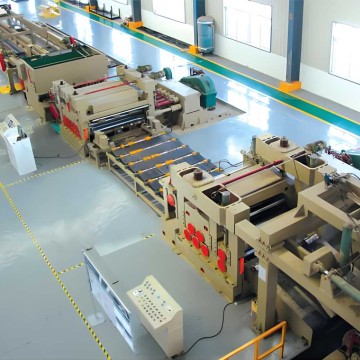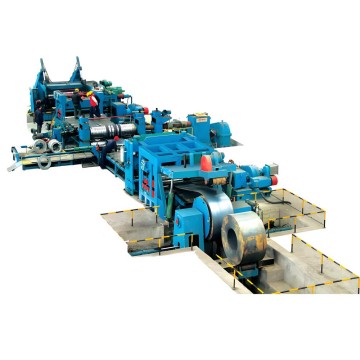
Primary Featured Equipment Catalog
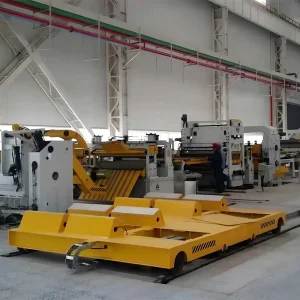
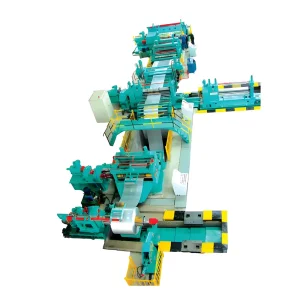
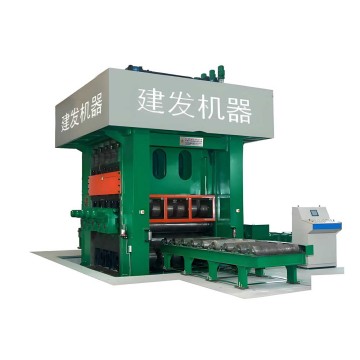
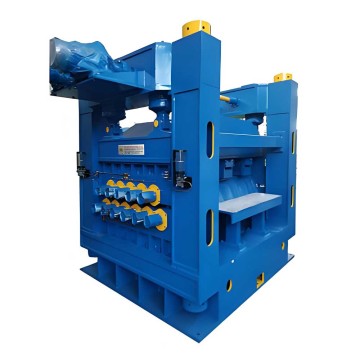
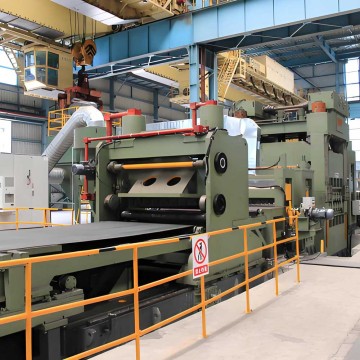
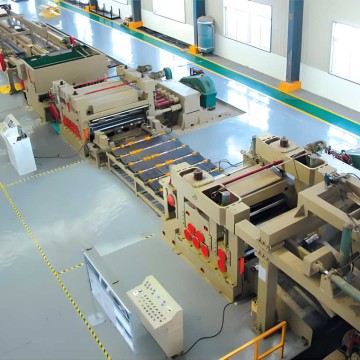
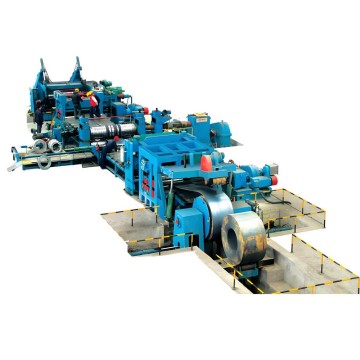
Explore our core engineering line-up designed for high-stress industrial applications. Fully integrated mechanical design, precision rotary shear mechanisms, and automated stacking infrastructure.

Industry Context & Technical Evolution in Aluminum Foil Slitting
Aluminum foil slitting has transitioned from conventional mechanical web cutting to high-dynamic digital tension conversion. As a National Key Developing Enterprise established in the early 1980s, Wuxi Jianfa Machine-Building brings deep metallurgy expertise to ultra-thin foil separation.
Dynamic Micro-Tension Physics
Aluminum foils (ranging from 0.005mm ultra-thin battery gauge to 0.2mm pharmaceutical blister sheets) have low tensile thresholds and high plasticity. Unlike standard steel coil slitting, foil processing requires frictionless closed-loop dancer systems and digital load-cell transducers to eliminate strip elongation, wrinkling, and edge tears during high-speed recoiling.
Blade Geometry & Edge Integrity
Our slitting configurations utilize ultra-fine micro-grain tungsten carbide shear knives paired with precision pneumatic knife holders. By maintaining axial runout tolerances within ±0.001mm, the system eliminates metallic dust generation, burrs, and micro-cracking—essential for high-density lithium-ion battery cathode substrates.
Differential Slip Winding Technology
Thickness variations across wide master aluminum coils lead to uneven web tension across slit ribbons. Jianfa incorporates pneumatic differential friction shafts with individual friction rings, automatically compensating for localized caliper differences and ensuring consistent coil density across all finished rolls.
The China Supply Chain Advantage in Heavy Machinery Manufacturing
Evaluating the structural, logistical, and component advantages of partnering directly with an established original equipment manufacturer based in the Yangtze River Delta industrial belt.
Wuxi Industrial Cluster
Situated in Wuxi, Jiangsu, our 40,000 m² factory operates within one of the world's most concentrated mechanical engineering hubs, ensuring immediate access to raw castings, specialized heat treatment, and precision CNC gear finishing.
In-House CNC Machining
We do not outsource critical structural fabrication. Floor-type boring mills, gantry planomillers, and stress-relieving annealing furnaces reside under our own roof, guaranteeing that machine frames resist torsional deflection under high continuous tensions.
Tier-1 Global Core Controls
Our automation architectures integrate Siemens S7-1500 series PLCs, Yaskawa servo drives, and Schneider low-voltage components, matching western electrical specifications while capitalizing on China's manufacturing speed and scale.
Port Proximity & Logistics
Direct highway links to the Port of Shanghai ensure containerized and flat-rack industrial cargo is dispatched without multi-hub transshipment delays, protecting heavy-duty components from transit vibration and maritime corrosion.
International Enterprise Procurement Requirements & Compliance
Cross-border procurement of high-speed aluminum foil slitting machinery requires verification across safety certifications, factory FAT benchmarks, and mechanical resilience.
| Procurement Pillar | Technical Verification Criteria | Jianfa Engineering Standard | Compliance Protocol |
|---|---|---|---|
| Mechanical Safety | Emergency stopping profiles, interlocked safety light curtains, roll nip guarding | EN ISO 12100 & ISO 13849-1 Performance Level d compliant design | CE Machinery Directive 2006/42/EC verified |
| Electrical Systems | Harmonic filtration, IP55 enclosure rating, dual-channel E-stops, cable marking | NFPA 79 & EN 60204-1 architecture with UL-certified panel layouts on demand | EMC Directive 2014/30/EU compliant |
| Dynamic Slitting Accuracy | Slit width tolerance, edge burr height, edge wave, and telescoping limits | Width tolerance within ±0.05mm; burr height < 3% of foil thickness | Factory Acceptance Testing (FAT) with coil run |
| Pressure & Hydraulics | Cylinder seal integrity, accumulator safety valves, non-leak hose connections | Proportional hydraulic valves with micron-filtration fluid loops | Hydrostatic pressure testing certification |
Global Application Scenarios & Downstream Processing
Modern slitting machines accommodate wide spectrum variations in aluminum alloy chemistries, temper classifications (O, H14, H18, H24), and surface coatings.
EV Battery Cathode Current Collectors
Processing 1060 and 1235 alloy foils down to 9–13 microns. Precision slitting without burrs prevents separator punctures in lithium iron phosphate (LFP) and ternary lithium cells, running cleanroom-ready configurations with zero oil mists.
Aseptic Barrier & Blister Packaging
Slitting 8011 and 8021 pharmaceutical cold-form foil and food laminate complexes. Smooth web passage over hard-anodized, micro-grooved anti-static guide rollers eliminates pinholing, surface scratches, and cross-contamination.
HVAC Finstock & Radiator Ribbon
Splitting high-strength 3003 and 4343 clad brazing foil for automotive heat exchangers and condenser units. Robust cutting heads handle heavier 0.05–0.2mm strip profiles across multiple simultaneous cuts at speeds reaching 400m/min.
Next-Generation Industry Trends & Smart Features
The manufacturing paradigm for slitting machinery is driven by smart sensing, predictive robotics, and low-waste processing.
Fully Automated Robot Knife Positioning
Manual knife setup accounts for up to 60% of production downtime in multi-order job shops. Next-generation Jianfa lines feature twin-axis robotic knife positioning arms that set knife-to-anvil clearance and width offsets in seconds with precision repeatability of ±0.005mm.
Optical Surface Defect Inspection
Continuous AI-based vision cameras scan both sides of the unwound foil web in real-time. The system detects pinholes, inclusions, oil spots, and edge nicks, automatically tagging reel positions and signaling scrap cutters without slowing line velocity.
IoT Remote Telemetry & Predictive Maintenance
Cloud-connected edge modules track main bearing temperatures, vibration spectrums on rotating cutters, and servo motor currents. By comparing real-time patterns against operational baselines, our engineering team assists operators in scheduling maintenance before strip degradation occurs.
Localized Support, Commissioning & Global Reliability
Purchasing heavy machinery from an overseas supplier demands certainty in post-sales deployment, operator competence, and long-term parts availability.
Field Commissioning
Jianfa dispatches experienced electrical and mechanical field engineers for on-site anchoring, laser-guided level calibration, dynamic wiring alignment, and dry/wet running trials directly at your facility.
Operator Training
We provide hands-on operator instruction covering HMI menu logic, slitter knife geometry setup, friction winding torque adjustment, safety procedures, and regular lubrication maintenance.
24/7 Diagnostics
Secure VPN hardware connections built into our main control cabinets enable Jianfa software engineers in Wuxi to diagnose PLC routines, drive faults, and sensor signals in real time without waiting for field travel.
Lifetime Parts Hub
All rotating shafts, gears, knife spacers, and air friction elements maintain documented design records in our ERP system, ensuring guaranteed parts interchangeability and dispatch throughout the machinery lifespan.
Frequently Asked Questions (FAQ)
Clear, direct answers regarding equipment sizing, alloy capabilities, knife maintenance, and international purchase workflows.
What coil processing equipment does Wuxi Jianfa manufacture?
We manufacture complete coil processing lines: slitting lines (rotary shear lines), cut to length lines, flying shear production lines, leveling machines, straightening machines and galvanizing production lines. Equipment can be supplied as a complete line or as individual machines to upgrade an existing line.
Which materials can your slitting and cut to length lines process?
Our lines process hot-rolled, cold-rolled, galvanized, stainless steel and aluminum coils, including high-strength grades. Each line is configured around your thickness range, coil width, yield strength and surface-quality requirements.
How do I choose between a slitting line, a cut to length line and a flying shear line?
Choose a slitting line when you need narrow strips recoiled for tube mills, roll forming or stamping. Choose a cut to length line when you need flat, stacked sheets or plates. Choose a flying shear line when you need high-volume sheet output, because the shear cuts while the strip keeps moving. Combined slitting and cut to length lines are also available.
What information should I send to receive an accurate technical proposal?
Please share the material grade and yield strength, coil thickness and width range, maximum coil weight and inner/outer diameter, required output (strip widths and count, or sheet length range), tolerance and flatness requirements, target line speed and the power supply at your plant.
Do you support installation, commissioning and operator training overseas?
Yes. Our after-sales team supports installation, commissioning and operator training, and continues with remote technical support and spare parts supply after start-up.
Can I visit the factory and inspect my equipment before delivery?
Yes. Buyers are welcome to visit our 40,000 m² facility in Wuxi, Jiangsu, within easy reach of Shanghai by high-speed rail, to review production and inspect their equipment before delivery.
How does your machine handle ultra-thin aluminum foil without breaking or wrinkling?
Ultra-thin foils (under 0.02mm) require ultra-sensitive closed-loop tension control. We combine low-inertia carbon fiber or specialized hard-anodized aluminum guide rollers with digital pneumatic dancer arms and AC vector servo motors. This provides constant tension under ±1N during both acceleration and deceleration profiles.
What knife clearance configurations are recommended for battery-grade foil?
For cathode battery foils (around 12-15 microns), we recommend carbide rotary shear blades with an overlap of 0.1–0.2mm and zero horizontal clearance (light contact with microscopic spring pre-loading). This configuration eliminates micro-burrs and edge dust that could puncture battery cell separators.
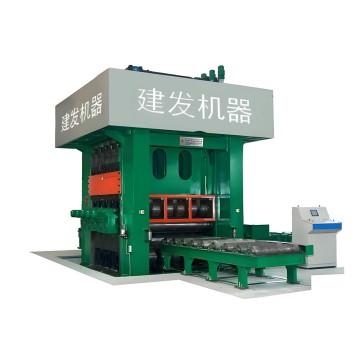
Secondary Advanced Equipment Showcase
Explore additional coil processing solutions manufactured in our Wuxi workshops. Built to handle heavy-gauge strip conditioning, multi-ribbon rewinding, and continuous cutting lines.