Engineering Architecture of Modern Longitude Cutting Lines
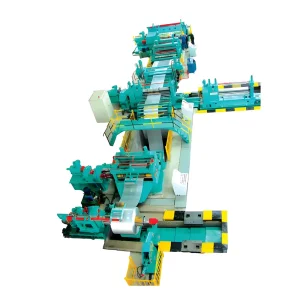
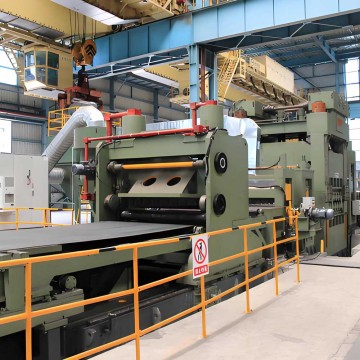
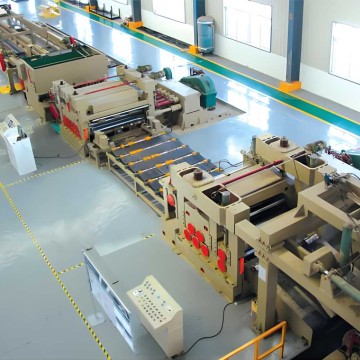
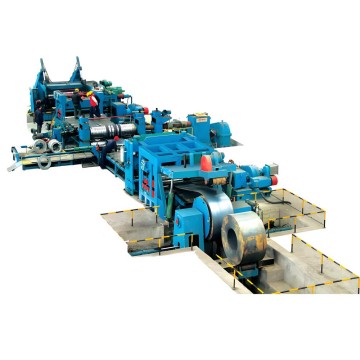
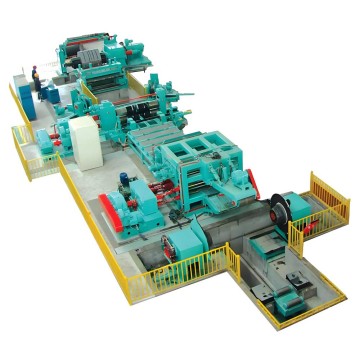
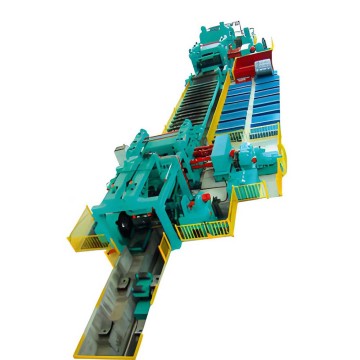
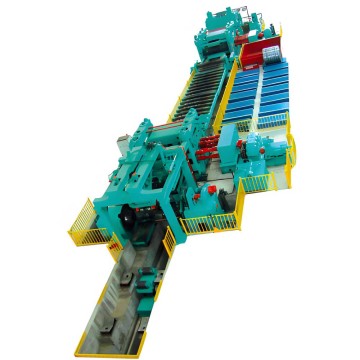
In modern industrial metallurgy, a Longitude Cutting Line (commonly known worldwide as a longitudinal slitting line or rotary shear coil line) functions as the essential cardiovascular system of steel service centers, automotive stamping facilities, transformer core manufacturing hubs, and tube-and-pipe mills. The fundamental engineering mandate of a longitude cutting line is deceivingly straightforward: decoiling a master metal coil weighing upwards of 35 metric tons, shearing the wide metal strip along its longitudinal axis into multiple high-precision narrow strands, and recoiling them under tightly calibrated tension back into uniformly dense coils with flawless edge geometry.
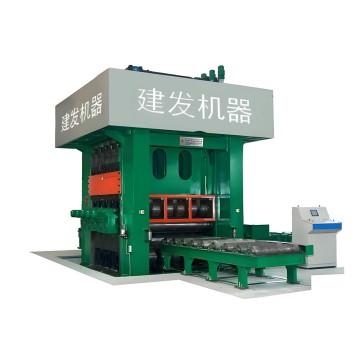
However, the underlying physics and mechanical complexity are immense. The cutting zone requires rotary circular knives mounted on micron-tolerance arbors operating with zero backlash. Any thermal expansion, shaft deflection under heavy hydraulic loading, or bearing runout exceeding 0.005 mm introduces burrs, edge deformation, camber, and uneven recoil tension. Wuxi Jianfa Machine-Building Co., Ltd., since its establishment in the early 1980s, has continuously innovated across every sub-assembly of the coil slitting lifecycle.
Key Physics of Longitudinal Precision: Arbor Deflection Limits
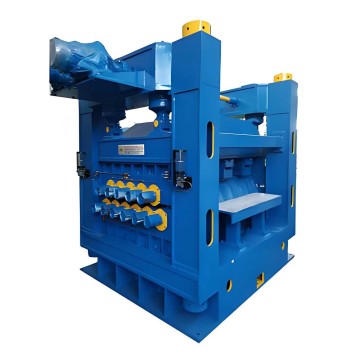
For modern high-strength steels (AHSS with tensile strengths $R_m > 980\text{ MPa}$), the radial separating forces generated between the upper and lower rotary knife arbors can exceed several hundred kilonewtons. Jianfa lines utilize vacuum-degassed 42CrMo forged arbors, dynamic preloaded ultra-precision Timken bearings, and dual outboard support housings to guarantee arbor deflection is restricted to $\le 0.008\text{ mm}$ over 2,200 mm barrel lengths under full load.
The 7 Critical Stages of the Longitudinal Slitting Process Flow
- Entry Coil Staging & Decoiling: Coil saddle preparation, automated optical centering, and single or twin-cone cantilevered uncoilers fitted with pneumatic/hydraulic disc braking systems to maintain primary strip back-tension.
- Peeling, Pinch Rolling & Cropping: Hydraulic peeler blades flatten the coil tongue; powerful entry pinch rolls advance the strip into a cross-cut hydraulic crop shear to remove out-of-spec head and tail segments.
- Centering & Edge Guiding (EPC/CPC): Photoelectric or ultrasonic sensor arrays dynamically align strip edges before entering the cutting throat, preventing lateral snake drift and reducing scrap margin allowances down to 5 mm per side.
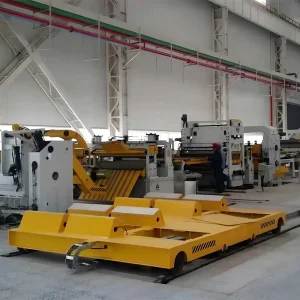
- High-Precision Rotary Longitudinal Slitting: Heavy-duty slitting head featuring double eccentric arbor adjustments, motorized CNC vertical and horizontal knife overlapping control, and rapid arbor exchange (turret heads or dual-housing transfer cars).
- Scrap Winding or Chopping: Integrated edge scrap handling via synchronized oscillating scrap ballers or high-speed rotary scrap choppers utilizing tungsten-carbide knives.
- Loop Accumulator Pit & Strip Separator Guidance: Free looping pit compensates for strip thickness differential variations across the mother coil profile; adjustable disc separator shafts ensure flawless parallel strip alignment into the tension unit.
- Tension Bridle & Synchronized Recoiling: Belt bridles, pneumatic tension pads, or roller leveler tension units provide isolated back-tension; hydraulic expanding recoiler drums with hydraulic push-off plates and over-arm separators produce rock-hard coil packages.
Longitudinal Slitter Line Configurations vs. Alternative Processing Methods
| Engineering Attribute | Longitude Cutting Line (Slitter) | Cut to Length Line (CTL) | Synchronized Flying Shear |
|---|---|---|---|
| Primary End Output | Multiple narrow strip coils on single/split spools | Flat rectangular metal sheets stacked on pallets | High-speed sheet blank bundles with zero pause |
| Strip Movement Mode | Continuous high speed (up to 400 m/min) | Start-stop feeding (servo driven) | Continuous running synchronization |
| Downstream Consumers | ERW pipe mills, stamping presses, roll formers | Enclosure makers, building panels, laser cutting | High-volume automotive skin panels, white goods |
| Edge Quality & Tolerances | Width tolerance ±0.02 mm; minimal edge burr | Length tolerance ±0.2 mm; diagonal ≤ 0.5 mm | Length tolerance ±0.5 mm; burr-free rotary blade |
| Critical Design Focus | Knife arbor rigidity & individual strip tensioning | Multi-roll stress relief & precise encoder stops | Servo velocity profiling & dynamic shear inertia |