
Precision Coil Processing & Leveling Systems
Direct factory engineered solutions for steel service centers, automotive stamping, and heavy metal fabrication.
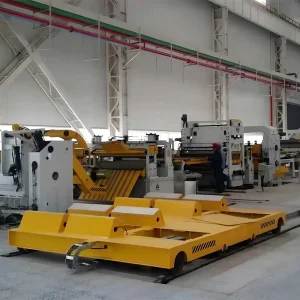

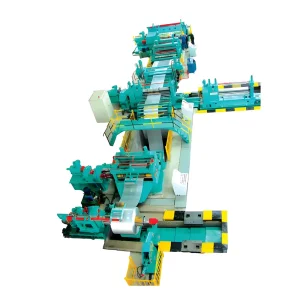
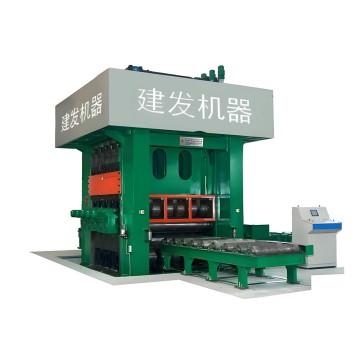
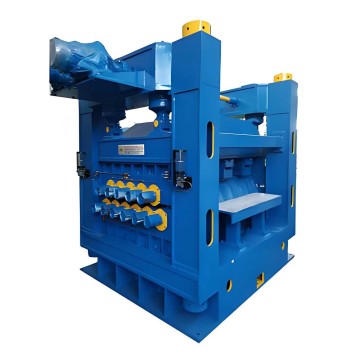
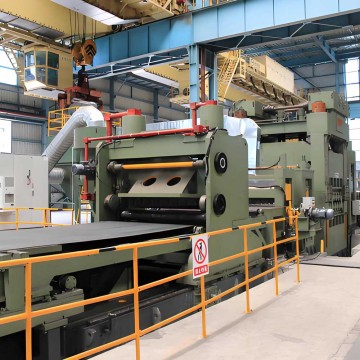
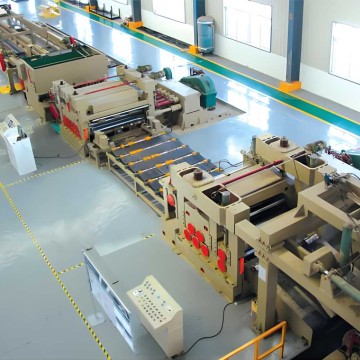
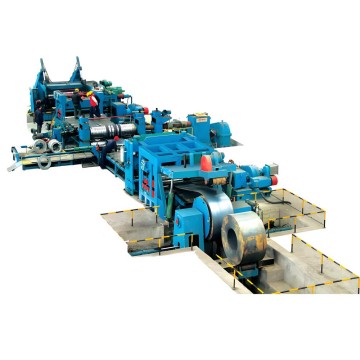
The Science of Cyclic Plastic-Elastic Bending in Leveling Technology
Roller leveling is not merely a superficial flattening operation; it is an exact metallurgical discipline governed by cyclic elastic-plastic deformation. When coil material is processed through decoilers, it retains substantial inherent flaws including coil set, crossbow, edge waves, center buckles, and invisible residual internal stresses.
Famous roller leveler manufacturers and advanced factories design multi-roller configurations (typically 11, 17, 19, 21, or 23 work rolls) that subject the metal strip to alternating, decreasing radii of curvature. The process forces the strip outer fibers beyond their tensile yield point into plastic elongation, shifting the neutral axis and relieving up to 90% of internal mechanical stresses.
- Fiber Elongation Control: Achieving 70% to 85% plastic deformation in the entry roll sets to cancel original shape memory.
- Decaying Wave Amplitude: Decreasing immersion depths toward the exit rollers return the outer fibers to absolute elastic springback neutrality.
- Elimination of Laser Warping: Prevents post-cutting heat distortion during high-power fiber laser or plasma processing.
Structural Topologies: 4-High vs. 6-High Levelers
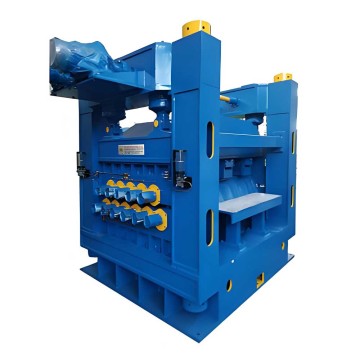
4-High Levelers: Built with working rolls supported by heavy-duty backup bearings. Ideal for hot-rolled steel, structural plates, and standard commercial cold-rolled sheets where minor backup roll shadow marks are acceptable.
6-High Levelers: Introduce an intermediate layer of staggered drive rolls between the backup bearings and the work rolls. This configuration prevents deflection transfer lines, making it mandatory for sensitive surfaces such as automotive outer panels, architectural stainless steel, and polished aluminum.
Engineering Evaluation Matrix for Global Buyers
Key technical parameters to assess when selecting an industrial roller leveler manufacturer or factory partner.
| Evaluation Parameter | Standard Steel Service Centers | Automotive & EV Lightweighting | Heavy Machinery & Shipbuilding | Jianfa Engineering Benchmark |
|---|---|---|---|---|
| Target Material Yield Strength (ReH) | 235 – 355 MPa (Carbon Steels) | 500 – 1200+ MPa (AHSS / UHSS / DP) | 460 – 960 MPa (Q690 / Hardox) | Up to 1350 MPa Customized |
| Roller Configuration | 4-High / 17 to 21 Rolls | 6-High / 19 to 23 Rolls | 4-High / 9 to 13 Rolls Heavy | Dynamic 4-High / 6-High Interchange |
| Roll Surface Hardness | HRC 58 – 60 (Surface Quenched) | HRC 62 – 64 (Chromium Plated) | HRC 60 – 62 (Deep Induction) | HRC 62 – 65 with Cryogenic Finish |
| Gap Adjustment Automation | Manual Screw-down or Motorized | Electro-Hydraulic Servo Closed Loop | Heavy Mechanical Hydraulic Wedge | Servo Hydraulic Positioning (±0.01mm) |
| Roll Cassette Changeover Time | 4 to 8 Hours (Static Assembly) | 15 to 30 Minutes (Quick Shift) | Crane Suspended (2+ Hours) | < 10 Mins Hydraulic Quick-Change |
| Flatness Tolerance Output | ≤ 3 – 5 I-Units (EN 10051) | ≤ 1 – 2 I-Units (Auto Grade) | ≤ 5 – 8 I-Units (ASTM A6) | Strict ≤ 1 I-Unit Capability |
Macro Drivers Shaping the Modern Leveling Equipment Landscape
How leading factories are adapting to ultra-high-strength metallurgy, autonomous gap control, and digital twin monitoring.
High-Yield AHSS Processing
The global push for vehicle lightweighting and structural safety has led to the widespread adoption of Dual-Phase (DP), Complex-Phase (CP), and Martensitic steels reaching up to 1200 MPa. Levelers require reinforced structural machine housings with finite-element-analyzed cast steel side columns capable of withstanding separating forces exceeding 15,000 kN without frame deflection.
Intelligent Closed-Loop Flatness
Modern production facilities cannot rely on operator intuition. Automated roller levelers utilize real-time optical laser flatness scanning tables positioned right after the exit roll set. Deviations (edge wave, center buckle) are instantly converted into corrective signals that adjust hydraulic individual backup bearing wedges across the roll face within milliseconds.
Surface Protection Technologies
With massive growth in solar racking, high-silicon electrical steels for EV motor laminations, and prepainted architectural sheets, zero roll-marking is paramount. Manufacturers now incorporate micro-finish chrome plating, continuous rotary wiping brushes, and fluid oil-mist cleaning systems that eliminate scale buildup and roller surface contamination.
Integrated Macro Solutions: From Decoiling to Finished Stacks
A precision roller leveler requires seamless coordination across complete coil processing lines to reach peak efficiency.
Cut to Length (CTL) Integration
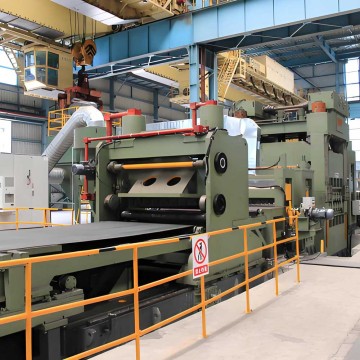
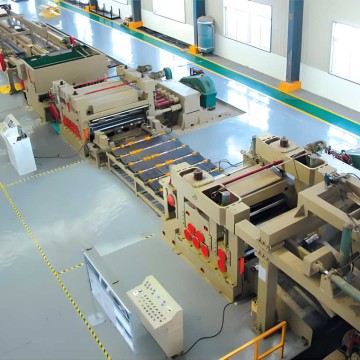
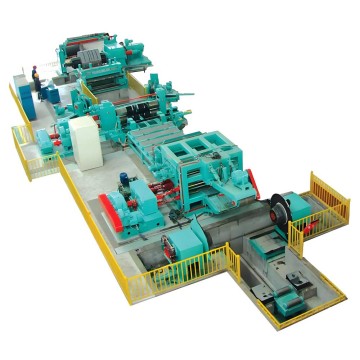
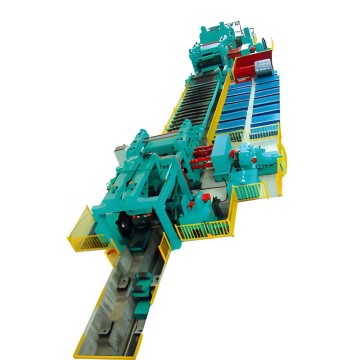
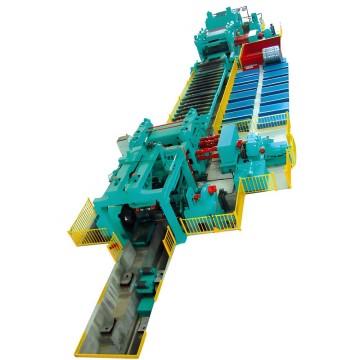
For steel distributors delivering stacked sheets, the roller leveler is paired with optical loop control pits, digital servo feeders, and high-speed hydraulic or mechanical shears. The leveler relieves coil camber and crossbow before the strip hits the measuring wheel, guaranteeing diagonal squaring accuracy within ±0.2mm per 2000mm length.
Explore CTL Line Architectures →Flying Shear Production Lines
When high throughput is critical, stopping the strip for shearing creates unacceptable cycle bottlenecks and mechanical wear. Integrating a continuous roller leveler directly with a synchronized rack-and-pinion flying shear enables uninterrupted processing speeds up to 80-120 m/min, preventing surface scratching and roll indentations.
Explore Flying Shear Solutions →High-Speed Rotary Slitting Lines
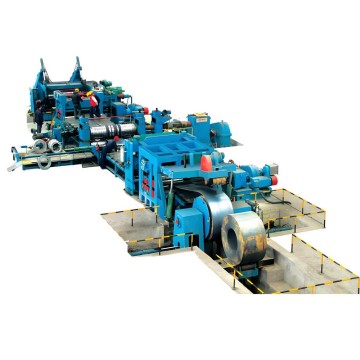
Slitting high-strength mother coils releases locked-in residual stress profiles, leading to camber, twisting, and strip edge curling. Placing a corrective leveling unit ahead of the slitter knives or utilizing dedicated strip tension leveling post-slitting guarantees perfectly straight multi-strip recoiling for ERW tube manufacturing.
Explore Slitting Line Systems →End-to-End Coil Processing Lifecycle Flow
Over 40 Years of Excellence in Heavy Metallurgical Machinery
Established in the early 1980s, Wuxi Jianfa Machine-Building Co., Ltd. has developed into a national key enterprise within China’s metallurgical machinery sector. Situated in Wuxi, Jiangsu—directly accessible to Shanghai’s deep-water ports—our continuous 40,000 m² heavy assembly facility houses complete in-house mechanical design, CNC machining, electrical automation programming, and rigorous running testing.
With registered capital of 45 Million RMB and more than 200 skilled mechanical engineers, technicians, and international field service personnel, Jianfa manufactures coil lines that eliminate intermediate trading markups, ensuring complete manufacturing transparency from billet to finished machine line.
Global Localization & International Standards Assurance
Factory-direct engineering designed to satisfy regional electrical codes, structural safety norms, and rapid on-site commissioning.
CE & International Compliance
Fully compliant with EU Machinery Directive 2006/42/EC and EN ISO 12100. Certified safety interlocks, light curtain zones, and safety PLCs ensure comprehensive worker protection in industrial environments.
Regional Electrical Standards
Control enclosures engineered to meet UL508A for North American buyers and IEC 60204-1 for global installations. Components sourced from trusted brands like Siemens, Schneider, and Rexroth.
Remote IoT Telemetry
Integrated VPN router modules allow Jianfa software engineers to perform remote diagnostics, PLC logic updates, and hydraulic sensor monitoring directly from our Wuxi engineering headquarters.
On-Site Commissioning
Experienced multilingual commissioning engineers dispatched globally to supervise foundation alignment, line power-up, test trials, and comprehensive hands-on training for plant operators.
Engineering Roadmap: Future-Proofing Leveling Operations
Key technological trajectories defining precision roller leveling efficiency from 2026 to 2035.
Autonomous Neural AI Leveling
Self-learning neural networks that read coil steel grade, measured hardness, and incoming camber, automatically calculating optimal roll immersion profiles without manual operator trial and error.
Smart Sensor Roll Arrays
Direct embedding of micro-strain piezoelectric sensors inside the working rolls to capture instantaneous load distributions across the strip width, isolating edge wave tendencies before they exit the machine.
Robotic Cassette Swapping
Automated guided vehicles (AGVs) paired with electro-hydraulic clamping that swap work roll cassettes for varying gauge ranges in under five minutes, eliminating line downtime in agile service centers.
Zero-Carbon Regenerative Drives
Full regenerative multi-motor DC common-bus variable frequency drives that capture braking energy from decelerating heavy strip reels, returning up to 35% of power consumption back to the plant grid.
Engineering Questions Answered by Leveler Specialists
Detailed insights on leveling theory, line configurations, and operational maintenance.
What is the difference between a standard straightener and a precision roller leveler?
A standard straightener uses 5 to 9 large-diameter rolls without individual backup support, designed solely to remove basic coil curvature (coil set). A precision roller leveler employs 15 to 23 tightly pitched rolls supported by multiple backup bearing rows that adjust across the roll body. This setup allows selective roll flexing to eliminate complex internal stresses, crossbow, edge wave, and center buckle.
Why is 80% plastic deformation required during the entry leveling stages?
To overcome material yield memory, the outer 70% to 85% of strip fibers must be elongated beyond their yield point (ReH). By alternating tension and compression across initial rolls, existing internal stress profiles are erased. The subsequent decreasing bend depths gradually transition the material back into purely elastic deformation, resulting in an internally balanced, stress-relieved sheet.
How does roll diameter affect the usable thickness range?
Physics dictates that smaller roll diameters create tighter bend radii, delivering the plastic strain necessary for thin sheets (e.g., 0.5mm requires Ø25-35mm rolls). However, small rolls cannot bear the high separating forces of thick plates without buckling. Heavy plates (12mm–25mm) require rolls of Ø150mm to Ø260mm. For wide gauge flexibility, leading factories install multi-cassette quick-change systems.
What maintenance preserves roll life when running abrasive hot-rolled scale?
Hot-rolled mill scale acts as an abrasive, causing premature roll scoring. Essential maintenance includes installing high-pressure water descaling or wire-brush units before leveling, using deep-induction hardened roll steels (HRC 60-62), maintaining continuous grease filtration on backup bearings, and employing automated quick-cassette extraction for periodic roll grinding.
Factory Direct Heavy Machinery Supply
Built to custom specifications in Wuxi, China. Delivered with factory warranty, CE compliance, and overseas commissioning.
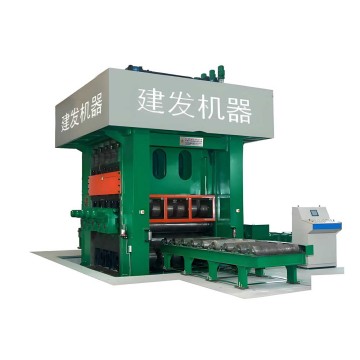
Request an Engineering Assessment for Your Plant
Send your coil specifications (thickness, width, yield strength, target line speed). Our engineering sales team will configure the optimal roller diameter, roll pitch, and cassette framework.