
High-Precision Roller Slitters & Primary Coil Processing Lines
Engineered to deliver tight strip width tolerances (±0.03 mm), low burr ratios, and synchronized automated recoil control for international service centers and steel mills.

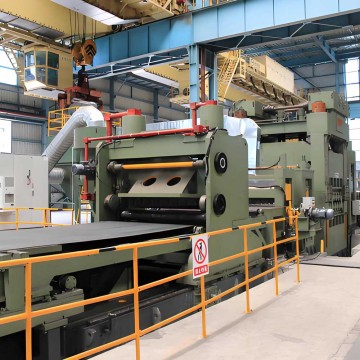
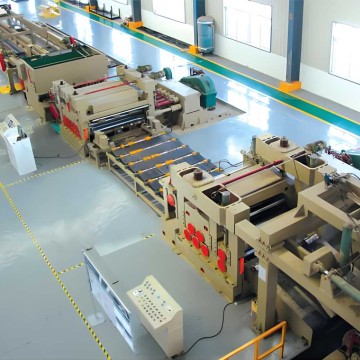
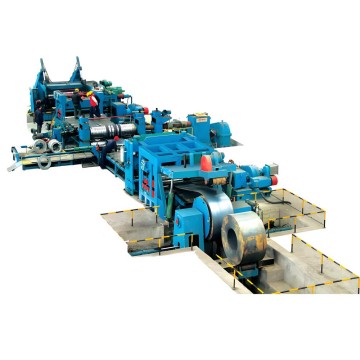
The Global Commercial & Industrial Landscape of Roller Slitters
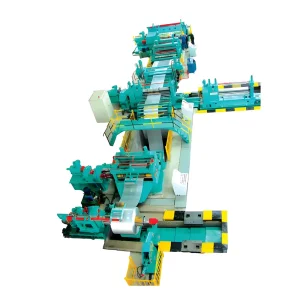
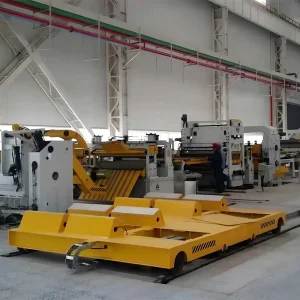
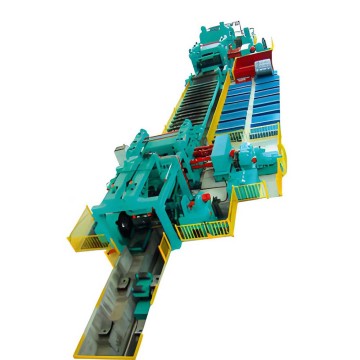
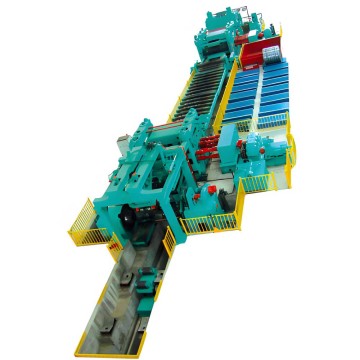
In modern metallurgical manufacturing and international metal service supply chains, the roller slitter—also universally classified as the rotary shear slitting line—is the critical primary processing link between continuous reduction rolling mills and downstream component fabricators. As global steelmakers migrate toward Advanced High-Strength Steels (AHSS), electrical steel with oriented grain structures (CRGO/CRNGO), and lightweight automotive-grade aluminum alloys, the technological benchmark demanded of an international roller slitter supplier has fundamentally evolved.
Historically, slitting machinery operated primarily under mechanical open-loop tensioning, where acceptable thickness variances were wide and strip edge geometry was inspected offline via manual micrometers. Today, tier-one industrial fabricators demand high-speed slitting lines reaching throughput velocities of 150 m/min to 300 m/min while maintaining knife shaft deflection below 0.005 mm per meter of arbor length. This precision eliminates secondary burr formation and avoids metallurgical work-hardening along the sheared edge—a factor that drastically affects progressive stamping dies, roll forming mills, and high-frequency welded (ERW) tube lines.
Commercial trends indicate that over 65% of global metal service center investments in North America, Western Europe, and developing manufacturing corridors in Southeast Asia and Latin America are targeted at high-rigidity retrofit installations and modular heavy-gauge slitting units. Factories must mitigate scrap generation: with coil feedstock prices representing over 78% of operating overhead in metal service operations, any edge camber, burr exceeding 5% of material thickness, or uneven tension rewinding directly erodes profitability.
Emerging Technology Trends in Automated Rotary Slitting Lines
The transition from semi-manual arbor setups to AI-supervised, closed-loop coil processing is reshaping operational expenditure and line safety.
Automated Robotic Tooling & Quick-Change Heads
Manual knife and shim loading historically consumed 40–50% of plant operating cycles. Modern tier-1 factories implement robotic knife-loading carousels and dual-head turntable slitter beds that swap pre-tooled arbors in under 2 minutes, reducing downtime and protecting sharp tungsten-carbide knife faces from accidental chipping.
- Turnaround reduction from 45 min down to 120 seconds
- Micron-level CNC positioning eliminating operator calculation error
- Extended blade lifespan through zero impact tooling handling
Optical Closed-Loop Burr & Width Vision Systems
Machine-vision high-speed cameras situated directly downstream of the slitter head illuminate cut strip edges with telecentric laser structured light. The AI system continuously calculates the depth of the fracture zone versus plastic shear penetration, warning operators of clearance degradation before out-of-spec burrs occur.
- Real-time continuous measurement up to 300 m/min
- Automated alerts for knife micro-chipping or arbor runout
- 100% digital audit trace for automotive stamping certifications
Differential Hydraulic Tensioning & Variable Loops
Crown variances across wide master coils cause center strands to rewind tightly while outer slit strips sag dangerously. Advanced roller slitter suppliers integrate servo-controlled tension roll assemblies, surface-protective felt belts, and vacuum drag boxes to exert distinct friction without scratching sensitive galvanized or painted finishes.
- Equalized recoil tightness regardless of coil crown camber
- Elimination of paper interleaving on high-polish stainless
- Controlled strand drop into deep hydraulic looping pits
Localized Applications & Specialized Manufacturing Demands
A single generic machine configuration cannot solve the distinct physical demands of diverse downstream industrial sectors.
Automotive Structural & BIW
Processing Dual-Phase (DP600–DP1200) and Martensitic steels requires arbor diameters up to 320mm with pre-loaded high-precision spherical bearings to resist tremendous upward separation forces without flexing.
Electrical Steel Cores & EV Motors
Silicon steel laminations require zero magnetic degradation. Roller slitters must operate with razor clearance (below 0.008 mm) and ultra-hard carbide cutters to prevent grain dislocation at the shear plane.
Heavy Hollow Sections & Tube Mills
Supplying uncoiled narrow strips to ERW pipe mills demanding heavy-gauge hot-rolled coils up to 16–25mm thickness. Requires massive hydraulic pinch rolls, peeler tables, and heavy scrap choppers.
Appliance & Architecture
Mirror stainless steel (SUS304/430) and pre-painted aluminum coils demand specialized polyurethane-sleeved bridle rolls, edge-trim winders, and static PVC laminators that protect critical cosmetic surfaces.
Comprehensive Technical Roadmap: The Physics of Roller Slitting
Critical mechanical configurations determine whether a slitting line maintains factory tolerances over 15 years of continuous multi-shift production.
| Subsystem | Core Technical Metric | Jianfa Engineering Standard | Operational Impact & Defect Prevention |
|---|---|---|---|
| Slitter Arbor Assembly | Dynamic Runout & Deflection | Radial runout ≤ 0.003 mm; Axial end-play ≤ 0.002 mm | Prevents knife clash, uneven burnish-to-break ratios, and edge burrs. |
| Uncoiler / Recoiler Mandrel | Radial Expansion & Drum Rigidity | 4-segment wedge hydraulic expansion with outboard support | Eliminates inner wrap slippage, coil dishing, and telescoping under heavy tension. |
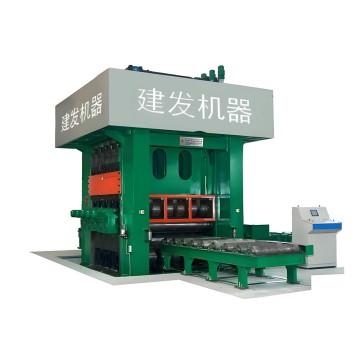
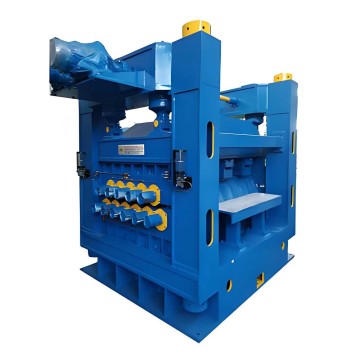
| Precision Leveler Unit | Roll Diameter & Back-up Nesting | 4-High / 6-High configuration with 19–23 nested work rolls | Relieves residual transverse and longitudinal internal stresses in master coil. |
| Tensioning Station | Pad / Roll / Vacuum Bridle Force | Multi-zone pneumatic/hydraulic differential pad regulators | Allows uniform winding of diverse strip thicknesses across slit packs. |
| Edge Scrap Management | Dual Rotary Drum Chopper / Winder | High-torque helical rotary scrap cutters with dual-edge reversible knives | Prevents line stoppages caused by scrap tangling; ensures safe scrap bundling. |
The Science of Blade Clearance: Depth of Penetration & Horizontal Offset
In rotary slitting, cutting is not a simple scissor slicing action; it is an engineered combination of plastic deformation followed by controlled crack propagation. The horizontal clearance between circular knives typically ranges from 7% to 12% of material thickness (t) for mild carbon steel, and up to 15% to 20% for ultra-high-strength steel. If clearance is too tight, secondary shearing creates excessive tool wear and heavy work-hardened burrs. If clearance is too loose, the strip gets drawn into the arbor gap, generating deep edge rollover, heavy cambers, and localized distortion that downstream roll formers cannot rectify.
Wuxi Jianfa arbors are forged from 42CrMo alloy steel, quenched and tempered, and sub-zero cryogenic treated to achieve deep dimensional stability. Knives are precision-ground with thickness tolerances of ±0.001 mm and flatness within 0.0015 mm, providing plant managers with predictable setups and guaranteed first-cut accuracy.
A National Key Developing Enterprise in Metallurgical Machinery
Founded in the early 1980s, Wuxi Jianfa Machine-Building Co., Ltd. has spent over forty years perfecting cold and hot metal strip processing technology. Located in Meicun, Xinwu District, Wuxi, Jiangsu Province, our 40,000 square meter modern manufacturing complex is fully equipped with heavy floor-type CNC boring mills, precision cylindrical grinders, ultrasonic stress testers, and automated electrical panel staging facilities.
Unlike export traders who act as intermediaries, Jianfa controls the entire engineering lifecycle: CAD/CAM mechanical drafting, structural welding, stress-relieving heat treatments, precision arbor machining, Siemens/Mitsubishi PLC software coding, pre-delivery dry-cycle trials, and on-site global commissioning across 30+ export countries.

Frequently Asked Questions: Roller Slitter & Coil Processing Engineering
In-depth responses from our senior metallurgical engineers to assist procurement managers and plant directors.
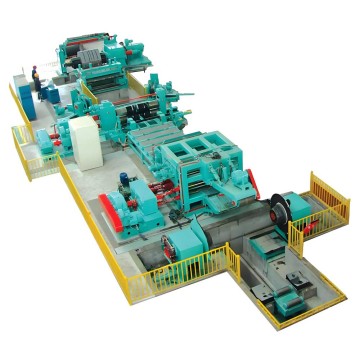
Explore Turnkey Metal Processing Lines by Wuxi Jianfa
Select any production-proven equipment model below to request technical drawings, power load parameters, and direct factory pricing.
Ready to Engineer Your Custom Coil Slitting or Leveling Line?
Consult directly with a senior Wuxi Jianfa machine-building specialist. Send your material grade specifications, coil yield strength, incoming thickness ranges, and target output capacity to receive an exhaustive technical proposal and layout drawing within 24 business hours.