
Primary Engineered Machinery Showcase
Engineered for high-yield flat-rolled metal processing: heavy-plate roller leveling, rotary slitting lines, and moving cut-to-length technology.
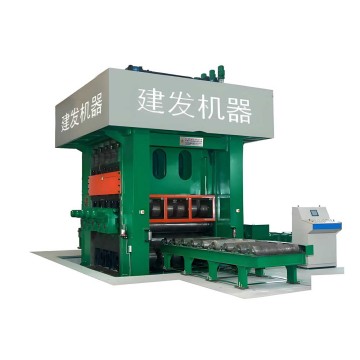
High Strength Automatic Leveling Machine
View Specifications →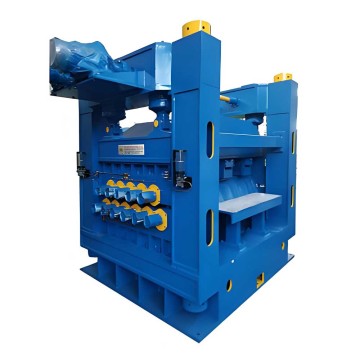
Professional Straightening Machine Line
View Specifications →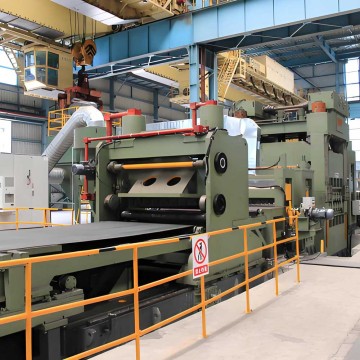
Hot Rolled Plate Moving Flying Shear Line
View Specifications →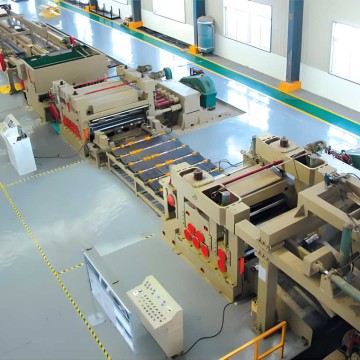
Stainless Steel Uncoiling-Leveling-Shearing-Stacking Line
View Specifications →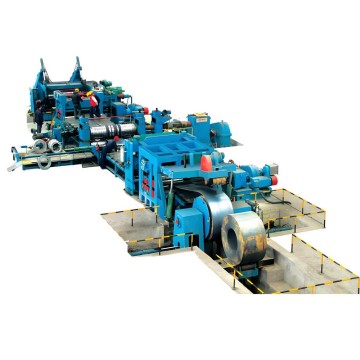
HR Coil Slitting, Leveling & Cut-To-Length Line
View Specifications →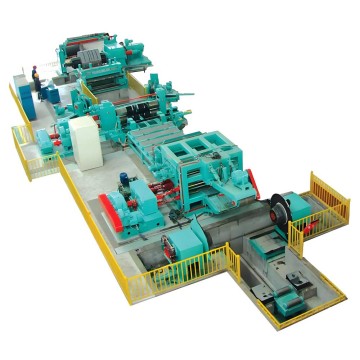
Hot Rolled Sheet Slitting & Recoiling Line
View Specifications →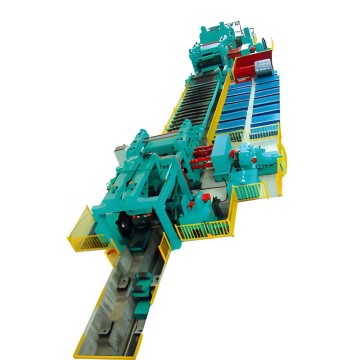
High-Speed Heavy HR Uncoiling-Slitting Line
View Specifications →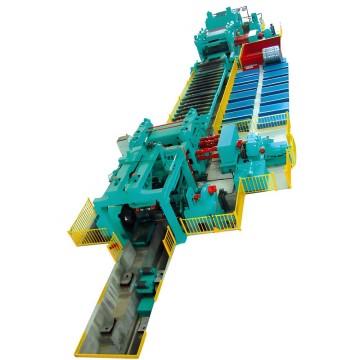
HR Continuous Leveling, Shearing & Stacking Line
View Specifications →Global Leveling Technology Shifts & Procurement Demands
A macroeconomic engineering white paper detailing the transition from static mechanical flattening to adaptive servo-hydraulic leveling systems.
Handling Ultra-High-Strength Steels (AHSS)
The global automotive and structural sector has widely adopted AHSS (Advanced High-Strength Steel), including DP980, CP1180, and martensitic alloys exceeding 1200 MPa yield strengths. Conventional levelers suffer catastrophic roll deflection and elastic springback under these extreme residual loads.
Modern procurement demands hydraulic automatic gap compensation, localized multi-point roll bending, and four-high / six-high cluster support assemblies capable of inducing controlled cyclic plastic deformation beyond the neutral fiber axis.
Closed-Loop Optical Surface & Flatness Feedback
Global fabricators no longer accept subjective visual assessment. Search intent across procurement desks focuses on in-line flatness measuring systems using multi-channel laser triangulation sensors.
By capturing real-time I-Unit deviation data directly at line speeds up to 120 m/min, the automatic leveling machine calculates corrective hydraulic wedge positions on fly, eliminating center buckles, cross bow, and edge camber without stopping production runs.
Automated Cassette Rapid-Change Systems
Processing lines that handle mixed inventories—such as switching between 0.5mm cosmetic stainless and 16.0mm structural hot-rolled plate—face massive downtime bottlenecks during manual roll cleaning and maintenance.
Tier-1 manufacturers prioritize fully automated cassette exchange systems, allowing dual or triple cassette assemblies to slide out hydraulically in under 8 minutes, dramatically shrinking overall setup overhead.
Enterprise Solutions: From Primary Mill To Precision Laser Cutting
How Wuxi Jianfa machine-building technology addresses non-linear stress states, internal micro-tensions, and extreme surface-protection demands.
Laser Blanking & Stress Elimination
Unrelieved internal stresses cause sheets to bow, twist, and strike laser cutting heads, creating downtime and tool wreckage. Our automatic leveling machines deliver over 70% to 80% plastic deformation on entry rolls, progressively dampening down to zero residual stress at exit, guaranteeing stay-flat blanks.
Heavy-Gauge Construction Machinery
For high-tensile structural steel used in crane booms, yellow goods, and maritime shipping, plate thicknesses reach 25mm to 32mm. Our heavy-duty levelers utilize forged 42CrMo roll assemblies, deep carburizing, and high-rigidity portal frames designed via FEA analysis to mitigate mechanical frame stretching.
Cosmetic Stainless & Mirror Aluminum
Processing mirror-finish, hairline, and anodized aluminum coils requires strictly non-marking handling. We integrate chrome-plated, super-finished leveler rolls (Ra ≤ 0.05 μm) coupled with synchronous motor drives to eliminate scuff marks and slippage micro-scratches.
| Machine System / Parameters | Light-Gauge Precision Leveler | Medium Plate Flying Shear Line | Heavy-Gauge Structural Straightener |
|---|---|---|---|
| Workable Thickness Range | 0.2 mm – 3.0 mm | 1.5 mm – 12.0 mm | 6.0 mm – 32.0 mm |
| Roll Arrangement Structure | 19-roll to 23-roll (6-High Cluster) | 13-roll to 17-roll (4-High / 6-High) | 9-roll to 11-roll (High-Torque 4-High) |
| Yield Strength Handling | Up to 650 MPa (Stainless/Alloy) | Up to 980 MPa (Automotive HSLA) | Exceeding 1200 MPa (Q690/Hardox) |
| Operating Processing Speed | Up to 120 m/min | Up to 80 m/min (Sync Shear) | Up to 35 m/min |
| Primary Application | Automotive exterior, HVAC, Appliances | Steel service centers, stamping blanks | Shipbuilding, pressure vessels, yellow goods |
Localization, International Compliance & Engineering E-E-A-T
Operational safety, electrical grid adaptability, and worldwide technical field commissioning guaranteed across 30+ countries.
CE, UL & ISO 9001 Compliance
Full machine construction aligns with European Machinery Directive 2006/42/EC, EN ISO 12100 safety frameworks, and North American UL/CSA electric panel configurations. Engineered with dual-channel emergency safety interlocks, optical light curtains, and integrated lockout-tagout (LOTO) protocols.
Grid Voltage & Environmental Adaptation
Exported machines are calibrated for fluctuating utility conditions: 380V, 415V, 440V, or 480V three-phase systems at 50Hz/60Hz. Hydraulic cooling loops are tailored specifically for tropical Gulf conditions or sub-zero Eurasian operating mills.
Industrial IoT Remote Telemetry
Every automatic leveling line features encrypted cloud gateway architecture (VPN-secured PLC link). Our senior metallurgical controls engineers in Wuxi diagnose roll deflection curves, motor thermal limits, and hydraulic pressures real-time anywhere on earth.
Global On-Site Deployment & Spare Parts
From foundational anchoring to cold and hot commissioning with trial master coils, Jianfa field engineers deploy directly to customer job sites. Critical high-wear spare parts (bearings, seals, replacement knives, and leveler rolls) ship with global logistics redundancy.
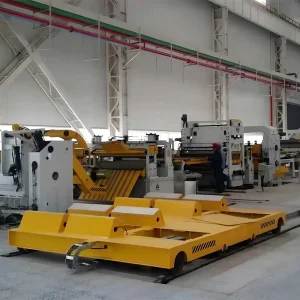
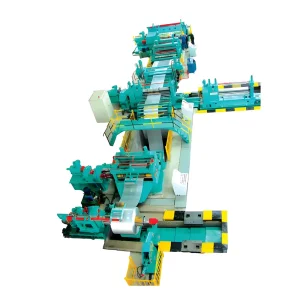
Core Specialized Production Lines
Original high-capacity heavy machinery lines from the Wuxi Jianfa manufacturing engineering portfolio.

Future Roadmap: AI Autonomous Leveling & Smart Factory Integration
The convergence of neural networks, metallurgical simulation, and green energy recovery in high-output coil handling lines.
AI Digital Twin & Predictive Plasticity
By simulating coil thickness variations, entry yield variances, and coil curvature profiles with a finite element neural network, the controller pre-sets the optimal entry/exit roll penetration values before the strip even reaches the first leveling bank, driving setup waste to zero.
Regenerative Drive Topologies & Decarbonization
Deceleration of heavy uncoiler drums and synchronized flying shears generates high kinetic back-EMF. Our lines utilize regenerative common DC bus variable frequency systems, returning up to 32% of electrical energy back into the plant grid, directly cutting plant carbon intensity.
Autonomous MES & ERP Handshake
Modern production facilities run unmanned coil yards. Jianfa automatic leveling machines integrate OPC-UA, Profinet, and MQTT protocols to seamlessly interface with upper-level Manufacturing Execution Systems (MES) for hands-free coil recipe downloads and automated pallet labeling.
Technical & Commercial FAQ for Engineering Buyers
Clear, direct engineering evaluations regarding roller leveling geometry, machine sizing, and factory deployment.
What is the fundamental difference between a standard straightener and an automatic roller leveler?
A standard straightener typically features 5 to 7 unbacked rolls and only rectifies macroscopic coil set (longitudinal longitudinal curvature). An automatic precision leveling machine employs 13 to 23 backed rolls arranged in 4-high or 6-high configurations, capable of flexing individually via hydraulic backup wedges. This eliminates edge wave, center buckle, camber, and residual cross-sectional internal stresses.
How do you calculate the optimal roll diameter for mixed production inventories?
Roll diameter dictates the minimum and maximum plastic deformation achievable for a given material yield. Smaller roll diameters (e.g., 25mm to 40mm) are essential for thin strip (0.3mm - 2.0mm) to reach yield without destructive forces. Heavy plate (up to 25mm) requires 160mm to 220mm+ rolls to avoid roll neck shear. When inventories span both extremes, we supply dual-cassette exchange systems with dedicated roll sizes.
What foundation and civil engineering works are needed prior to machine delivery?
Jianfa provides comprehensive certified static and dynamic loading civil drawings 60 days before dispatch. Standard cut-to-length lines require isolated reinforced concrete foundations with anchoring pockets and dedicated looping pits. Self-contained compact leveling machines can often be floor-mounted on vibration-dampening wedge anchors depending on soil load ratings.
How does your leveling machine control edge waves versus center buckles?
Edge waves occur when strip edges are longer than the center; center buckles occur when the center is longer. Our hydraulic leveler actively adjusts multi-point intermediate backup support rollers. To fix edge wave, center backup rolls are adjusted downward to stretch the center material to match edge lengths. To fix center buckle, the outer backup assemblies are forced downward.
Full Heavy-Duty Industrial Line Solutions
Complete coil-to-blank slitting, uncoiling, and continuous precision leveling machinery available factory-direct from Wuxi, China.
High-Strength Heavy Plate Leveling Unit
View Equipment →
Continuous Heavy Straightening Machine
View Equipment →
Hydraulic Moving Flying Shear Stacking Line
View Equipment →
Precision Stainless Cut-to-Length System
View Equipment →
Combined Slitting & Blanking Leveler Line
View Equipment →
Industrial Master Coil Slitting & Recoiler
View Equipment →
Heavy-Duty Rotary Shear Slitting Line
View Equipment →