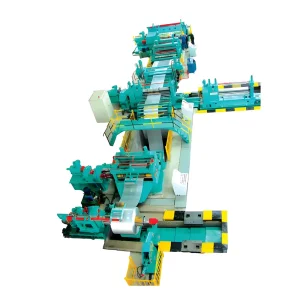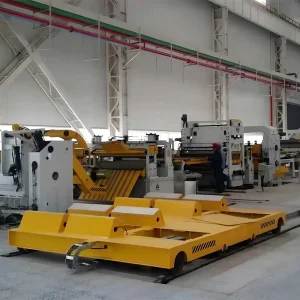
High-Performance Continuous Coil Processing Systems
Explore heavy-duty slitting, cut-to-length, and multi-roll leveling machinery configured for uninterrupted strip feed and high-tensile material integrity.
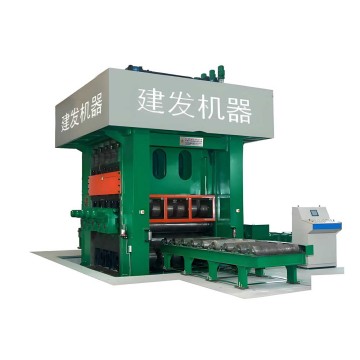
High Strength Leveling Machine
View Details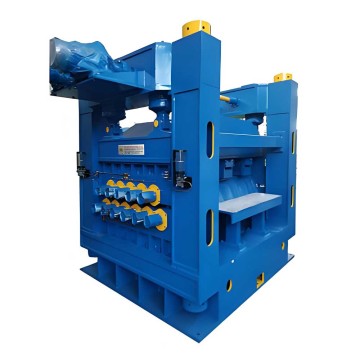
Professional Straightening Machine
View Details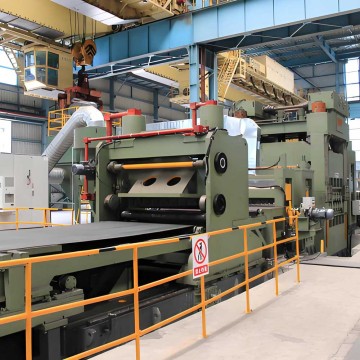
Hot Rolled Plate Moving Shear Line
View Details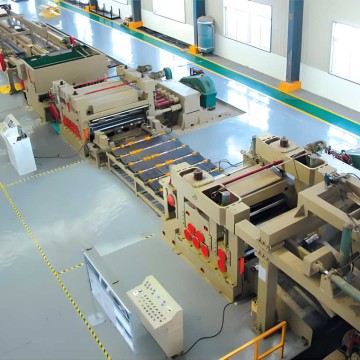
Stainless Steel Coil Processing Line
View Details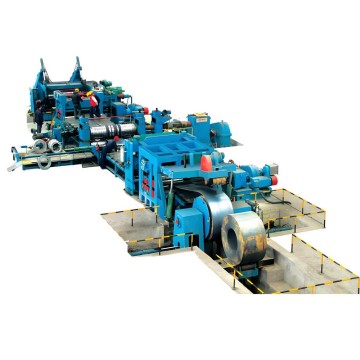
HR Uncoiling-Slitting-CTL Line
View Details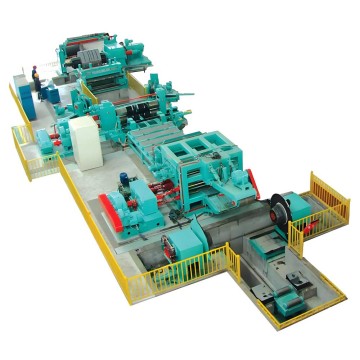
HR Sheet Slitting & Recoiling Line
View Details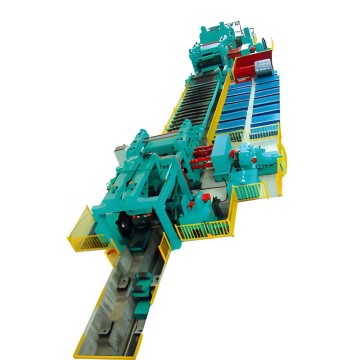
HR Coil Slitting-Recoiling Line
View Details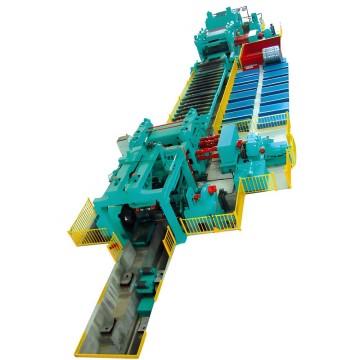
HR Sheet Shearing-Stacking Line
View DetailsCommercial Status & Global Manufacturing Landscape
In high-speed stamping, progressive forming, continuous pipe milling, and modern metal processing centers, coil changeover represents the single largest cause of operational downtime. As metal fabrication shifts from static lot-processing to continuous flow models, the worldwide demand for precision double uncoiling reels (also termed duplex swivel de-coilers or dual-mandrel uncoilers) has surged exponentially.
Zero-Downtime Transition
By leveraging an alternating twin-mandrel carousel mounted on a 180-degree heavy-duty slewing bearing, operators can stage, band-strip, and inspect a secondary coil while the primary mandrel feeds the downstream slitting or cut-to-length line at design velocity.
Hydraulic Wedge Expansion
Modern mandrels use 4-segment or 3-segment sliding wedge configurations backed by precision-ground alloy steel linkage bars. This architecture guarantees radial concentricity even under maximum expansion force on heavy 35-ton coils.
Back-Tension Closed Loops
Equipped with pneumatically cooled multi-disc brakes, regenerative servo drives, or dual-circuit hydraulic disc brakes, these systems maintain constant linear tension, preventing strip slippage, camber deformation, or surface marking.
Emerging Technical Paradigms in Coil Feeding
The global metal forming market is transitioning through significant structural transformations. Dual uncoiling reels are no longer stand-alone passive handling stands; they have matured into intelligent, cyber-physical feeding centers.
AHSS & Ultra-High Strength Steels
Processing Dual-Phase (DP) and Martensitic steels with tensile strengths exceeding 1200 MPa demands massive uncoiling torque and high-pressure snubber rolls to prevent hazardous coil clockspringing.
Optical Thickness & Edge Tracking
Integrated laser triangulators and optical vision sensors measure incoming coil profiles dynamically, pre-adjusting straightener rolls and side guides before the strip head enters the leveler nip.
Automated Turret Indexing
Closed-loop hydraulic slewing drives combined with absolute optical encoders index the 180° rotation within 15 seconds, positioning the next strip head directly into the peeler blade interface.
| Performance Parameter | Conventional Single Uncoiler | Standard Double Uncoiling Reel | Jianfa Heavy-Duty Dual Mandrel |
|---|---|---|---|
| Coil Changeover Downtime | 12 - 25 Minutes | 2 - 4 Minutes | < 45 Seconds (Continuous Interlock) |
| Maximum Coil Weight Capacity | 15 Metric Tons | 25 Metric Tons | Up to 35 Metric Tons per Arm |
| Braking & Back-Tension Control | Manual / Pneumatic Caliper | Closed-Loop Proportional Air | Regenerative AC Servo + Dynamic Disc |
| Mandrel Expansion System | Manual Wedge / Single Link | Hydraulic Wedge 4-Segment | Forged 40CrNiMo Hardened Wedge + Outer Support |
| High-Tensile Containment | Auxiliary Crane Hooks | Mechanical Hold-down Roll | Motorized Hydraulic Peeler + Snubber + Flattener |
Localized Industrial Applications & Case Blueprints
Real-world integration patterns demonstrate why dual uncoiling engineering is paramount across key global manufacturing corridors.
Automotive Stamping Hubs (Detroit, Stuttgart, Monterrey)
Supplying Class-A body skin panels and structural ultra-high-strength steel pillars. Double uncoiling systems ensure non-marking strip payoff with rubberized mandrel sleeves, coupled with automatic strip threading to feeding presses producing 60 strokes per minute.
High-Frequency Welded Pipe Mills (Middle East & SEA)
Continuous ERW / HFW pipe mills cannot halt without creating seam weld flaws and strip scrap. A duplex uncoiler matched with a high-capacity horizontal strip accumulator guarantees that the welding line runs 24/7 at up to 120 m/min without interruptions.
High-Output Steel Service Centers (Yangtze Delta, Ruhr)
Contract toll-processing centers handle 50+ master coil changeovers per 24-hour cycle across diversified alloys (stainless 304/316, galvanized, electrical steel). Dual-reel indexers slash non-productive crane waiting time by 80%.
Macro-Industry Engineering Solutions
Wuxi Jianfa approaches double uncoiling reels not as isolated machinery, but as the foundational anchor of a synchronized, automated coil-to-sheet production system.
Integrated Coil Loading Car & Tilter
Floor-recessed hydraulic cars with V-shaped nylon-lined saddles raise, center, and traverse coils onto the idle mandrel arm. Automatic optical center alignment prevents manual crane adjustments and protects core edges.
Automated Peeler & De-Banding Safety
Heavy hydraulic hold-down snubber rolls hold the outer wraps under pressure while a telescopic peeler spade penetrates the outer lap. The operator remains outside the hazard perimeter during steel strap severing.
Hydraulic Outboard Bearing Support
For cantilevered loads exceeding 15 tons, deflection along the mandrel axis causes uneven stress. Jianfa's automated swing-away bearing supports clamp the mandrel nose rigidly during feeding, keeping shaft deflection under 0.05 mm.
Future Outlook: Towards Cognitive Coil Feeding (2025–2030)
The roadmap for heavy metal forming centers on predictive artificial intelligence, green regenerative energy, and autonomous coil tracking architectures.
Phase 1: Autonomous Vision Threading
AI-driven stereoscopic vision systems automatically detect coil clocking orientation, guide the hydraulic peeler spade dynamically into the lead edge, and thread the strip into pinch rolls without manual intervention.
Phase 2: IoT Vibration & Thermal Telemetry
Piezoelectric accelerometers and thermal sensors installed directly within main slewing gears and mandrel bearings feed real-time vibration signatures to neural networks to forecast fatigue failure before catastrophic line shutdowns.
Phase 3: Regenerative Payoff Braking
Replacing traditional friction drag pads with dynamic AC servo motors that convert continuous strip tension back into clean electrical energy, redirecting up to 75% of braking power back into the plant electrical grid.
Comprehensive Engineering Questions & Answers
Expert answers addressing the critical mechanical, operational, and procurement decisions in selecting double uncoiling reels.
Q1: How does a double uncoiling reel fundamentally improve plant ROI?
Traditional single-arm decoilers require halting the entire line for 15 to 30 minutes while an overhead crane retrieves, aligns, and mounts a new coil. A double uncoiler allows the secondary coil to be staged, centered, and pre-prepped while the first coil pays off. Payoff turnover takes under one minute, yielding an average 18% to 27% increase in total line uptime across a standard 3-shift operation.
Q2: How do you prevent strip slippage during high-speed expansion and payoff?
Jianfa mandrels use four-segment machined alloy-steel expansion wedges driven by continuous axial hydraulic cylinders. Segment faces feature precision serrated profiles or vulcanized polyurethane coats to maximize friction without marring the internal wraps. Optional hydraulic segment limit switches ensure consistent mechanical lock.
Q3: What prevents deflection on wide, heavy master coils?
On master coils over 15 metric tons or strip widths above 1500 mm, cantilevered bending moments cause axial sag. We integrate a hydraulically actuated outboard bearing support (snout support). When the mandrel pivots into position, the outboard arm swings in and locks onto the mandrel tip, creating a double-supported simply supported beam setup.
Q4: Can double uncoiling reels accommodate variable internal diameters (IDs)?
Yes. Standard expansion ranges cover 480 mm to 520 mm. For larger inner diameters (e.g., 610 mm, 760 mm, or 810 mm), we provide bolt-on or quickly interchangeable cast-steel or lightweight composite expansion shoes with rubber pads, allowing rapid changeover across metric and imperial coils.
Q5: What back-tension control mechanism is recommended for thin or pre-painted stock?
For surface-critical painted, galvanized, or automotive sheet, proportional electro-pneumatic disc brakes or closed-loop AC regenerative servo motors are essential. Sensors measure coil diameter continuously, automatically decreasing brake torque in direct proportion to reel diameter reduction to maintain constant linear web tension.
Q6: How is safe 180° rotation guaranteed with asymmetric weight loads?
When one arm is fully loaded (e.g., 30 tons) and the other is empty, severe torsional and overturning moments act on the swivel turntable. Jianfa utilizes heavy-duty cross-roller or three-row roller slewing bearings mounted to deeply ribbed, stress-relieved steel fabrications, driven by hydraulic motors with dual pilot-operated check valves and mechanical locking shot-pins.
End-of-Line & Supplementary High-Speed Line Systems
Explore our complete metallurgical machinery portfolio below, engineered for full lifecycle performance and CE-certified industrial reliability.
HR Sheet Leveling & Shearing Line
View Details
HR Uncoiling-Slitting-Recoiling Unit
View Details
Hot Rolled Slitting Production Line
View Details
Complete HR Slitting-Leveling-CTL
View Details
Stainless Steel Cut to Length Line
View Details
Hot Rolled Moving Shear Production
View Details
Industrial Straightening Machine
View Details