
Standard & Custom Metal Slitting Solutions
Explore our industrial coil processing lines, rotary shearing stations, and high-precision metal slitters engineered to satisfy demanding industrial tolerances.
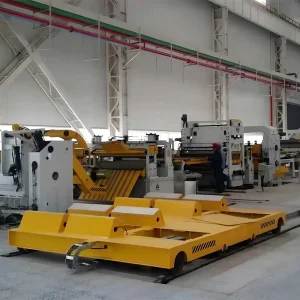

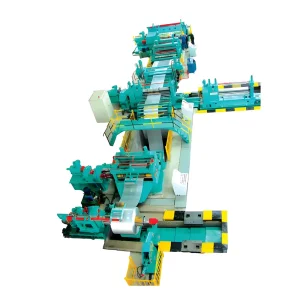
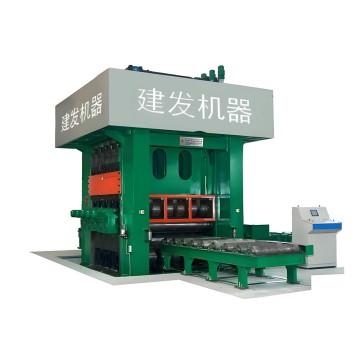
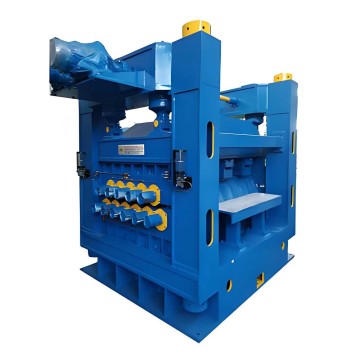
The Evolution of Precision Sheet Metal Slitting Machinery
An authoritative engineering perspective on metallurgical shearing, decentralized manufacturing, and the global reliance on precision rotary slitting.
Global Market Restructuring
The global metal fabrication landscape has shifted significantly from centralized mega-service centers toward agile, decentralized fabrication cells. In industries such as HVAC ductwork manufacturing, architectural flashings, and electrical enclosure production, fabricators require localized sheet metal hand slitters and benchtop rotary shear machines to eliminate lead times associated with external slitting tolls. Having in-house manual and semi-automatic slitting capability slashes working capital by enabling the purchase of economical standard-width master coils.
Kinematics of Rotary Shearing
Unlike conventional guillotine shears that utilize linear progressive cutting action, a sheet metal hand slitter operates via opposing hardened rotary disc knives. Cutting mechanics depend on critical mathematical balances between horizontal blade clearance (typically 7% to 10% of material thickness) and vertical blade overlap (positive or neutral penetration). This dual-disc rotary continuous action eliminates strip torsion, minimizes mechanical camber, and prevents edge deformation on thin-gauge pre-painted metals.
Material Yield & Scrap Economics
With cold-rolled carbon steel, galvanized coil, and marine-grade aluminum representing significant raw material expenditures, kerf waste in metal cutting is directly scrutinized. Precision hand slitters and motorized rotary slitters operate with near-zero material loss, cleanly dividing sheets down to target widths without producing the metal shavings, chips, or burnished thermal zones common to plasma or laser systems, preserving protective zinc and organic paint coatings entirely.
China Factory Efficiency & The Wuxi Engineering Advantage
Why leading global EPCs, steel distributors, and sheet metal fabrication plants partner directly with Wuxi Jianfa Machine-Building Co., Ltd.
Integrated Metallurgical Hub
Situated in Xinwu District, Wuxi, Jianfa operates within the core of the Yangtze River Delta industrial belt. Direct access to premier specialty steel forges, state-of-the-art vacuum heat treatment facilities, and Shanghai maritime export terminals ensures short delivery cycles and direct cost structures unavailable to western fabricators.
Superior Tooling Metallurgy
Every slitting blade engineered in our workshops utilizes premium alloy tool steels, including Cr12MoV, AISI D2, and High-Speed M2 Tool Steel. Through cryo-tempering and precision induction hardening, our rotary slitter knives achieve a Rockwell hardness of HRC 60-62, guaranteeing razor-sharp edges and resistance to chipping.
Precision CNC Machining
Arbor shafts, blade holders, and gear drives are turned and ground on high-accuracy German and Japanese CNC centers. Arbor runout is tightly controlled within 0.005 mm. This dimensional accuracy eliminates blade flutter, which is the primary cause of uneven burr heights, edge roll, and premature tooling wear.
Complete Factory Direct Control
From initial CAD/CAE finite element stress simulations to complete physical pre-delivery assembly and power-on testing, 100% of manufacturing is conducted in-house. Overseas buyers bypass trading intermediaries, working directly with mechanical and electrical engineers who design the equipment.
Localized Application Scenarios for Sheet Metal Slitters
From commercial construction jobsites to advanced electronic component production, explore how modern rotary hand and powered slitters are utilized across diverse industries.
HVAC Ductwork & Air Handling
In heating, ventilation, and air conditioning workshops, sheet metal hand slitters are indispensable for slicing standard 1000 mm or 1250 mm galvanized steel sheet into custom-width wrappers, drive cleats, and S-connectors. The non-distorting rotary cut ensures that zinc galvanic protection remains intact along the strip edge, preventing premature atmospheric corrosion inside high-humidity ductwork environments.
Architectural Roofing & Flashings
Field installations of standing seam roofing, valley gutters, ridge caps, and parapet coping require accurate, continuous long-strip cuts. Hand slitters mounted directly to portable roll formers or mobile fabrication trailers allow architectural roofers to slit prepainted aluminum and color-coated steel (such as PVDF and SMP coil) on site without surface scratching, tool marks, or wavy oil-canning edges.
Electrical Cabinets & Switchgear
Manufacturers of power distribution boxes, server racks, and industrial control consoles utilize precision benchtop slitters to prepare strip stock for progressive stamping dies. Controlling burr height to less than 5% of material thickness prevents wiring abrasion and insulation puncture, meeting strict UL 508A and IEC electrical safety guidelines during assembly.
Rotary Slitting Kinematics & Mechanical Clearances
A rigorous examination of shear forces, blade overlap settings, and arbor shaft deflection calculations essential for quality control teams.
Rotary slitting differs fundamentally from orthogonal linear shearing. During the rotary slitting cycle, the material undergoes four distinct metallurgical stages: initial elastic deformation, plastic deformation and indentation, crack initiation from both knife edges, and ultimate brittle fracture. Maintaining the optimum clean shear-to-break ratio (typically 1/3 cut depth to 2/3 clean fracture) requires precise control over three interdependent physical parameters:
1. Horizontal Knife Clearance (A)
Horizontal clearance represents the lateral axial distance between the male and female rotary knives. If clearance is too tight, secondary shear occurs, doubling energy expenditure and causing accelerated knife wear and edge burrs. Conversely, excessive clearance causes the sheet to roll and draw between the knives, producing a pronounced edge rollover, tensile micro-tearing, and unacceptable lateral camber. For mild cold-rolled steel, the target clearance formula is expressed as:
Where k = 0.06 to 0.08 for Aluminum; 0.08 to 0.10 for Cold Rolled Steel; 0.11 to 0.14 for Stainless 304/316.
2. Vertical Overlap (H) Dynamics
Vertical penetration governs strip feeding stability and the rotational torque required to sustain the shear line. Thin materials (under 0.8 mm) generally require positive overlap (+0.2 mm to +0.5 mm) to establish immediate crack initiation. For heavy gauge coils (above 3.0 mm), a neutral (0.0 mm) or negative clearance (gap) is configured, relying on the high hoop stress and radial contact forces to propagate fractures ahead of the shear apex.
3. Arbor Shaft Deflection Control
Under heavy slitting loads, arbor shafts experience bending moments that tend to open horizontal clearances at the midpoint of the shaft. Wuxi Jianfa utilizes high-modulus forged alloy steel (42CrMo), quenched and tempered, to achieve high rigidity. Shaft diameters are calculated through rigorous finite element analysis to ensure maximum centerline deflection does not exceed 0.015 mm per meter of arbor span under maximum material yield stress.
| Equipment Category | Typical Capacity | Shaft / Blade Metallurgy | Drive Mechanism | Primary Industrial Use Case |
|---|---|---|---|---|
| Bench Hand Slitter | 0.3 mm – 1.2 mm Mild Steel | Cr12MoV / AISI D2 (HRC 58-60) | Manual Hand Crank / Feed Lever | HVAC, onsite flashing, prototype prototyping |
| Semi-Automatic Rotary Slitter | 0.4 mm – 2.5 mm Carbon / SS | SKD11 / High-Chrome D2 (HRC 60-62) | Geared AC Induction Motor | Batch duct fabrication, small service centers |
| High-Speed Industrial Slitting Line | 0.2 mm – 16.0 mm Heavy Plate | Tungsten Carbide / M2 Tool Steel | Variable Frequency / Servo Drives | Steel mills, tube mills, automotive stamping plants |
| Rotary Flying Shear Production Line | 0.5 mm – 6.0 mm Hot/Cold Coil | Hardened Tool Steel Insert Blades | CNC Synchronized Servo Drive | Continuous mill processing, cut-to-length lines |
Emerging Trends in Sheet Metal Slitting Machinery
How automation, IoT diagnostics, advanced metallurgy, and green manufacturing are redefining coil processing efficiency.
Digital Digital Gauges & Quick Setup
Manual calipers and mechanical scale rules are increasingly replaced by magnetic digital readout (DRO) backgauges and linear encoder positioning systems. Operators can set strip widths with ±0.02 mm repeatability in seconds, drastically minimizing setup downtime and eliminating trial-and-error scrap waste during initial product commissioning.
Cryogenic Metallurgy & DLC Coatings
To withstand advanced high-strength steels (AHSS), dual-phase (DP) automotive alloys, and titanium grades, slitter knives are treated with deep cryogenic processing (-196°C) followed by Diamond-Like Carbon (DLC) or TiAlN PVD coatings. These surface treatments reduce friction coefficients, avoid galling on aluminum coils, and multiply edge life by up to 300%.
Modular Hybrid Powered Systems
Fabrication shops increasingly demand versatility. Modern sheet metal hand slitters now feature dual-input modular drives: they can be manually hand-cranked for sensitive prototype work or field operations lacking three-phase power, or quickly attached to high-torque electric cordless driver modules or plug-and-play servo gearboxes for high-volume batch runs.
Engineering Evaluation Checklist for International Buyers
A rigorous verification protocol for sourcing agents and plant engineers before finalizing equipment purchasing contracts.
1. Tensile & Yield Strength Range
Always specify the maximum material yield strength (MPa), not merely sheet thickness. A slitter designed for 1.2 mm mild steel (240 MPa) will stall, deflect, or chip blades if subjected to 1.2 mm full-hard stainless steel (600+ MPa).
2. Shaft Rigidity & Bearing Tolerance
Verify that the arbor shafts utilize heavy-duty pre-loaded angular contact bearings or double-row tapered roller bearings. Zero axial play is required to preserve horizontal clearance settings under side thrust loads.
3. Stripper Ring Durometer
For multi-cut powered slitters, ensure high-grade polyurethane stripper rings are matched to material thickness: 70-75 Shore A for thin, delicate alloys; 85-90 Shore A for heavy carbon steel to ensure clean strip expulsion.
4. Traceable Certifications
Confirm the equipment builder provides authentic factory test certificates, metallurgical chemical analysis reports for cutter tooling, CE safety compliance documentation, and comprehensive spare parts schematics.
Frequently Asked Questions by Industrial Buyers
Direct engineering answers regarding slitting parameters, knife maintenance, burr management, and commissioning.
Integrated Coil Processing & Finishing Systems
Expand your manufacturing capabilities with our complementary heavy-duty uncoiling, leveling, slitting, and stacking equipment portfolio.
Consult with Jianfa's Metallurgical Machine Engineers
Whether your plant requires a rugged manual hand slitter for duct fabrication or a fully automated 200 m/min coil slitting production line, our engineering department will formulate a tailored technical proposal.
Direct Engineering Phone
Speak directly with technical sales specialists regarding blade clearances, coil widths, and line layout configurations.
+86 139 2116 6015Technical Proposal Email
Submit coil specifications (thickness, width, yield strength) for a detailed quotation within 24 hours.
[email protected]Factory Inspection Base
No. 58 Qunxing Road, Meicun, Xinwu District, Wuxi, Jiangsu, China. Factory audits and test cuts welcomed.
Schedule Factory Audit