
Engineered to meet the stringent cycle time and surface tolerance requirements of Marmara, Gebze, Bursa, and İskenderun heavy metal processing centers.
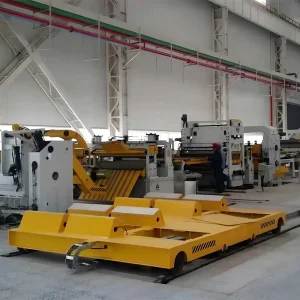

The Republic of Turkey has firmly cemented its position as one of the world's most dynamic metallurgical corridors, bridging the production ecosystems of Europe, the Middle East, and Central Asia. With major steel hubs concentrated across the Marmara region (Kocaeli, Gebze, Dilovası), the Aegean coast (İzmir, Aliağa), and the Mediterranean industrial zone (İskenderun, Payas), Turkish flat steel processors are facing an unprecedented transition. Downstream demand from automotive manufacturing clusters in Bursa, appliance and white goods giants in Manisa and Eskişehir, and structural roll-forming operations throughout Anatolia has surged.
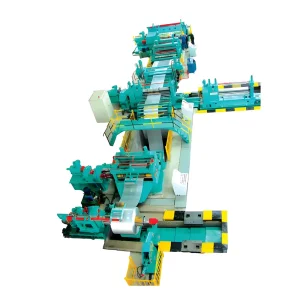
Historically, Turkish metal service centers (Çelik Servis Merkezleri) relied heavily on traditional start-stop cut-to-length (CTL) machines. While these systems offered acceptable dimensional tolerance on heavy structural plate, they introduce catastrophic operational bottlenecks in high-volume production: mechanical cycle wear, severe hydraulic thermal loading, and noticeable pinch roll stop-marks across Class-A surface sheets. Today's export-oriented Turkish mills are transitioning en masse to continuous flying shear production lines. By synchronizing the cutting blade with strip movement at line speeds between 60 m/min and 120 m/min, flying shears eliminate surface scratching while multiplying plant overall equipment effectiveness (OEE).
- Zero Impress Marks on Automotive Blanks: Essential for processing high-strength DP600/DP800 cold-rolled coils destined for European vehicle export programs.
- Reduced Floor Space & Foundation Cost: Flying shear production lines eliminate deep looping pits, drastically reducing excavation costs in earthquake-conscious Turkish zones.
- Low Cycle Times on Short Sheet Lengths: Rapid blank cutting (from 400mm up to 6,000mm) without slowing down the uncoiler or leveler.
- Energy Regeneration (KERS): Servomotor deceleration feeding electrical power back into the Turkish TEİAŞ industrial grid.
Combining high-inertia mechanical rigidity with microsecond-level motion servo control to achieve precision cutting of high-tensile hot rolled, cold rolled, galvanized, and stainless steel coils.
The shear carriage is driven by high-torque AC permanent magnet servo drives coupled to low-backlash planetary gearboxes and precision rack-and-pinion or ball-screw linkages. Microprocessor motion controllers execute a virtual cam profile that calculates line acceleration, matches strip velocity perfectly over a 40ms cutting window, fires the upper blade, and dynamically returns to starting position.
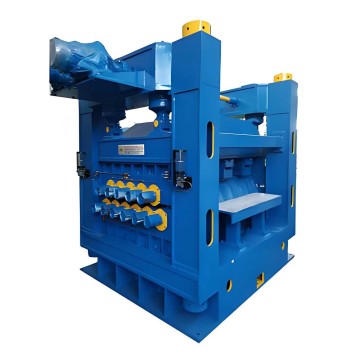
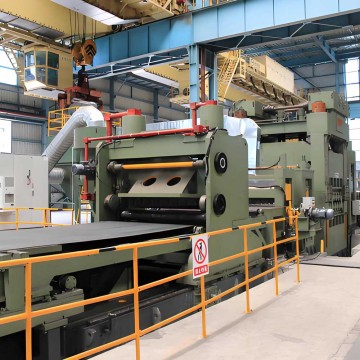
Eliminating internal stresses and coil set in high-yield-strength metals (such as St52, S355JR, or AHSS) requires deep plastic-elastic alternating bending. Our 6-Hi configuration features intermediate rolls between work rolls and backup bearings to prevent roll mark transfer on sensitive stainless steel, while motorized hydraulic roll-bending compensates for cross-bow and edge-wave defects.
Switching between 0.5mm thin cold-rolled gauge and 6.0mm heavy hot-rolled plate typically requires manual blade shimming. Jianfa's automated shear head incorporates motorized eccentric gap calibration governed by HMI recipes. Operators select coil grade and thickness, and servo actuators position the 4-edge Cr12MoV/H13K cutting knives in under 20 seconds.
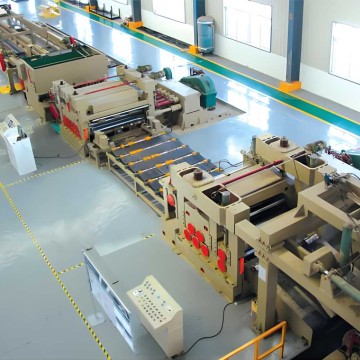
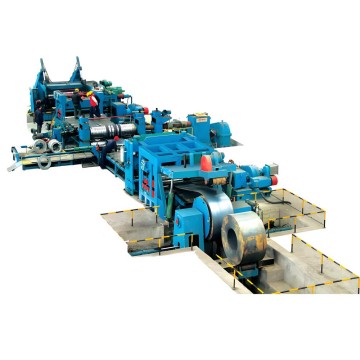
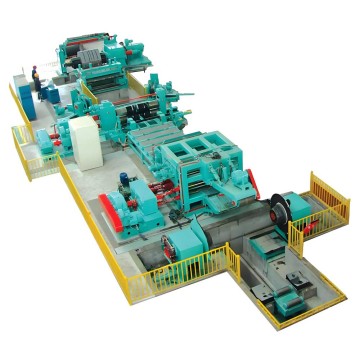
From the heavy industrial ports of Marmara to Anatolian automotive supply parks, Jianfa flying shear production lines integrate directly into downstream fabrication streams.
Supplying flat, square, and burr-free blanks for progressive stamping presses. Using non-marking PU-coated pinch rolls and automatic magnetic float stackers, our flying shears process cold-rolled, electro-galvanized, and aluminum coils without micro-scratching, ensuring flawless paint adherence for automotive assemblies.
Large household appliance manufacturers (refrigerator side panels, washing machine drums) demand high length accuracy (±0.2mm) at 90 cuts per minute. Jianfa flying shears feature integrated protective film applicators, automatic edge trimming, and optical scrap rejection gates for pristine panel preparation.
Processing 25-ton master coils into custom structural plate lengths for commercial truck trailers, storage racking, and container builders. The heavy-duty 4-Hi leveling unit strips residual memory from hot-rolled steel up to 16mm thickness, producing completely flat sheets ready for fiber laser cutting tables.
Turkey's green energy sector requires massive volumes of pre-punched, pre-cut zinc-aluminum-magnesium (ZM) alloy sheet. Our flying shears synchronize seamlessly with upstream hydraulic pre-punching presses, enabling continuous multi-hole punching and flying cutoff without line stoppage.
Selecting the correct line configuration depends on coil thickness, yield stress, surface sensitivity, and required daily sheet throughput.
| Performance Parameters | Continuous Flying Shear Line | Rotary Drum Flying Shear | Traditional Start-Stop CTL | Stationary Hydraulic Shear |
|---|---|---|---|---|
| Cutting Kinematics | Reciprocating servo carriage (tracks strip) | Continuous rotating blade drum | Strip stops completely per cut | Strip stops with hydraulic guillotine |
| Maximum Line Speed | 80 – 120 m/min | 120 – 180 m/min | 30 – 50 m/min | 15 – 30 m/min |
| Length Accuracy (1,000mm) | ±0.15 mm | ±0.25 mm | ±0.30 mm | ±0.50 mm |
| Thickness Capability | 0.3 mm – 8.0 mm (AHSS / Mild) | 0.2 mm – 3.2 mm (Light gauge) | 1.0 mm – 16.0 mm | 6.0 mm – 25.0 mm |
| Surface Protection | Maximum (No slippage or friction marks) | High (Requires synchronized exit belt) | Risk of roller deceleration scratches | Clamp indentation on sensitive coils |
| Civil Foundation / Pit Needs | Shallow pit or pitless design | Pitless / shallow table | Deep looping pit mandatory | Deep looping pit mandatory |
| Energy Efficiency (OEE) | Highest (Low cycle thermal loss) | High | Moderate (High drive acceleration draw) | Lowest (Continuous hydraulic pump load) |
Purchasing heavy coil processing machinery demands full confidence in structural longevity, international logistics, and localized operational commissioning.
Located in Wuxi (Jiangsu province), Jianfa operates minutes away from major expressways connecting directly to the Port of Shanghai. Equipment is secured in flat-rack and heavy-duty containers with vacuum anti-corrosive VCI packaging, transiting straight to Turkish container ports including Gemlik, Derince, Haydarpaşa, and Mersin.
All lines destined for Turkey are built in compliance with EU Machinery Directive 2006/42/EC and Low Voltage Directive 2014/35/EU, with dual-channel emergency safety gates and Sick/Pilz light curtains. Baseframes are structurally verified to resist dynamic vibration loads compliant with Turkish earthquake foundation codes.
Control pulpits are equipped with Siemens or Beckhoff industrial PCs featuring complete Turkish and English language switching. Built-in industrial VPN gateways (Tosibox / Ewon) enable Jianfa automation engineers in Wuxi to perform real-time servo loop tuning, firmware updates, and fault diagnosis alongside Turkish plant electricians.
Key engineering considerations addressed by our technical directorate for Turkish service center owners, plant managers, and procurement teams.
In standard start-stop lines, the strip is clamped and halted abruptly during shearing while the upstream loop absorbs continuous strip feed. During deceleration and re-acceleration, friction between stationary rolls and moving metal causes rubbing marks. In a flying shear, the strip moves constantly at a steady velocity; the shear carriage accelerates to equal velocity before the knife bites, generating zero relative motion between metal and blade.
Yes. Our heavy-gauge lines utilize blade tool steels specifically formulated for high yield stress materials (D2 / Cr12MoV / H13K heat-treated to 58-62 HRC). Coupled with our dynamic hydraulic knife clearance setting and anti-deflection structural shear crowns, shock impact is evenly distributed across the blade edge, extending sharpening cycles beyond 300,000 cuts.
Standard factory equipment is wired for Turkey's industrial grid supply: 400V AC, 3-Phase, 50Hz. All control cabinets integrate high-frequency line chokes, EMC filters, and regenerative active front-end (AFE) modules to eliminate harmonic distortions, conforming strictly to Turkish TEİAŞ industrial electrical regulations.
Jianfa dispatches a dedicated commissioning crew (lead mechanical engineer, hydraulic specialist, and senior automation programmer) to the buyer's facility in Turkey. Our team supervises anchor bolt verification, wiring hookups, dry-cycle testing, live coil commissioning, and provides two weeks of on-site operator and maintenance training.
Standard light-to-medium gauge lines (up to 3.0mm thickness, 1,600mm width) require approximately 90 to 120 days for machining, assembly, and internal factory testing. Heavy-gauge flying shear lines (up to 8.0mm or 12.0mm) require approximately 120 to 150 days. Pre-shipment test run videos with buyer-supplied coil materials are provided prior to container loading.
Yes. We frequently supply combo systems featuring rotary side trimmers with scrap choppers ahead of the flying shear, as well as downstream bypass conveyors allowing strip to pass directly to a hydraulic recoiler when small-width strip slitting coils are required.
Explore our complete catalog of slitting lines, cut to length systems, precision levelers, and moving shears exported across 30+ countries worldwide.
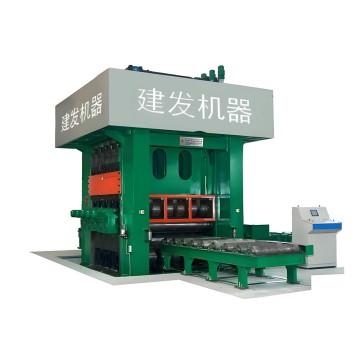
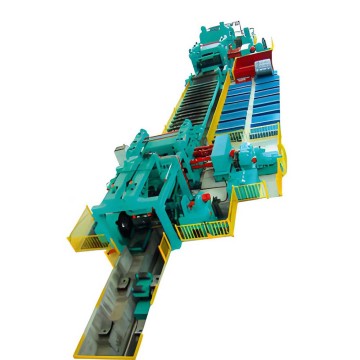
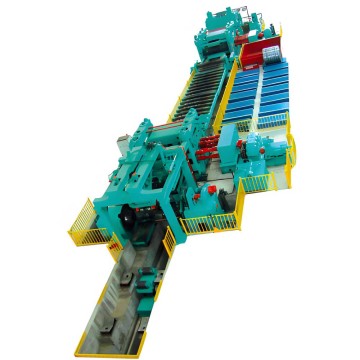
Plan Your Flying Shear Line with Wuxi Jianfa
Contact our engineering sales team directly. Share your coil material (HR, CR, PPGI, Stainless), thickness range, maximum coil weight, and target output speed to receive a detailed layout proposal and quotation within 24 hours.